Refusing a Breath Test in Wisconsin: Penalties Explained
Refusing a breath test in Wisconsin usually means refusing the official chemical test after an OWI arrest, and that choice can trigger a whole separate case against you fast. If you’re searching for answers about refusing breath test penalties, start here: the rules are stricter than most people think, and the clock starts running almost immediately.
What Refusing a Breath Test Means in Wisconsin
Hit the definition first: in Wisconsin, a refusal usually means you said no to an evidentiary chemical test, or you failed to clearly cooperate with it, after a lawful OWI arrest. That is different from being confused, asking what’s happening, or hesitating for a moment. It is also different from the early testing that can happen on the roadside.
A lot of people mix those up, and that mistake matters. The roadside part and the post-arrest part play by different rules.
The difference between a roadside breath test and the official test
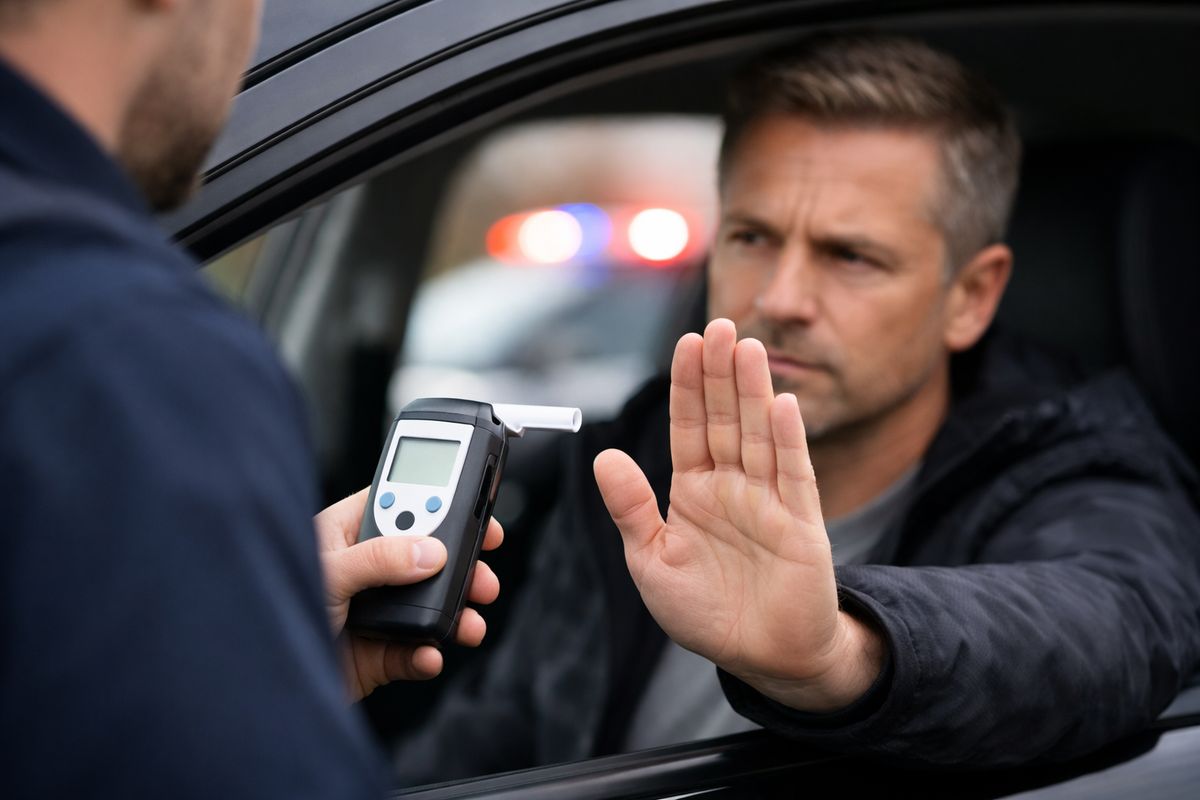
Start with the split. A roadside breath test, often called a preliminary breath test, is the handheld test an officer may ask you to take during the stop. The official test is the one requested after arrest, usually at a station, jail, or hospital, and it falls under Wisconsin’s implied consent law.
That official test is the one that usually creates a refusal issue. If you refuse that post-arrest chemical test, your license can be hit even if your OWI case is still being fought. If you need the bigger picture on how the charge itself works, get grounded in what an OWI charge actually means in Wisconsin.
When a refusal charge usually comes into play
Log the timing. In most cases, the refusal issue shows up after an officer arrests you for OWI, reads the informing-the-accused form, and asks for a chemical test of your breath, blood, or urine. Once that happens, the stakes jump.
That procedure matters because the refusal case is not just about whether you said “no.” It is also about whether the officer had legal grounds to arrest you, whether the required warnings were properly given, and whether the request for testing followed Wisconsin law.
Wisconsin’s Implied Consent Law, Broken Down Fast
Hit the legal core in plain English: by driving on Wisconsin roads, you have already agreed to chemical testing if certain legal conditions are met. That agreement is not unlimited. But it is real, and it carries penalties if you break it.
Think of it like a deal tied to your license. You get the privilege to drive, and one of the rules of the road is that if police lawfully arrest you for OWI, you can be required to submit to chemical testing.
What “implied consent” means for you
Ship the simple version. You did not sign a special breath-test contract at the side of the road. Instead, Wisconsin law treats driving as acceptance of certain testing rules. If an officer has the required legal basis and follows the process, refusing the official test can bring license consequences on its own.
That is why refusal cases often surprise people. A person may think, “If you do not have my breath result, you do not have the case.” But implied consent changes that playbook.
What police have to do before asking for the test
Track the procedure. The officer generally needs a lawful OWI arrest first. Then the officer must read the informing-the-accused warnings and request the test in the way Wisconsin law requires. Those details can become the whole fight.
If the stop itself was shaky, or the arrest lacked enough evidence, the refusal may be challengeable. That is where whether police actually had enough basis for the arrest can become a major issue, and sometimes the stop before that matters too.
Immediate Penalties for Refusing a Breath Test
Start with the number that matters: 1 refusal can trigger a separate license penalty quickly. The refusal is not just an argument in your OWI case. It can produce its own revocation and restrictions.
That is the first gut punch for most people. Work, school, child pickups, medical appointments, all of it gets harder fast.
License revocation and waiting periods
Hit the driver issue first. A refusal finding can lead to license revocation, and in many cases you may face a waiting period before becoming eligible for an occupational license. Refusal-based license consequences can be harsher than standard OWI administrative fallout.
The exact length can change based on prior history, but the main point is simple: refusing can cost driving privileges even before the OWI charge is fully resolved. For a wider look at the fallout that can follow an impaired-driving case, review the real-world penalties that come with a Wisconsin DUI.
Ignition interlock and other court-ordered consequences
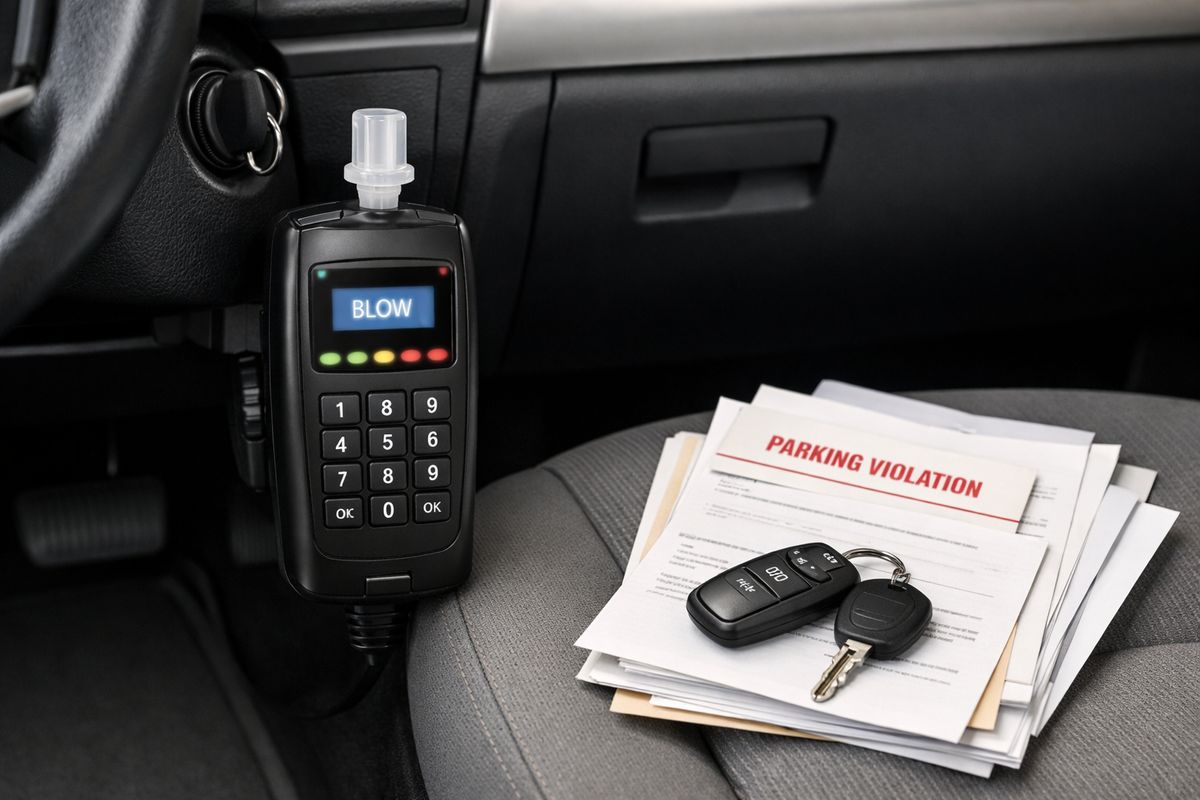
Log the extra penalties. A refusal can also lead to an ignition interlock requirement in some situations, meaning you may need to blow into a device before your vehicle starts. That is expensive, inconvenient, and hard to hide from your daily life.
Other restrictions can pile on too. Assessment requirements, reinstatement fees, and compliance conditions can all become part of the mess. Refusal is not a clean dodge. It is often a second penalty track.
Penalties for prior refusals or OWI history
Repeat the pattern with higher stakes. If you have prior OWI-related history, the consequences can ramp up. Wisconsin treats repeat impaired-driving conduct more seriously, and refusal penalties often get worse in that setting.
Prior offenses can change license sanctions, ignition interlock requirements, and how prosecutors frame the case. If this is not your first trip through the system, learn how earlier convictions can stack against you.
How a Refusal Can Affect Your OWI Case
Hit the two-part goal here: refusal creates a license-related case, and it can also damage your position in the OWI prosecution. Saying no does not erase the stop. It can actually add pressure.
That is the catch. You can end up fighting on two fronts at once.
Refusal does not stop an OWI arrest
Start with the big myth. Refusing the test does not stop the arrest, end the investigation, or block OWI charges. If the officer believes there is enough evidence, the case keeps moving.
That evidence may include driving behavior, odor of alcohol, slurred speech, admissions, field sobriety observations, witness statements, and body camera footage. If you are trying to map out the sequence after booking, what usually happens after an arrest in Wisconsin helps frame the timeline.
Prosecutors can use the refusal against you
Ship the practical impact. In many cases, prosecutors may argue that your refusal shows consciousness of guilt, basically that you refused because you expected the test result to hurt you. Courts do not accept every argument automatically, but this is a real risk.
That means refusal can become part of the story told against you. Not always. But often enough that it should never be treated like a harmless move.
Police may seek another type of chemical test
Log the next move. Refusing a breath test does not always end evidence collection. Officers may request a different chemical test, or seek a warrant for a blood draw in some situations.
So the idea that refusal keeps your blood alcohol evidence out of the case is often wrong. Sometimes police still get the sample. Sometimes the refusal just adds another problem on top.
Can You Ever Refuse Without Penalties?
Hit the FAQ straight on: yes, there are limited situations where a refusal can be challenged, but “I just didn’t want to” is usually not enough. Winning a refusal issue usually depends on procedure, legality, or a real inability to comply.
This is where details matter more than attitude.
Common defenses to a refusal allegation
Start the defense checklist in plain English. A refusal can sometimes be challenged if there was no lawful arrest, if the officer failed to properly read the required warnings, if the request for testing was legally flawed, or if confusion was caused by the officer’s instructions.
Language barriers can matter too. So can situations where you were not actually refusing but were trying to understand what was being asked. Another angle may exist if the traffic stop itself was unlawful, which is why mistakes during the stop can sometimes get a DUI case attacked early deserves a close look.
Medical issues, confusion, and inability versus refusal
Track the key nuance. A true refusal is different from being physically unable to provide a sample. Medical conditions, breathing problems, injuries, panic, or other health issues can complicate what looked like noncompliance.
Still, this is not automatic. Police and prosecutors may say you were stalling or faking inability. The facts need to be locked down early, including what you said, what the officer said back, and whether another testing method was offered.
What Happens After a Refusal in Wisconsin
Ship the timeline. Refusal cases move quickly, and waiting around burns leverage. You need to know what usually comes next so you do not miss a hearing or lose license options by default.
Treat this like a sprint, not a slow jog.
Notice of intent and the refusal hearing process
Hit the procedure. After the alleged refusal, you may receive paperwork starting the process to revoke your license. You can challenge the refusal through a hearing, and that hearing is not just a formality.
At the hearing, the court may look at a limited set of issues, such as whether the officer had probable cause, whether there was a lawful arrest, whether the required warnings were given, and whether you actually refused. That narrow focus is why early case review matters so much.
Key deadlines that can hurt you fast
Log the urgency. Refusal and OWI matters can run on short timelines. Missing the deadline to request or prepare for a hearing can hand the state a win before your defense gets moving.
The same goes for license-related steps. Delay can shrink your options for occupational driving privileges and weaken your ability to preserve evidence, including surveillance footage, dispatch records, and witness memories.
Possible outcomes of the hearing
Repeat the finish-line options. If the court upholds the refusal, the license penalties and related consequences move forward. If the challenge succeeds, the refusal penalty may be defeated, though the OWI case itself can still continue.
That split surprises a lot of people. Winning the refusal issue does not automatically end the criminal case, and losing the refusal issue does not automatically prove the OWI. They are connected, but not identical.
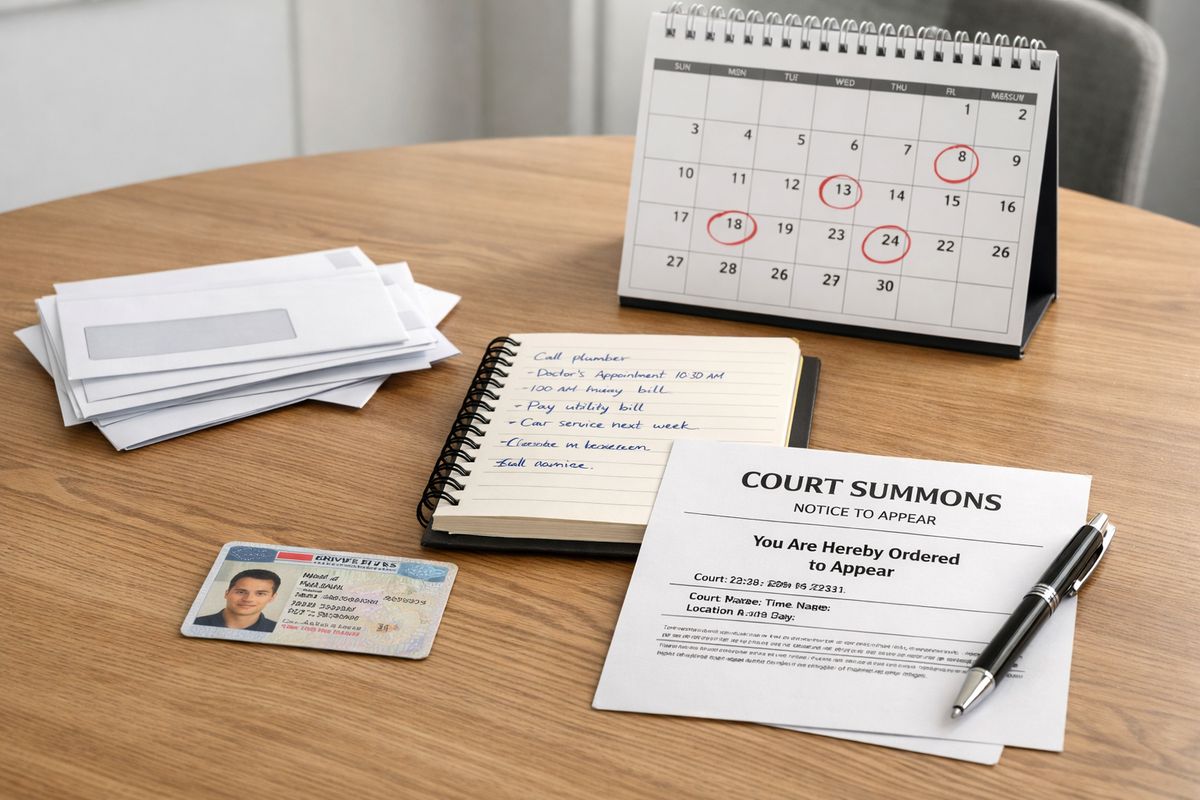
What to Do in the First 24 Hours After You Refuse
Start with the 24-hour action plan. Stress wrecks memory, and delay helps the case against you. Move fast today.
1. Write down the stop, the arrest, and the test request
Hit memory before it fades. Write out the time of the stop, where it happened, what the officer said, what you said back, whether field sobriety tests were requested, when the arrest happened, and exactly how the test request was made.
Log whether the informing-the-accused form was read, whether you understood it, whether you asked questions, and whether any medical issue affected you. Save names, badge numbers, receipts, photos, and screenshots. This is your first rep, and it matters.
2. Protect your hearing deadline and license options
Ship the admin work fast. Read every paper you were given. Track every date. Missing a deadline can wreck a good defense before it starts.
Also track your driving needs immediately. Work routes, school runs, treatment appointments, court dates. If you end up seeking limited driving privileges, those details matter. For a fuller post-arrest playbook, review the moves that matter right after a Wisconsin DUI arrest.
3. Call a Wisconsin OWI lawyer this week
Track the highest-value move. A lawyer can review the stop, arrest, warnings, refusal allegation, test request, and hearing deadlines before the case hardens. That early review can expose procedural mistakes that are easy to miss when you’re stressed out.
Not every defense wins, but late action loses a lot of cases. If you’re comparing counsel, study how to pick the right Wisconsin DUI attorney for your case and make the call this week, not after deadlines pass.
Common Questions About Refusing a Breath Test in Wisconsin
Hit the fast-answer round. These are the points people usually get wrong first.
Is refusing better than blowing over the limit?
Usually not. Refusal is not a free pass, and it can bring separate license penalties plus arguments that you refused because you knew the result would be bad. In some cases, police may still get other chemical evidence anyway.
Can you refuse a field sobriety test too?
Field sobriety tests and chemical tests are different. The legal consequences are not the same. A roadside balancing test is not the same thing as the official post-arrest test tied to implied consent.
Can police force a blood draw after a refusal?
In some cases, yes. Police may seek a warrant for a blood draw or rely on legal authority that allows another form of testing under the circumstances. Refusing breath is not always the end of evidence collection.
Will a refusal stay on your record?
A refusal finding can affect your driving record, future OWI-related penalties, and insurance problems. It can also make later cases worse because prior history matters in Wisconsin.
Frequently Asked Questions
Does refusing a breath test automatically mean you lose your license?
Not automatically forever, but it can trigger a license revocation process fast. You may have the right to challenge the refusal, and the outcome can depend on whether the arrest, warnings, and test request were legally proper.
Can you change your mind after refusing?
Sometimes trying to reverse course helps less than people expect. If the refusal has already been recorded and the process has moved on, a later “yes” may not erase the original refusal issue.
What if you were confused by the officer’s instructions?
Confusion can matter, especially if the officer’s wording or conduct made the request unclear. That is one reason to write down the exact exchange as soon as possible.
Is a panic attack or breathing problem the same as refusing?
Not necessarily. A real physical or medical inability to provide a sample can be different from a refusal. The facts need to show that you could not comply, not that you chose not to.
Does refusing help if you already have prior OWIs?
Usually it creates more risk, not less. Prior OWI history can make refusal penalties harsher and raise the stakes across the whole case.
Start Your Defense Before the Clock Runs Out
Act today. Write out your timeline, save your paperwork, track your deadlines, and get legal advice before the refusal case gains momentum. The first 24 hours can shape everything that follows.
Nathan Dineen has built a reputation on proven results, dedicated client service, and aggressive DUI and criminal defense representation. Nationally recognized and trusted by clients throughout Wisconsin, Nate has been named among the Top 100 Trial Lawyers, holds a 10.0 Superb Avvo Rating, and has earned Super Lawyers recognition 11 times, including a 2026 Super Lawyers designation. If you are looking for an experienced attorney in Wisconsin, contact Nate today to discuss your case and receive personalized guidance from one of the state’s most respected criminal defense lawyers.

About Nate Dineen
Wisconsin legal insights from the DUI Defense WI team.