The Real Consequences of a DUI in Wisconsin
A DUI consequences case in Wisconsin triggers two problems at once: court penalties and loss of driving privileges. Wisconsin law uses the term OWI, short for Operating While Intoxicated, but people across the state still search for DUI, and both refer to impaired-driving consequences that begin at arrest and often continue for years.
Wisconsin DUI Consequences at a Glance
In Wisconsin, an OWI arrest can lead to fines, jail, license revocation, ignition interlock orders, alcohol assessment requirements, and lasting insurance and employment damage, according to the Wisconsin Legislature and Wisconsin Department of Transportation. The court handles the charging case, while the DOT handles separate licensing action. Missing either track carries consequences of its own.
What follows covers the main penalties, the first hours after arrest, the difference between DUI and OWI terminology, and why early legal review matters across the state.
How Wisconsin Defines DUI and When a Driver Faces Charges
Wisconsin statutes generally use OWI rather than DUI, according to state law. A driver faces charges for operating a vehicle while under the influence of an intoxicant, a controlled substance, another drug, or a combination that makes safe driving impossible. Court and agency materials also recognize prohibited alcohol concentration as a separate basis for enforcement.
BAC Limits and Impairment Rules
For most drivers, the prohibited alcohol concentration is 0.08, according to the Wisconsin Legislature. Commercial drivers face a lower 0.04 threshold, and lower limits apply to certain drivers with prior offenses. Drivers under 21 are subject to separate alcohol restrictions under Wisconsin law, which are explained in more detail in this guide to alcohol rules for younger drivers.
Prosecutors do not need a chemical result alone. Officers and witnesses can testify about driving behavior, odor of intoxicants, speech, balance, and field observations, according to Wisconsin court practice.
OWI vs. DUI in Wisconsin Search and Legal Use
“DUI” remains the public shorthand, but “OWI” is the formal term used by Wisconsin courts, police reports, and DOT records. For a fuller breakdown of the terminology, related definitions appear in this explanation of how Wisconsin labels impaired-driving cases.
What Happens Immediately After an Arrest
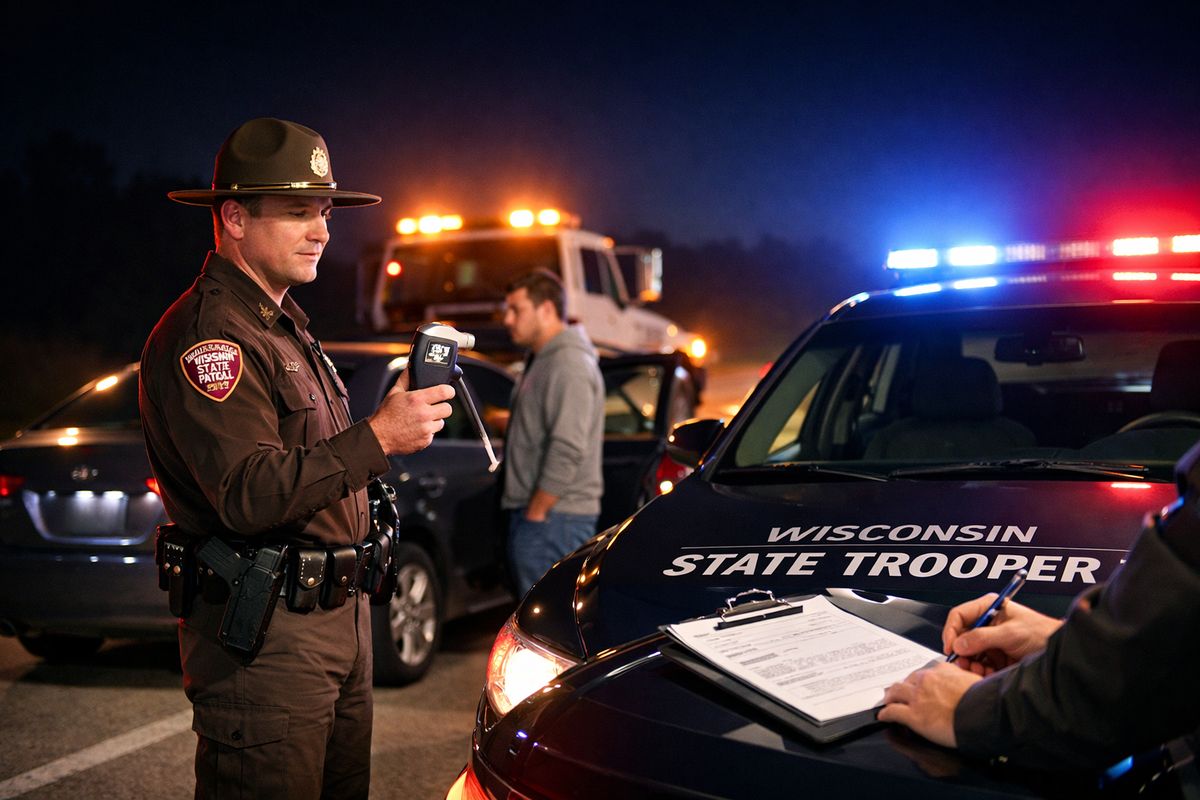
After a stop and arrest, the driver generally faces booking, chemical testing, notice of license action, and a future court date. According to the Wisconsin DOT, the administrative process often starts immediately, even before the criminal case is resolved.
The Two Tracks: Criminal Case and License Consequences
A Wisconsin DUI arrest usually opens two separate matters: a court case and a license case. The court decides guilt, penalties, and sentencing conditions. The DOT handles revocation periods, occupational-license eligibility, and reinstatement requirements. The timeline can move quickly, which is why many defendants review what happens after a Wisconsin arrest as soon as charges are filed.
Refusing a Chemical Test
Wisconsin’s implied-consent law imposes direct penalties for refusing an evidentiary chemical test, according to the Wisconsin DOT. Refusal can change the evidence available to prosecutors, but it also creates separate revocation consequences and other sanctions. Additional details appear in this review of test-refusal penalties in Wisconsin.
Criminal Penalties for a Wisconsin DUI Conviction
Penalties rise sharply with prior offenses, high BAC results, child passengers, and injury-related facts. According to the Wisconsin Legislature, the escalation from a first offense to repeat offenses is one of the most severe features of OWI enforcement.
First-Offense DUI Consequences
A first OWI is generally a civil forfeiture offense, not a crime, unless aggravating facts apply. Even so, the penalties are substantial: fines, surcharges, license revocation, mandatory alcohol assessment, and ignition interlock in qualifying cases, especially where the BAC is high or a minor passenger is present, according to Wisconsin statutes and DOT guidance.
Second and Third Offense Consequences
Second and third offenses bring mandatory jail, higher financial penalties, and longer revocations. They also bring more restrictive ignition interlock conditions and harsher treatment in court. For drivers trying to understand how prior cases stack up, Wisconsin practice is outlined in this overview of repeat-offense treatment under state law.
Felony DUI and Aggravating Circumstances
Later offenses and cases involving injury or death can become felonies, according to Wisconsin statutes. Child passengers, crash injuries, and other aggravating facts increase exposure significantly. Related charging thresholds are discussed in this guide to when impaired-driving charges become felonies.
License Suspension, Revocation, and Getting Back on the Road
Losing driving privileges often hits harder than the fine. Work travel, family care, school obligations, and insurance all become immediate problems once revocation begins.
Occupational Licenses and Ignition Interlock Devices
Wisconsin allows some drivers to seek limited occupational driving privileges, subject to waiting periods and eligibility rules, according to the DOT. Ignition interlock devices become mandatory in many cases, and the cost falls on the driver. As Wisconsin attorney Nathan Dineen has said in case materials, “The license issue starts immediately, and it affects daily life long before the case is finished.”
Reinstatement Requirements and Fees
Full reinstatement usually requires completion of the revocation period, alcohol assessment, ordered education or treatment, interlock compliance where required, and payment of fees, according to Wisconsin DOT guidance. Incomplete paperwork and missed program steps often delay restoration.
The Hidden Costs Beyond Court Penalties
The sentence on paper is only part of the damage. Insurance carriers, employers, and licensing boards often respond long after the hearing ends.
Insurance, Employment, and Professional Fallout
According to insurance industry practice, premiums often rise sharply after an OWI, and some carriers cancel coverage. Employers whose workers drive for business can impose discipline or termination. Commercial drivers and licensed professionals face the steepest fallout because a driving-related conviction can threaten both income and credentials.
Long-Term Record Impact
Even when a first offense is civil, it remains highly relevant later. Prior OWI history affects future charging, sentencing, and screening decisions, according to Wisconsin law and common background-review practice.
Cases Involving Injury, Death, or Commercial Drivers
These cases draw stronger charging decisions and far more serious penalties. They also place greater focus on restitution, prison exposure, and long-term license loss.
Injury and Homicide by Intoxicated Use
When impaired driving causes bodily harm or death, Wisconsin law authorizes felony charges, prison sentences, restitution orders, and extended revocation periods. More detail appears in this explanation of injury-based impaired-driving prosecutions.
Commercial Driver Consequences
CDL holders face a 0.04 BAC standard and severe disqualification risks under state and federal rules. A case can damage both the commercial privilege and the regular license, effectively ending a driving career.
Why Early Legal Representation Changes the Outcome
Defense counsel typically reviews the stop, probable cause, testing procedure, refusal allegations, prior-offense counting, occupational-license options, and sentencing mitigation. Prosecutors pursue public-safety enforcement, according to charging practice, while defense attorneys focus on protecting legal rights, reducing penalties, and preserving driving status where the law permits. Early review matters because deadlines begin immediately, facts harden quickly, and mistakes at the start often shape the final result.
Frequently Asked Questions
Is a first DUI in Wisconsin a criminal offense?
Usually no. A first OWI is generally a civil forfeiture offense unless aggravating factors such as injury or certain related charges apply, according to Wisconsin law.
How long does a Wisconsin DUI affect a driver’s license?
The revocation period depends on the offense level and related allegations such as refusal. Additional time often follows if treatment, fees, or interlock requirements are not completed.
Does refusing a breath or blood test help a DUI case?
Refusal removes one piece of evidence, but Wisconsin imposes direct refusal penalties under implied-consent law. That creates a separate problem even if the criminal case is still being contested.
Can a DUI become a felony in Wisconsin?
Yes. Later offenses and cases involving injury or death can be charged as felonies, according to Wisconsin statutes.
Do DUI consequences continue after court ends?
Yes. Insurance increases, job problems, professional licensing issues, and future sentence enhancements often continue well beyond the case itself.
Nathan Dineen has built a reputation on proven results, dedicated client service, and aggressive DUI and criminal defense representation. Nationally recognized and trusted by clients throughout Wisconsin, Nate has been named among the Top 100 Trial Lawyers, holds a 10.0 Superb Avvo Rating, and has earned Super Lawyers recognition 11 times, including a 2026 Super Lawyers designation. Those seeking an experienced attorney in Wisconsin should contact Nate to discuss the case and receive personalized guidance from one of the state’s most respected criminal defense lawyers.

About Nate Dineen
Wisconsin legal insights from the DUI Defense WI team.