
What Happens at Arraignment? Step-by-Step Guide
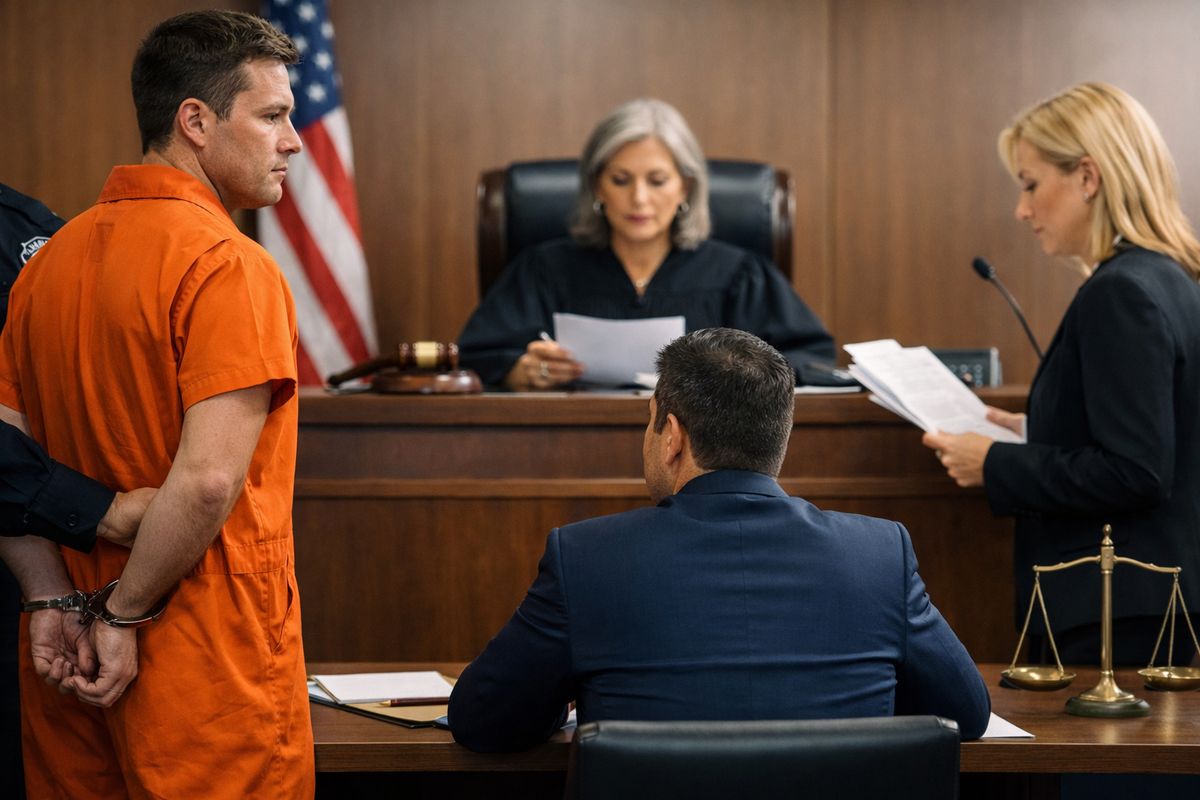
If you have court coming up, the question is usually simple and stressful at the same time: what happens at arraignment, exactly? The short answer is that this is the hearing where the court tells you the charge, explains your rights, asks for your plea, and often decides release conditions, and knowing that ahead of time can make the whole day feel less like a blur.
What an arraignment is and what this guide will help you do
An arraignment is usually your first formal court appearance in a criminal case. Think of it as the court officially opening the file in front of you, out loud, in a courtroom instead of on paper.
At this hearing, the judge typically confirms your identity, states the charge, explains basic rights, asks how you plead, and may deal with bail or release terms. By the end, you should know what your case is about right now, what rules apply to you, and when you have to come back.
What you’ll need before your arraignment
A little preparation goes a long way here. Bring your court notice, citation, summons, booking or release paperwork, photo ID if you have one, the name and number of any lawyer or public defender contact, and something to take notes with.
Practical stuff matters too. Figure out the courthouse location the day before, plan parking, and leave early enough to handle security and still find your courtroom without rushing through a long hallway at 8:30 a.m. Dress neatly, keep your papers together, and treat the morning like an appointment you really cannot miss, because that is exactly what it is.
Step 1: Check your court date, courtroom, and case details
Before anything else, make sure you know where to go and when. A missed room number or wrong courthouse can create a problem fast, even if you meant to appear.
- Read every page of your paperwork slowly.
- Find the date, time, courthouse, courtroom, and case number.
- Check the listed charge so you know what case the court is calling.
- Put the date and time in your phone right away.
- Keep a paper copy with you on the day of court.
Checkpoint: you should be able to say the exact courthouse, the courtroom if listed, and your hearing time without guessing.
Find the information on your paperwork
Look for the case number, charge name, and hearing details on your citation, summons, or release papers. Those details are your map for the day.
If the charge name is confusing, do not panic. Legal labels can sound more dramatic or more technical than everyday language. A charge like drunk driving, for example, may appear under different terms depending on the state, which is why it helps to understand how impaired driving charges are labeled in court.
Double-check with the court if needed
If the paperwork is hard to read, incomplete, or inconsistent, contact the clerk’s office before the hearing. Many courts also post calendars or case lookup tools online.
- Call the clerk during business hours.
- Give the case number if you have it.
- Confirm the date, time, and location.
- Ask what to do if any detail looks wrong.
The trick is to solve confusion before court morning, not while standing in a security line.
Step 2: Get ready before you walk into court
Court is formal, but the prep is pretty simple. The goal is to arrive calm, organized, and ready to listen.
- Set out your paperwork the night before.
- Charge your phone, even if it must stay off in court.
- Plan your route and parking.
- Arrive early enough to get through security.
- Sit quietly and wait for your case to be called.
Arrive early and plan for security
Give yourself more time than you think you need. Courthouses often have metal detectors, lines at the entrance, and confusing floor layouts. It can feel a bit like an airport without coffee or gate numbers.
A good rule is to arrive at least 30 minutes early, and earlier if the courthouse is large. Success here looks boring, and that is good. You are in the building, through security, and outside the right courtroom with time to breathe.
Know the basics of courtroom behavior
Turn your phone off. Follow directions from deputies, clerks, and court staff. Stand when instructed, speak clearly, and do not interrupt.
Small details matter because your arraignment may move fast. You want the focus on the hearing itself, not on a side issue that could have been avoided.
Have your questions and documents ready
Keep all paperwork in one folder. Write down simple questions such as your next court date, whether any release rules apply, or how to contact appointed counsel.
That way, if the hearing moves quickly, you are not trying to remember everything from memory. Honestly, that is where a lot of people get tripped up.

Step 3: Meet the judge and hear the charges
Once your case is called, you will go before the judge for the formal start of the arraignment. This is the point where the court confirms who you are and what case is on the calendar.
- Listen for your name or case number.
- Go where court staff directs you.
- Answer identity questions clearly.
- Listen closely as the charge is read.
Confirm your identity and case
The court usually starts with basic housekeeping. You may be asked to confirm your name, and the judge makes sure the correct case is in front of the court.
That sounds minor, but it matters. This is the foundation for everything that follows, and it is part of why arraignment is often described as your earliest formal trip into criminal court.
Listen as the charge is read
The judge or another court official states the offense you are accused of. Sometimes the court also refers to the complaint or charging document.
In plain English, this is the court officially telling you what the case is about. If the accusation involves violence in a family or household setting, terms on the paperwork can carry extra consequences, so it helps to understand how those charges are framed in a criminal case.
Step 4: Hear your rights and deal with the lawyer question
A major part of arraignment is making sure you know your rights before you respond to the charge. This part can feel quick, but it matters a lot.
- Listen carefully as rights are explained.
- Do not volunteer facts about the case.
- Tell the court if you want a lawyer.
- Ask about appointed counsel if you cannot afford one.
Understand the rights the court explains
The judge often explains that you have the right to a lawyer and the right not to say things that could be used against you. That second right is not just for police questioning. Keeping quiet in open court can matter too.
If that right feels fuzzy, it helps to get clear on what staying silent actually protects. The catch is that a casual attempt to explain yourself can end up in the court record.
Ask for a lawyer if you do not have one
If you do not already have counsel, tell the court you want a lawyer. If you cannot afford one, the judge may ask questions about your finances to see if you qualify for a public defender or court-appointed attorney.
If you plan to hire private counsel, cost is often part of the stress, so it helps to understand what defense fees usually look like in real life. Asking for counsel early is smart. Waiting usually does not help.
Avoid explaining the facts of your case in open court
Arraignment is not your chance to tell the full story. It is not a trial, and it is not the moment to argue your innocence in detail.
Say only what is needed to address the court’s questions. The more you talk about the facts, the more chance you create for misunderstandings or statements that can hurt later.
Step 5: Enter your plea
After the charge and rights are covered, the judge asks for your plea. This is one of the biggest moments of the hearing because it shapes what happens next.
- Listen for the plea question.
- Answer only with the plea, unless your lawyer tells you otherwise.
- Make sure you understand the result before leaving the courtroom.
Not guilty
A not guilty plea means you are contesting the charge. That does not mean a trial happens immediately. More often, the case moves to another hearing, possible negotiations, evidence review, or other pretrial steps.
This is a very common plea at arraignment.
Guilty or no contest
A guilty plea means you admit the charge. No contest usually means you are not disputing it, even if you are not making a formal admission in the same way. Depending on the charge and the court, sentencing or resolution may happen soon after.
Why plea decisions matter
Your plea affects scheduling, strategy, and possible outcomes. If resolution talks happen later, you may hear about negotiated outcomes, so it helps to know how case deals are usually structured and when they make sense.
Treat this moment seriously. It is not like checking a box on a form and moving on.
Step 6: Address bail, bond, or release conditions
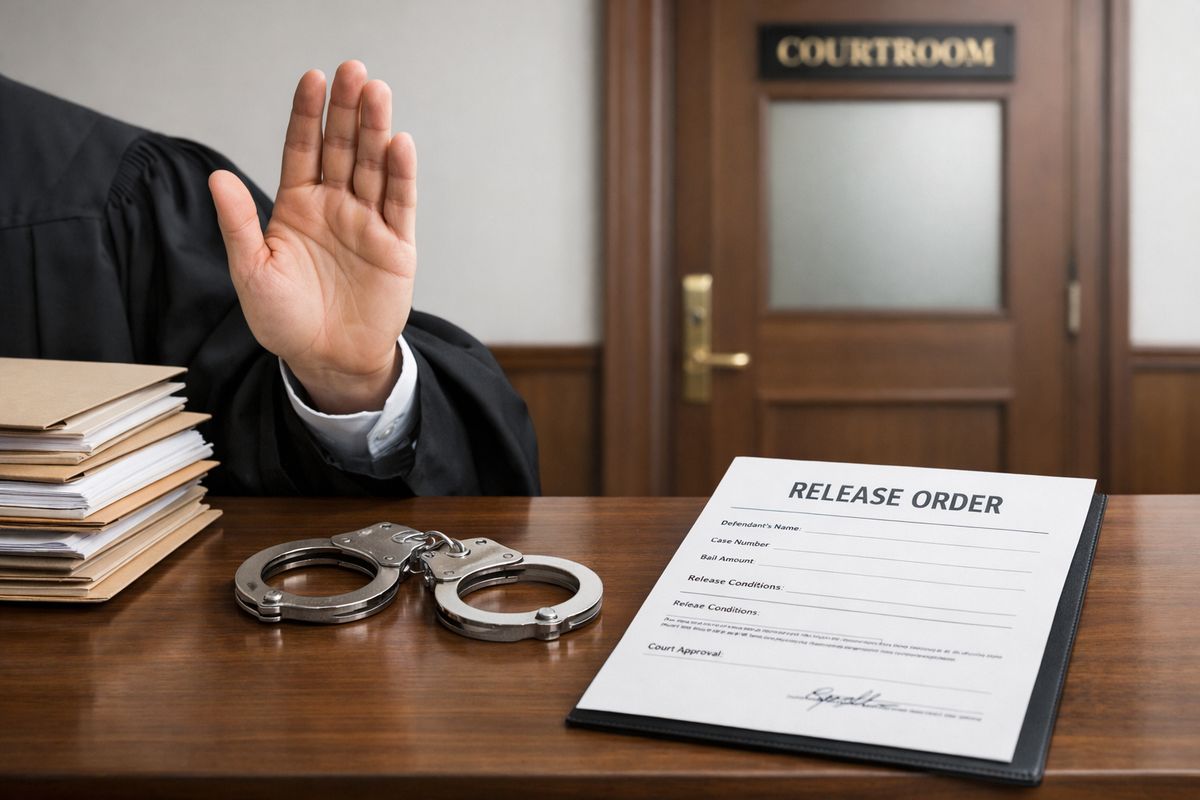
Many arraignments also cover whether you stay in custody, are released, or have to follow rules while the case is pending. For some people, this is the most immediate part of the hearing.
- Listen for any bail amount or bond terms.
- Pay attention to each release rule.
- Ask for clarification before leaving if anything is unclear.
What bail or bond means
Bail is money or a financial condition tied to release. Bond often refers to the promise or arrangement used to secure that release.
The court uses these tools to balance appearance in court with public safety concerns. In simple terms, the judge is deciding what has to happen for your case to continue without extra risk.
Common release conditions
Release conditions can include no contact with a certain person, travel limits, staying away from a place, or checking in with the court or another office. These rules start right away.
If a no-contact order is part of your release, take it literally, because breaking that order can trigger a new problem fast.
What the judge considers
The judge may consider the charge, any record, ties to the community, and the risk of missing court. That is why two arraignments can look similar on paper but end differently in practice.
Step 7: Find out your next court date and what happens next
Before the hearing ends, the court usually sets the next step. Do not leave until you know exactly what that step is.
- Get the next hearing date.
- Review every paper before walking out.
- Make sure you understand any deadline or condition.
Get your next hearing date
If you plead not guilty, you will usually receive another date for a pretrial hearing, conference, or similar proceeding. Put it in your phone before you even leave the building.
Checkpoint: your phone calendar and your paperwork should match exactly.
Review any orders before you walk out
Read the paperwork slowly. Look for release conditions, deadlines, fines, instructions, or warnings.
This is where small mistakes turn into big headaches. One wrong assumption about a date or condition can lead to a missed hearing or violation.
Know the possible paths after arraignment
Your case may move toward dismissal, negotiation, diversion, more hearings, or trial preparation. Some cases do get dropped later, and it helps to understand when charges sometimes get thrown out, but arraignment usually does not decide the whole case.
Step 8: Handle the first 24 hours after arraignment
What you do after court matters more than most people expect. A few simple follow-up steps can save you a lot of stress later.
- Put all papers in one place.
- Save photos of every court document on your phone.
- Contact your lawyer or public defender.
- Follow every release condition exactly.
- Calendar the next court date and reminders.
Save and organize your court papers
Keep everything in one folder, envelope, or clearly labeled phone album. The trick is to make your future self’s job easier.
When you need a date, case number, or condition later, you should be able to find it in under a minute.
Contact your lawyer or public defender
If counsel was appointed, or if you already have a lawyer, reach out promptly. Confirm the next date, ask what to expect, and make sure communication is set up clearly from the start.
Follow every release condition exactly
Treat release conditions like a checklist, not a suggestion. Even a small slip can create a new issue while the original case is still pending.
Common arraignment variations you may run into
Not every arraignment looks exactly the same. Local rules, charge level, and custody status can change the feel of the hearing.
In-custody versus out-of-custody arraignments
If you were arrested and held, the hearing may move quickly and focus heavily on release. If you were cited and released earlier, the process may feel more administrative.
Misdemeanor versus felony arraignments
The basic structure is similar, but higher-level charges usually bring more formal procedure and greater attention to bail and future hearings. If you are unsure where your charge falls, it helps to know what really separates lower-level and higher-level criminal charges.
Virtual or video arraignments
Some courts use video appearances, especially for first appearances tied to a jail. The same core steps usually happen, just through a screen instead of in person.
Troubleshooting: common problems and how to handle them
Even a straightforward arraignment can go sideways in practical ways. The good news is that most of the common problems have a direct next move.
You missed your arraignment
Missing court can lead to a bench warrant, which is a judge’s order for your arrest. Act fast by contacting the court or a lawyer to find out how to fix it.
You do not understand the charge or paperwork
Legal terms can feel like another language. Ask the clerk about procedure, and ask your lawyer about meaning, consequences, and strategy.
You cannot afford bail
If bail is set higher than you can pay, there may be options such as asking for a bail review or making legal arguments for lower conditions. That issue usually needs quick attention.
You were not able to get a lawyer before court
Tell the court you want a lawyer. Do not try to solve the whole case in the moment by explaining facts or arguing everything yourself.
What outcome to expect and one smart next move
By the end of arraignment, you should know the charge, your plea status, whether you are released, any rules you must follow, and your next court date. The smart move is simple: put that date in your phone before you leave the building, then keep every court paper in one place.
Frequently Asked Questions
How long does an arraignment usually take?
Many arraignments are brief, sometimes just a few minutes once your case is called. The total time at court can be much longer because of security, waiting, and a crowded docket.
Do you go to jail at arraignment?
Not always. Some arraignments end with release, some with bail, and some with continued custody. A lot depends on the charge, your history, and the judge’s release decision.
Should you talk about your case during arraignment?
No. Arraignment is usually not the time to explain the full story. Keep your answers short, ask for a lawyer if needed, and avoid volunteering facts in open court.
What happens if you plead not guilty at arraignment?
Your case usually moves to another hearing, such as a pretrial conference or similar court date. The court will set the next step, and you will need to follow any release conditions in the meantime.
Can you change your plea later?
Often, yes. In many cases, a plea entered at arraignment is not the final word. Later developments, legal advice, negotiations, or case review can affect that decision.
Is arraignment the same as a trial?
No. An arraignment is an opening-stage hearing. The court tells you the charge, explains rights, asks for a plea, and may address bail or release rules. It does not usually decide guilt or innocence.
Speak With Attorney Nathan J. Dineen
Attorney Nathan J. Dineen represents clients facing DUI, OWI, and related criminal charges throughout Wisconsin. His approach combines strategic courtroom advocacy with advanced training in standardized field sobriety testing, drug-recognition evaluation, and the science behind breath, blood, and chemical testing.
Nathan has also presented DUI defense topics to other attorneys and has been recognized by legal organizations for trial advocacy, professional achievement, and work in impaired-driving defense.
A DUI or OWI charge can affect your license, career, reputation, and future. Get experienced legal guidance before making your next decision.
Schedule your confidential consultation with Attorney Nathan J. Dineen today.

About Nate Dineen
Wisconsin legal insights from the DUI Defense WI team.