OWI in Wisconsin: What the Charge Really Means
OWI Wisconsin refers to the state’s charge of Operating While Intoxicated, the formal term used when a person is accused of driving or operating a vehicle while impaired by alcohol, drugs, or a prohibited alcohol concentration. In Wisconsin, that label carries immediate consequences for court exposure, license status, testing rules, and long-term record issues, according to the Wisconsin Department of Transportation.
What OWI Means in Wisconsin
Under Wisconsin law, OWI means Operating While Intoxicated. The charge covers three basic theories, according to the Wisconsin Department of Transportation’s impaired driving overview and Wisconsin defense practitioners: impairment by alcohol, impairment by drugs, and operating with a prohibited alcohol concentration.
That distinction matters because an OWI case is not limited to a drunk-driving allegation in the ordinary sense. A person can face the charge based on alcohol, illegal drugs, restricted controlled substances, or prescription medication that allegedly impaired safe driving, according to state guidance and legal summaries. Wisconsin’s terminology also differs from many other states, which often use DUI or DWI instead.
For a broader explanation of the state’s terminology, many legal guides point to the difference between the labels Wisconsin uses for impaired-driving cases.
Why Wisconsin Uses “OWI” Instead of DUI
Wisconsin uses OWI as the formal legal term, not DUI. The Wisconsin Department of Transportation uses “Operating While Intoxicated” in its public materials, and Wisconsin attorneys consistently note that “DUI Wisconsin” remains a common search phrase even though it is not the formal charge name.
That split between legal terminology and everyday shorthand causes confusion. Out-of-state drivers, insurers, employers, and media outlets often say DUI because it is more familiar nationally. The underlying issue stays the same: in Wisconsin, the official charge is OWI, and court documents, agency notices, and licensing actions use that term.
Wisconsin-focused legal commentary has also noted that the distinction is practical, not cosmetic. A person searching for “DUI” in Wisconsin is still dealing with the same legal framework described in state law explainers on what counts as an impaired-driving charge.
What “Operating” Really Means
The word “operating” does a lot of work in Wisconsin OWI cases. According to Wisconsin legal sources, prosecutors do not need proof that a person was speeding down a highway or traveling a long distance. The question is often whether the person physically manipulated or activated the vehicle in a way that fits the state’s definition.
That means cases can arise from facts involving a parked vehicle, keys in the ignition, the engine running, or movement that is minor but still treated as operation under Wisconsin law. Defense lawyers and court-focused summaries regularly emphasize this point because it is one of the most misunderstood parts of OWI Wisconsin cases.
A parked car is not an automatic shield. If the state can show operation, the analysis moves to intoxication, testing, and proof.
How Wisconsin Decides Whether Someone Can Be Charged
Wisconsin generally relies on three paths to support an OWI charge: observed impairment, prohibited alcohol concentration, or drug-related impairment. According to the Wisconsin Department of Transportation and legal commentary, those paths can overlap, and prosecutors often use more than one at the same time.
In practice, that means a person does not need every possible form of evidence before a charge is filed. An officer’s observations, a chemical test result, witness statements, video, and circumstantial facts can all become part of the case. The arrest decision and the court case are built from that combined record.
Impairment by Alcohol or Drugs
Officers typically document the reason for the stop, what they observed at the scene, and what followed during the investigation. Law-enforcement procedure materials and defense-law analyses describe a familiar pattern: weaving, speeding, braking irregularly, drifting, odor of alcohol, slurred speech, bloodshot eyes, admissions about drinking, and performance on field sobriety tests.
Drug-related impairment follows the same general structure, though the proof often looks different. Instead of a breath result alone, the state may rely on physical observations, statements, toxicology testing, and officer testimony about behavior consistent with drug impairment. Wisconsin legal sources note that these cases often involve prescription medication as well as illegal drugs.
Challenges to the basis for the stop or arrest often begin with whether police had lawful grounds to investigate, a point discussed in many analyses of what officers need before making an impaired-driving case.
Prohibited Alcohol Concentration (PAC)
Wisconsin also recognizes a prohibited alcohol concentration, often called PAC, as a separate basis for an OWI-related charge. According to the Wisconsin Department of Transportation, the standard limit is generally 0.08 for most drivers, while lower thresholds can apply based on prior history or license class.
That matters because a person can be charged based on the chemical result itself, apart from broader observations about visible impairment. A prosecutor does not need exaggerated driving behavior if the evidentiary test shows a concentration over the legal limit. In repeat-offense situations, Wisconsin law imposes stricter BAC thresholds, which raises the risk of both charging and sentencing exposure.
OWI Involving Controlled Substances or Prescription Drugs
Wisconsin law does not limit OWI to alcohol. State law summaries and defense materials report that drivers can be charged for operating under the influence of controlled substances, with detectable levels of certain restricted controlled substances, or while impaired by prescription medication.
Lawful possession of medication does not block an OWI allegation. If the state alleges that the medication affected the person’s ability to drive safely, the legality of the prescription is not a defense to impairment itself. That is one reason OWI cases involving drugs often become more technical, with greater attention to toxicology, timing, dosage, and observed behavior.
What Happens After an OWI Arrest in Wisconsin
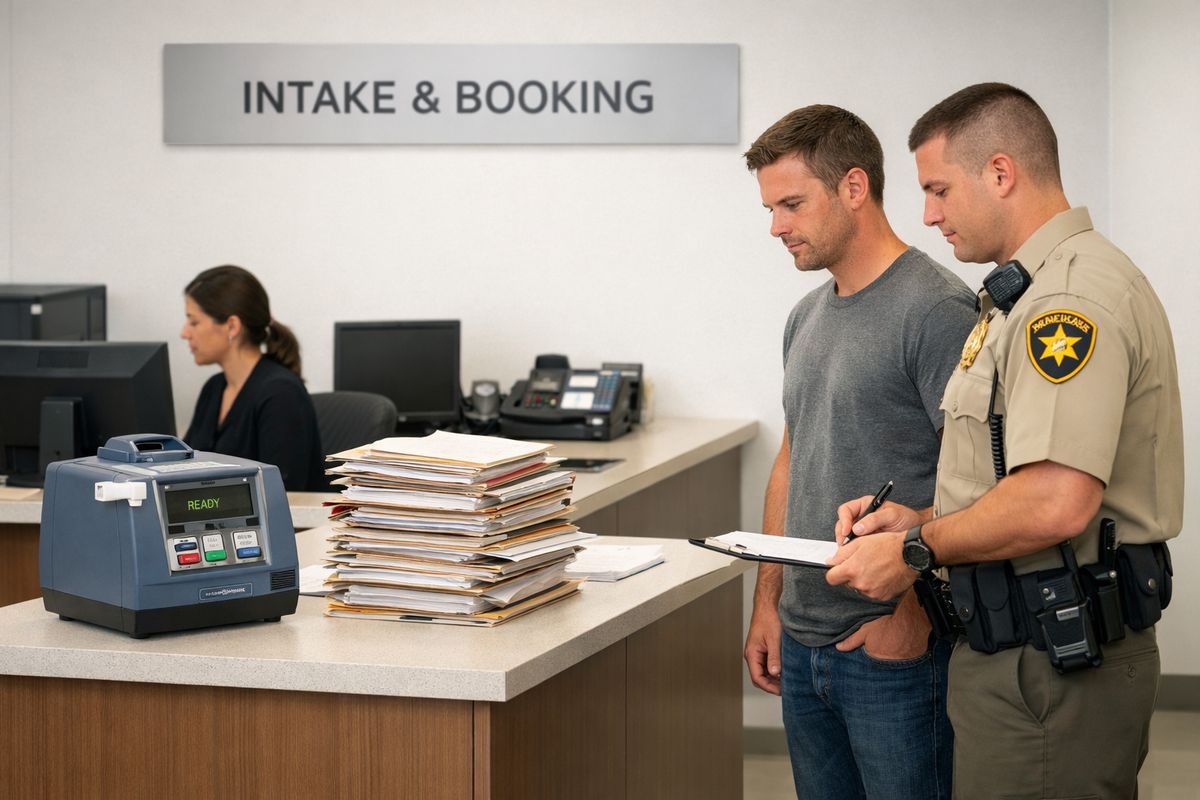
After an OWI arrest, the sequence usually moves quickly from roadside investigation to booking, notice of license consequences, and a first court appearance. The Wisconsin Department of Transportation and Wisconsin criminal-defense sources describe early deadlines as one of the most immediate concerns, especially when testing issues or refusal allegations are involved.
For context on the broader arrest process, many defendants look to guides on what follows a Wisconsin arrest from charging through court.
Traffic Stop, Investigation, and Arrest
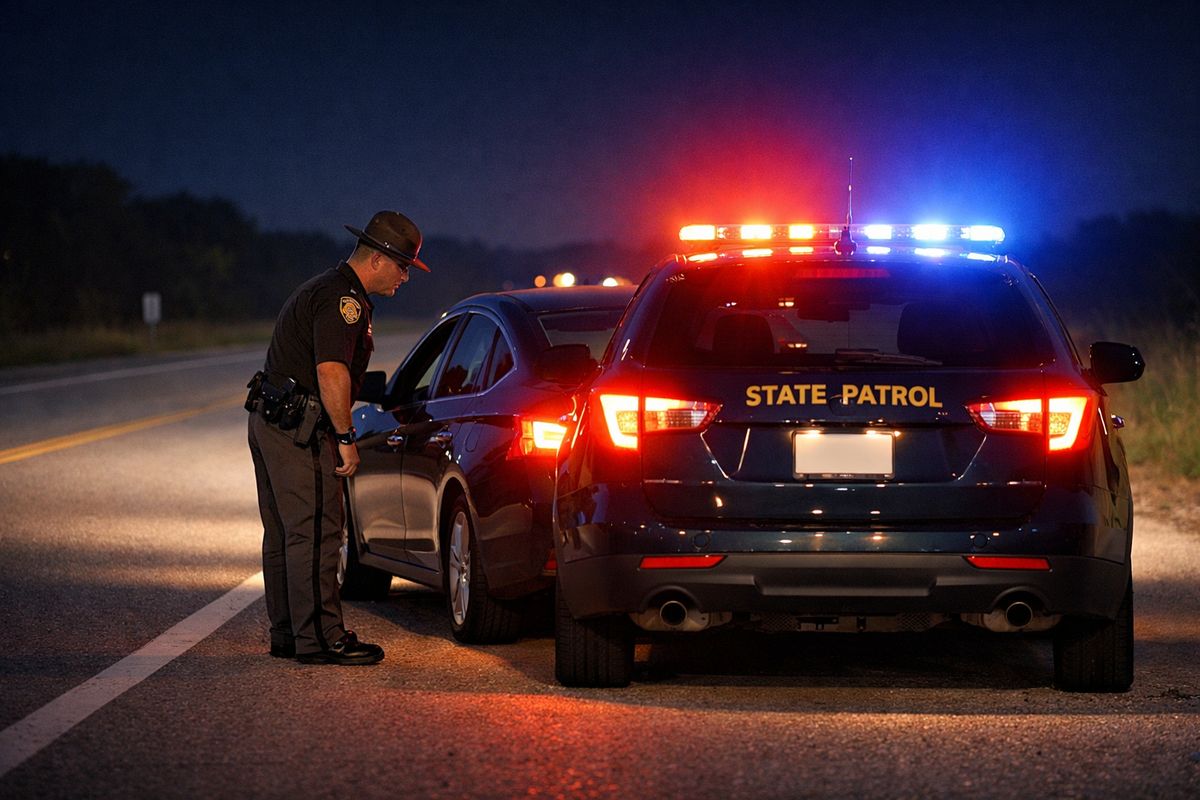
A typical case begins with a traffic stop or a police response to a crash, disabled vehicle, or report from another driver. Officers then question the driver, observe physical signs, and often request field sobriety testing. A preliminary breath test may also be used before arrest, according to Wisconsin DOT materials.
If the officer concludes there is probable cause, the person is arrested and taken for further processing. Booking, citation or complaint paperwork, and notice of license-related action usually follow. The details vary by county, but the overall sequence is consistent across the state.
Chemical Testing and Wisconsin’s Implied Consent Law
Wisconsin’s implied consent law means licensed drivers are deemed to have consented to chemical testing for intoxication, according to the Wisconsin Department of Transportation and state legal summaries. After arrest, police may request an evidentiary breath, blood, or urine test depending on the circumstances.
Breath testing is common in alcohol cases, while blood testing often appears in accidents, drug-related allegations, or situations involving unavailable breath equipment. Urine testing is less common but remains part of the statutory framework. The evidentiary result becomes a central part of both the criminal or forfeiture case and the driver’s license consequences.
Refusing a Test and the Separate Refusal Consequences
Refusal is not a simple way around an OWI case. Wisconsin law treats refusal as a separate legal problem with its own penalties and hearing process, according to state implied-consent materials and defense attorneys across Wisconsin.
A refusal allegation can trigger additional license consequences even before the OWI charge is resolved. It can also become damaging evidence in the underlying case. Detailed discussions of the separate penalties tied to declining an evidentiary chemical test often focus on how quickly deadlines begin after the arrest.
Penalties for an OWI in Wisconsin
Wisconsin structures OWI penalties to escalate sharply with prior offenses and aggravating facts. According to the Wisconsin Department of Transportation, that escalation affects fines, incarceration exposure, revocation periods, ignition interlock requirements, treatment obligations, and vehicle-related sanctions.
First-Offense OWI
A first OWI in Wisconsin is often treated differently from later offenses, but “different” does not mean minor. Wisconsin DOT materials report that a first offense usually carries a civil forfeiture rather than a criminal conviction, yet still includes significant fines and surcharges, license revocation, alcohol assessment requirements, and ignition interlock in qualifying cases such as high BAC.
That first-offense label also misleads people about practical impact. Insurance increases, work-related problems, and public record consequences can follow even when the case is not charged as a crime. The short version is simple: first offense does not mean no consequences.
Second and Subsequent Offenses
Second and later OWI offenses become criminal matters and carry increasingly severe punishment. According to Wisconsin DOT summaries, penalties rise through longer revocations, mandatory jail or prison exposure, greater fines, longer IID requirements, and stronger vehicle-related sanctions.
Repeat offenses are where Wisconsin’s system becomes especially unforgiving. Prior convictions or qualifying prior incidents are used to increase the level of the new case, and the timeline of prior offenses matters. Many defendants facing a later arrest examine how previous impaired-driving cases stack up in Wisconsin because the counting rules often determine whether the new charge remains a misdemeanor or becomes a felony-level case.
Penalty Enhancers That Raise the Stakes
Certain facts increase the seriousness of an OWI case from the outset. Wisconsin legal sources and DOT materials identify high BAC, a minor passenger, bodily injury, death, driving while suspended or revoked, and substantial prior history as major enhancers.
These facts affect charging, bond conditions, sentencing exposure, and negotiating posture. Injury and death cases can move far beyond the framework people associate with routine OWI arrests, and they often overlap with separate felony analysis discussed in guides to when an impaired-driving case turns into an injury-based felony.
Driver’s License Consequences and Related Restrictions
License consequences are often the most immediate effect of an OWI arrest. According to the Wisconsin Department of Transportation, the case in court and the status of driving privileges are related but not identical, which is why many drivers become confused about what has already happened and what still lies ahead.
Revocation, Suspension, and Waiting Periods
Wisconsin distinguishes between different forms of loss of driving privilege, including suspension and revocation. DOT materials explain that these terms are not interchangeable. A suspension is generally temporary and may end after a set period or condition, while a revocation requires a formal period to pass and often additional steps before reinstatement.
OWI-related consequences can arise from the arrest process, the test result, a refusal finding, or the final case outcome. That layering is what causes confusion. A person can be dealing with more than one license issue at the same time.
Occupational License and Limited Driving Privileges
An occupational license is a limited license that allows approved driving for specified purposes such as work, school, household needs, or treatment, according to Wisconsin DOT materials. It is not unrestricted driving, and the approved hours, routes, and purposes matter.
Eligibility depends on the type of revocation or suspension, timing, and compliance with other requirements. In practice, the occupational license serves as a narrow exception, not a return to ordinary driving privileges.
Ignition Interlock Device Requirements
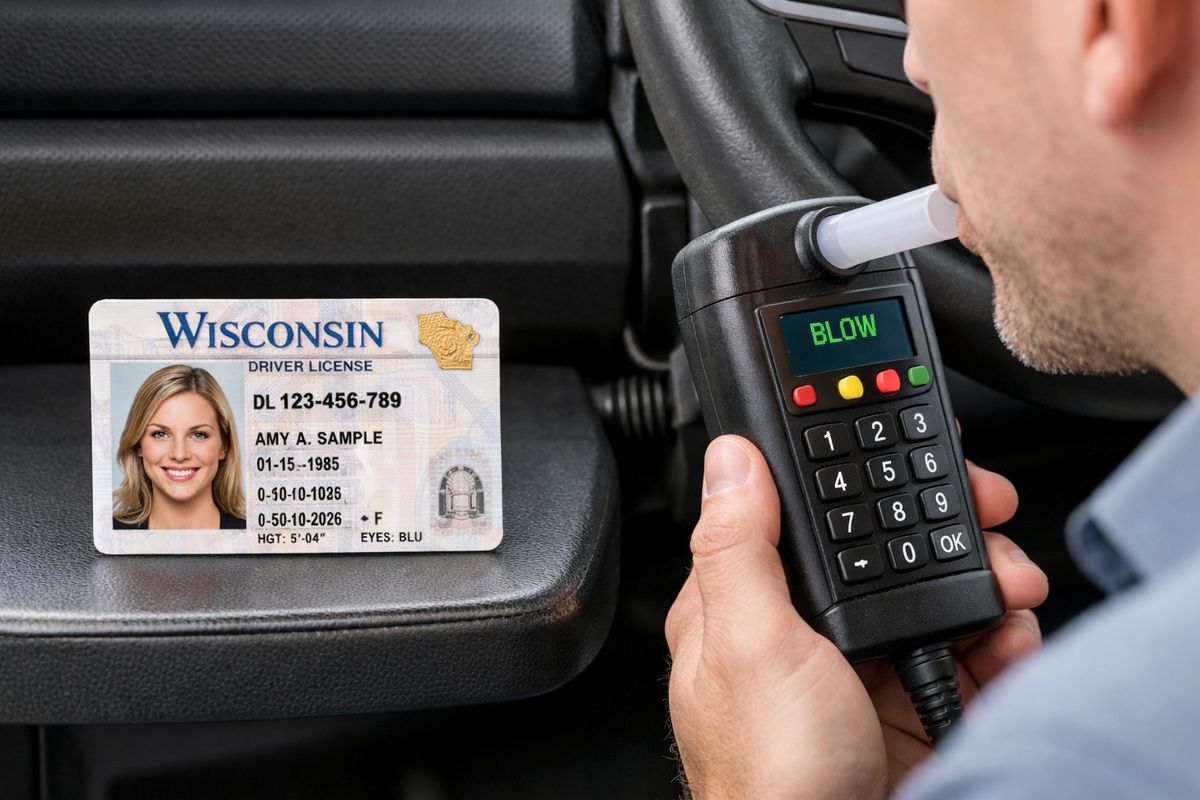
Wisconsin requires an ignition interlock device, or IID, in a range of situations, especially high-BAC cases and repeat offenses, according to the Wisconsin Department of Transportation. The device requires a breath sample before the vehicle starts and may require additional samples while the vehicle is being operated.
For drivers, IID means ongoing cost, scheduling, monitoring, and compliance obligations. Violations can create fresh legal trouble or delay restoration of full driving privileges. Day to day, it becomes one of the most visible parts of the OWI penalty structure.
Special Situations That Change an OWI Case
Some OWI cases carry extra consequences because of the driver’s age, license type, or prior record from another state. Wisconsin law applies the same basic impaired-driving framework, but these surrounding facts change the stakes quickly.
OWI for Drivers Under 21
Underage drivers face separate alcohol rules that interact with OWI enforcement. Wisconsin-focused legal sources report that drivers under 21 can face consequences tied to very low alcohol concentrations under the state’s not-a-drop framework, apart from a standard adult OWI analysis.
That lower tolerance is why underage cases need separate attention. Many families and young drivers review Wisconsin’s under-21 alcohol-driving rules and penalties because the assumptions that apply to adult first offenses often do not fit minors.
Commercial Drivers and CDL Holders
Commercial drivers face stricter professional and licensing consequences, according to transportation regulations and Wisconsin legal commentary. A CDL holder can suffer major employment fallout even when the arrest occurred in a personal vehicle and even when the BAC is below the standard 0.08 threshold used for most noncommercial drivers.
The employment risk is immediate. A commercial license often supports the driver’s income, and an OWI arrest can interfere with qualification, retention, or insurability before the court case is finished.
Out-of-State Drivers and Prior Convictions From Elsewhere
Wisconsin’s use of the term OWI does not insulate out-of-state drivers from consequences back home. Licensing agencies share information, and another state may treat a Wisconsin OWI as the equivalent of that state’s DUI or DWI for suspension and record purposes, according to legal practitioners.
Prior convictions from other jurisdictions can also affect the level of a new Wisconsin case. Terminology differences across states do not erase prior history. Courts look at substance over label.
The Longer-Term Impact of an OWI Charge
The court penalty is only part of the cost. Competitor materials, insurers, and legal analysts consistently identify insurance, employment, and record consequences as the effects that last longest.
Insurance, Employment, and Professional Licensing
Insurance premiums often rise after an OWI arrest or conviction, according to insurer underwriting practices described in legal and consumer guidance. For some drivers, coverage becomes more expensive for years. Employers may also view an OWI as relevant when the job involves driving, public trust, supervision of others, or professional credentials.
Licensed professionals face additional scrutiny. Nursing boards, teaching authorities, commercial transportation employers, and other regulated fields often require disclosure of criminal or alcohol-related incidents.
Criminal Record and Background Check Questions
Record treatment in Wisconsin depends on the offense level and disposition. A first offense is often handled as a civil forfeiture, while later offenses become criminal matters, according to Wisconsin legal summaries. But even where the first offense is not a crime, the arrest record, court record, and driver-history consequences remain highly relevant.
That distinction matters on background checks. Arrest, charge, forfeiture adjudication, and criminal conviction are not identical, but each can appear in different reporting systems and screening contexts.
Financial Costs Beyond Court Fines
The listed fine is rarely the full cost of an OWI case. Additional expenses often include towing, storage, chemical testing fees, reinstatement costs, IID installation and monitoring, alcohol assessment, treatment programming, occupational-license fees, and insurance consequences.
For many defendants, those secondary costs exceed the court-imposed forfeiture or fine itself. The financial hit also arrives in stages, which makes the case feel more expensive over time rather than all at once.
Common Misunderstandings About OWI in Wisconsin
Several misunderstandings appear repeatedly in public searches and law-firm FAQs. Wisconsin law and agency materials cut against each one.
“It Was Only a Parked Car, So It Does Not Count”
A parked car does not end the case. If the state can prove the person operated the vehicle under Wisconsin’s definition, the fact that the vehicle was not observed traveling down the road does not eliminate exposure.
That is why “operating” remains one of the first terms defense lawyers examine. The factual details matter, but the misconception itself is wrong.
“A First Offense Is No Big Deal”
A first offense carries serious consequences even when it is treated as a civil matter rather than a crime. Wisconsin DOT guidance identifies fines, surcharges, revocation, assessments, and possible IID requirements. Employment and insurance effects often follow as well.
The phrase “no big deal” does not survive contact with the actual process.
“Refusing the Test Solves the Problem”
Refusal creates a second problem. According to Wisconsin implied-consent rules, it triggers its own penalties and separate proceedings. It does not erase the OWI allegation, and it often adds license risk.
That is why refusal issues are treated as pivotal from the first days after arrest.
What People Commonly Ask After an OWI Arrest
Is OWI the Same as DUI in Wisconsin?
Wisconsin uses OWI as the formal legal term, according to the Wisconsin Department of Transportation. DUI remains common in public conversation, online searches, and out-of-state reporting, but Wisconsin court and agency materials use OWI.
Is a First OWI a Crime in Wisconsin?
Generally, a first offense in Wisconsin is treated as a civil forfeiture rather than a criminal offense, according to Wisconsin legal summaries and DOT guidance. That analysis changes when aggravating facts or qualifying prior history are present.
How Long Does an OWI Stay on a Record?
Wisconsin legal sources report that prior OWI history remains highly relevant for future charging and sentencing. The practical effect is long lasting, especially for repeat-offense analysis and driver-record consequences.
When Does It Make Sense to Speak With a Wisconsin OWI Lawyer?
Wisconsin defense practitioners consistently report that attorneys are often involved immediately after arrest because testing issues, refusal allegations, court dates, and license consequences begin early. Many defendants review how to evaluate defense counsel for an impaired-driving case in Wisconsin soon after release because early case decisions affect both the court track and driving privileges.
Frequently Asked Questions
Does Wisconsin call it OWI or DUI?
Wisconsin formally uses OWI, short for Operating While Intoxicated, according to the Wisconsin Department of Transportation. DUI remains an informal shorthand used by many drivers, insurers, and websites.
Can a person get an OWI while sitting in a parked car?
Yes, according to Wisconsin-focused legal sources. If the facts show the person operated or activated the vehicle under the state’s legal definition, a parked-car setting does not automatically prevent an OWI charge.
What BAC is illegal for an OWI in Wisconsin?
For most drivers, the prohibited alcohol concentration is generally 0.08, according to Wisconsin DOT guidance. Lower thresholds can apply to certain drivers, including those with prior OWI history or commercial-license obligations.
Is refusing a chemical test better than taking it?
No, according to Wisconsin implied-consent law summaries. Refusal triggers separate consequences and does not eliminate the underlying OWI allegation.
How long does an OWI case usually take in Wisconsin?
The timeline varies by county, court calendar, testing issues, and whether the case involves refusal or repeat-offense allegations. Many defendants look at how Wisconsin OWI case timelines usually unfold because the process often extends beyond the initial arrest and license notice.
Nathan Dineen has built a reputation on proven results, dedicated client service, and aggressive DUI and criminal defense representation. Nationally recognized and trusted by clients throughout Wisconsin, Nate has been named among the Top 100 Trial Lawyers, holds a 10.0 Superb Avvo Rating, and has earned Super Lawyers recognition 11 times, including a 2026 Super Lawyers designation. For those seeking an experienced attorney in Wisconsin, contact Nate to discuss the case and receive personalized guidance from one of the state’s most respected criminal defense lawyers.

About Nate Dineen
Wisconsin legal insights from the DUI Defense WI team.