How Long Does a DUI Case Take in Wisconsin?
If you are searching how long does a DUI case take in Wisconsin, the frustrating answer is that your case can wrap up in weeks or stretch for many months. The part that matters is not just the charge, it is where your case slows down, which deadline hits first, and whether it stays simple or turns into a fight.
Why DUI case timing varies
A Wisconsin DUI, usually charged as OWI, does not move on one fixed clock. A first offense often moves faster because it is usually a civil traffic matter, while later offenses, injury cases, and refusal cases can trigger a criminal process with more hearings and more paperwork. If you are still sorting out what an OWI charge means in Wisconsin, that distinction explains a lot of the timing.
The broad pattern is simple. Cases move fastest when charging is straightforward, evidence is not heavily contested, and the case ends in an early plea. Cases take longer when blood testing, video review, suppression motions, or court congestion get involved.
Average Wisconsin DUI timelines
Statewide court data shows Wisconsin case timing varies sharply by case type. The Wisconsin Court System’s annual reports show misdemeanor cases often resolve within months, while felony matters take longer because of added hearings and scheduling pressure (Wisconsin Court System annual reports). Nationally, the Bureau of Justice Statistics found many misdemeanor cases resolve in under six months, but felony cases routinely run longer (BJS criminal case processing).
First-offense case ranges
A first-offense Wisconsin OWI often resolves in about 1 to 4 months if you plead early and no major evidentiary issue needs litigation. That lines up with common municipal and circuit court scheduling patterns across Wisconsin counties, where first appearances and follow-up dates are often set a few weeks apart (Wisconsin circuit court access and calendars).
Some first-offense cases finish even faster, especially if the citation is filed promptly and the case settles at or shortly after the first court date. But that quick result is not automatic, and it should not be confused with your separate license timeline.
Criminal DUI case ranges
Second and later OWI offenses, OWI causing injury, and other criminal DUI cases usually take longer, often around 3 to 9 months, and sometimes more. Criminal filing decisions, formal charging, discovery exchange, and pretrial motion practice all add time. Wisconsin treats repeat impaired-driving cases more seriously, and that usually means more process, not less. For context on escalating penalties, see how prior drunk driving cases stack up in Wisconsin.
Trial versus plea timing
The biggest split is plea versus trial. A negotiated resolution may happen in a few months. A trial-bound case can take 6 to 12 months or longer, especially in a busy county. It is like switching from the express lane to a road full of stoplights. Every motion date, witness issue, and calendar reset adds another wait.
What happens right after arrest
The first hours and days after arrest set the pace. This is when you get booked, released, handed paperwork, and told what comes next.
Arrest, booking, and release
After an OWI arrest, booking and release often happen within several hours, though it can last longer depending on jail intake, bail conditions, testing, and transport. In some counties, a late-night arrest can turn into a long morning of waiting on procedure. That first stretch feels small compared with the whole case, but it affects everything that follows.
Citation or formal charges
In many first-offense cases, you receive a citation fairly quickly. In criminal OWI cases, formal charges may come later through a complaint filed in court. That gap matters. Your case does not really start moving in court until the charging document is filed and a hearing is set. If your stop itself is questionable, timing can shift further once an attorney starts looking at whether the traffic stop can be challenged.
Initial paperwork deadlines
Some deadlines move fast. Wisconsin’s implied consent law gives a short period to challenge a refusal revocation, generally 10 days after notice for a refusal hearing request under Wis. Stat. § 343.305 (Wisconsin Legislature, implied consent law). That is one reason the first few days matter more than most people expect.
Wisconsin court process by stage
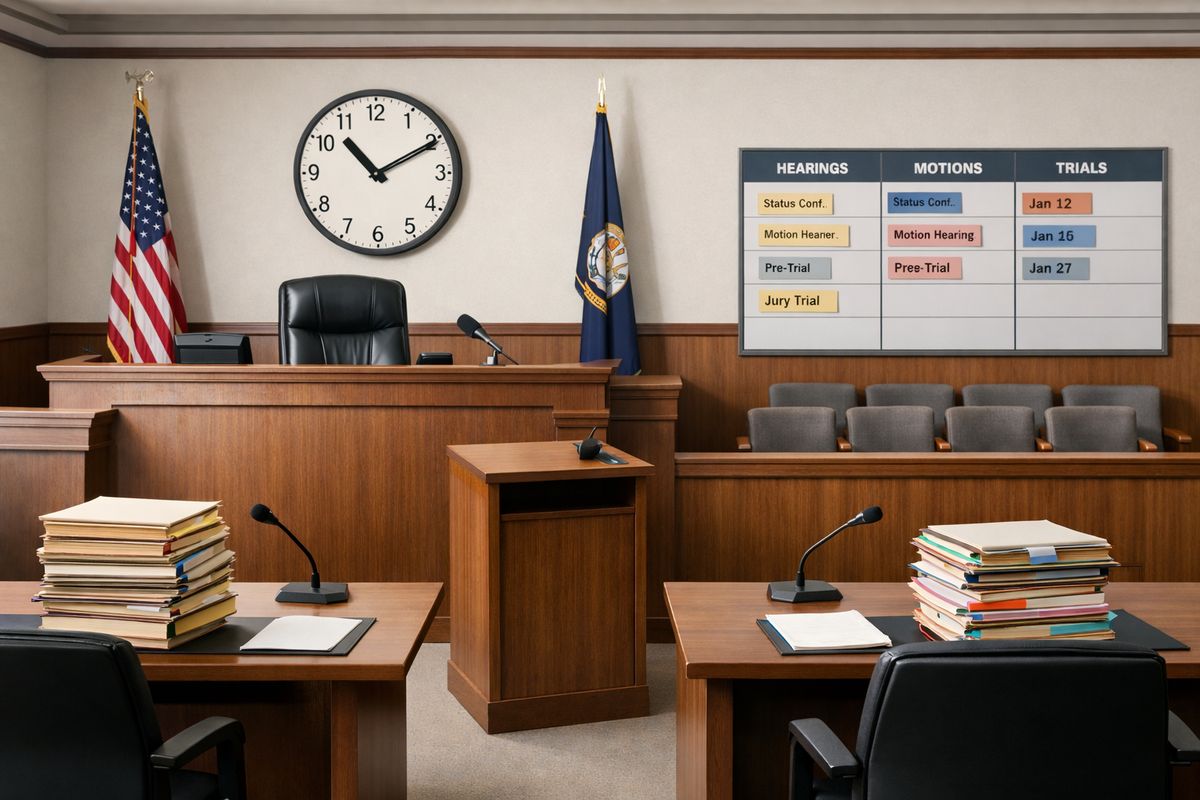
Most OWI cases follow a familiar sequence, and each stage adds its own waiting time.
First appearance or arraignment
Your first court date may happen within a few weeks after citation or charging, though county calendars vary. At this stage, the court addresses the charge, your plea, conditions of release if needed, and the next setting.
Pretrial conferences and motions
The middle phase often lasts the longest. Discovery gets exchanged, police reports and video get reviewed, and any legal challenges get scheduled. Motions attacking probable cause, the stop, field sobriety testing, or chemical testing can add weeks or months. If you need a primer on what police must have before making the arrest, that issue often sits right at the center of pretrial timing.
Plea deal or resolution point
A large share of DUI cases resolve before trial. This often happens after evidence review but before the court blocks off trial time. Evaluations, negotiations, and county scheduling all tend to meet here, which is why many cases end in the 2 to 6 month range rather than at the very beginning.
Trial and sentencing timeline
If your case goes to trial, expect added delay. Jury coordination, officer availability, expert testimony, and court backlog all matter. Sentencing can happen the same day in some cases, especially lower-level matters, or later in more serious criminal cases.
License suspension and DMV timing
Your court case and your driving privileges do not always move together. That catches a lot of people off guard.
Administrative revocation deadlines
After a refusal or certain chemical-test results, the administrative side can move quickly. Missing the hearing request deadline can change your license status before your court case is close to finished. Wisconsin’s refusal procedures and revocation periods are set by statute (Wisconsin Legislature, refusal and revocation procedures).
Occupational license waiting periods
Occupational license timing depends on filings, eligibility, SR-22 insurance requirements, and ignition interlock steps where required. The Wisconsin Department of Transportation outlines eligibility and application requirements, and processing can take days or longer depending on what is missing (WisDOT occupational license information). If your case includes a refusal issue, it helps to understand how refusing a breath test changes the picture.
Court case versus license case
Here is the catch: your license issue can change quickly while your court case stays open for months. Administrative action is one track. The court case is another. They overlap, but they are not the same thing.
What makes a case take longer
A case rarely drags out for just one reason. Usually, delays stack up.
Prior offenses and enhancements
Prior convictions, high BAC allegations, minors in the vehicle, and injury claims all add complexity. More serious charges mean more records to collect, more legal issues to address, and often more court dates. If your case involves injury or felony exposure, timing usually expands fast, especially once you get into when an impaired-driving case turns into a felony-level problem.
Refusal, testing, and evidence issues
Evidence fights slow cases down. Blood tests can require lab processing. Body cam and squad video need review. Experts may need time to examine testing methods. Once chemical evidence becomes the main battleground, quick resolution usually disappears.
County court backlog differences
County differences are real. A crowded morning docket at the Milwaukee County Courthouse does not move like a lighter calendar in a smaller county. Wisconsin court statistics and local calendar access both show uneven workloads across counties (Wisconsin court statistical reports).
Continuances and scheduling conflicts
Simple postponements are one of the biggest reasons a short case becomes a long one. Witness scheduling, lawyer conflicts, officer availability, and courtroom congestion can all push dates back by weeks at a time.
How Wisconsin timelines compare
Wisconsin is not uniquely fast or uniquely slow. It lands pretty close to broader court patterns.
Wisconsin versus national patterns
National Center for State Courts reporting has shown misdemeanor and traffic calendars generally move faster than felony dockets, but trial capacity remains a bottleneck in many jurisdictions (NCSC court backlog resources). Wisconsin fits that pattern. First-offense OWI matters often resolve relatively quickly. Criminal and trial-bound cases do not.
Pandemic and post-pandemic delays
Court slowdowns from 2020 through the backlog years after it pushed many hearings and trials further out across the country. The Conference of State Court Administrators and NCSC both tracked prolonged delay pressure even after courts reopened more fully (pandemic-era court backlog trends). More recent calendars look better than the worst backlog period, but trial scheduling in busier counties can still run long.
What the timing means for you
A short case is not always better, and a longer case is not always bad. Timing changes stress, cost, driving restrictions, and strategy.
Fast resolutions and tradeoffs
A quick plea can feel like relief. Sometimes that is the right move. But speed can cost you if video, blood records, or stop issues have not been fully reviewed yet. If you are just getting oriented, it helps to read what to do in the first stretch after a Wisconsin DUI arrest.
Longer cases and possible benefits
More time can create room to review evidence, negotiate better terms, complete assessments, or fix practical problems before the next hearing. A longer timeline is inconvenient, but it can also create options.
When to talk to a lawyer
The smartest move is early clarity. Gather your citation, bond paperwork, notice of intent, test paperwork, and every court date sheet you have, then get your timeline reviewed as soon as you can.
Nathan Dineen has built a reputation on proven results, dedicated client service, and aggressive DUI and criminal defense representation. Nationally recognized and trusted by clients throughout Wisconsin, Nate has been named among the Top 100 Trial Lawyers, holds a 10.0 Superb Avvo Rating, and has earned Super Lawyers recognition 11 times, including a 2026 Super Lawyers designation. If you are looking for an experienced attorney in Wisconsin, contact Nate today to discuss your case and receive personalized guidance from one of the state’s most respected criminal defense lawyers.
Frequently Asked Questions
How long does a first DUI case usually take in Wisconsin?
A first-offense OWI often takes about 1 to 4 months from arrest to resolution, especially if it ends in an early plea and there are no major evidence disputes.
Does a second or third DUI take longer?
Yes. Criminal OWI cases usually take longer because charging is more formal, penalties are higher, and pretrial litigation is more common. A 3 to 9 month timeline is common, and trial can push it further.
Can your license be suspended before the court case ends?
Yes. Administrative license action can happen on a separate timeline, especially in refusal cases or after certain test results, so your driving status may change while your court case is still pending.
What part of the case usually causes the biggest delay?
Pretrial motions, evidence review, lab testing, and calendar congestion are frequent delay points. Trial scheduling is often the single biggest reason a case stretches out.
Is a faster DUI case always better?
No. A fast resolution can help you move on, but it can also mean important evidence was not fully reviewed. The better outcome is not always the faster one.
How can you keep your case from taking longer than necessary?
Keep every court date, respond quickly to document requests, track license deadlines, and get legal advice early so avoidable delays do not pile up.

About Nate Dineen
Wisconsin legal insights from the DUI Defense WI team.