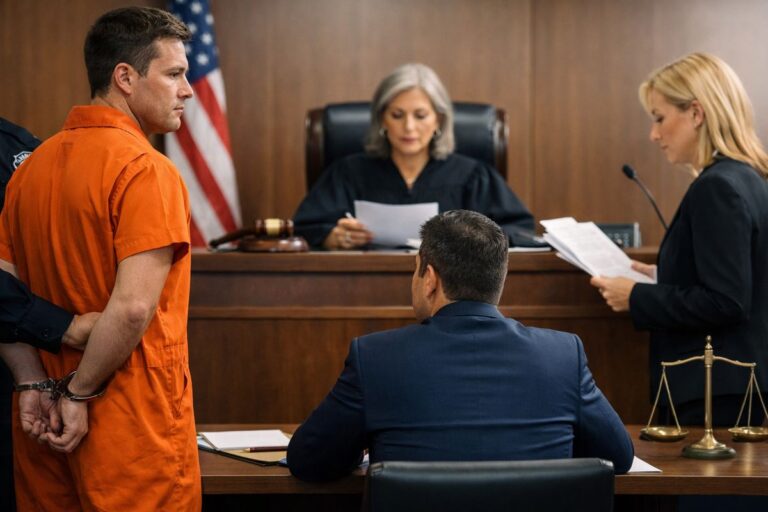
Domestic Violence Charges in Wisconsin: What Happens Next

Getting hit with domestic violence charges Wisconsin can make the next few days feel like a blur. One argument, one police call, and suddenly you are dealing with jail, release conditions, court dates, and rules that can affect where you sleep tonight. This guide breaks down what the charge usually means, what happens next, and where the real risks show up fast.
In Wisconsin, domestic violence is not a single standalone crime. It is a label attached to certain alleged crimes when the accusation involves a qualifying relationship, such as a spouse, former partner, co-parent, adult family member, or adult household member. That label changes how police respond, how release conditions get set, and how your case can affect daily life.
What you will learn:
- what counts as a domestic violence case
- what happens after arrest
- how court dates usually unfold
- what penalties and side effects matter most
- how restraining orders fit in
- what a defense lawyer actually does
What Counts as Domestic Violence in Wisconsin
The first thing to clear up is simple: the words “domestic violence” usually describe the context, not the entire charge. A criminal complaint might list battery, disorderly conduct, criminal damage to property, stalking, sexual assault, or threats, then add a domestic abuse enhancer or designation because of the relationship involved.
That matters because a heated argument at home can get treated differently from a similar argument in a parking lot. Wisconsin law treats domestic abuse incidents as a special category for arrest decisions, release conditions, and no-contact rules. The underlying allegation still controls the actual charge and possible penalty.
The relationships that trigger a domestic violence designation
In Wisconsin, the domestic violence label usually applies when the accusation involves a spouse or former spouse, a dating partner or former dating partner in some situations, someone you share a child with, an adult family member, or an adult who lives or lived in the same household.
Here’s the thing: that relationship question gets answered early, often at the arrest stage. If police decide the people involved fit one of those categories, the case can be processed as domestic abuse even if the facts feel messy or both sides were yelling.
The kinds of conduct that often lead to charges
Some of the most common allegations are battery, which usually means causing bodily harm, disorderly conduct tied to threats or violent behavior, damage to phones, doors, or walls, stalking, and sexual assault allegations. Misdemeanors are common, but felony charges can show up quickly if the accusation involves strangulation, serious injury, repeated conduct, a weapon, or violation of an order.
Children in the home can also affect how the case is viewed. So can photos of injuries, prior incidents, and 911 recordings. If you want a broader picture of the steps after any arrest, this overview of how Wisconsin criminal cases usually move after an arrest helps fill in the bigger process.
What Happens Right After an Arrest
The first 24 to 72 hours are usually the most disorienting part. After arrest, you are taken for booking, searched, photographed, and held while the case gets entered and release conditions are considered. In a place like Milwaukee County or Dane County, that can mean hours in an intake area waiting for the next step while nobody tells you much beyond the basics.
Then come bond conditions. Sometimes you get released fairly quickly. Sometimes you stay in custody until court. Either way, the release terms can be stricter than expected, especially if the accusation involves a partner, shared home, or claimed injury.
Wisconsin’s mandatory arrest rule and why police often make an arrest
Wisconsin follows a mandatory arrest approach in many domestic abuse situations. Under Wisconsin Statutes section 968.075, if officers have probable cause, meaning enough facts to reasonably believe a domestic abuse crime happened, an arrest often follows.
That catches a lot of people off guard. An alleged victim asking police not to arrest you does not automatically stop it. The same goes for mutual arguing. Once officers decide probable cause exists, the decision can move out of your hands fast.
No-contact orders, firearm limits, and other release conditions
The catch is that release is often the start of the hardest part. You may be ordered not to contact the other person at all, not to return home, not to possess firearms, and not to go to certain places. Even trying to send a quick text about clothes, medication, or a child pickup can turn into a violation if the order forbids contact.
Some firearm limits come from bond conditions, and some can become more serious later depending on the case outcome or any injunction entered under Wisconsin’s domestic abuse restraining order law. If your case also involves questions about evidence found in a home, vehicle, or shared space, this explanation of being accused based on control rather than direct possession can be useful.

Your First Court Dates and How the Case Moves Forward
Court usually moves in a sequence, even if it feels chaotic from the outside. You get an initial appearance, formal charges are filed or reviewed, pretrial hearings follow, motions may be argued, and then the case ends in a plea or trial.
Knowing the order helps because you stop guessing. Most cases do not get resolved at the first hearing. Most also do not vanish just because emotions cool down after the arrest.
Initial appearance, bail, and formal charges
At the initial appearance, the court looks at bond, conditions of release, and the allegations in the complaint. The criminal complaint is the document that officially lays out what the prosecution says happened. That means the charges after arrest can change once the complaint is filed.
You might have been arrested for one thing and later see a different count, an added enhancer, or a revised description of the facts. That is normal in criminal court, even if it feels anything but normal to you.
Pretrial hearings, plea options, and trial
The middle of the case is where most of the real work happens. Pretrial hearings deal with scheduling, evidence issues, possible negotiations, and updates on whether the case may settle. A plea bargain, meaning an agreement to resolve the case without trial in exchange for a certain plea and outcome, can happen here.
If no agreement is reached, motions may challenge statements, police conduct, or admissibility of evidence. Witnesses matter. So do missing recordings, conflicting stories, and timeline problems. If the case does not settle, it goes to trial.
What prosecutors look at before deciding how hard to push the case
Prosecutors usually look beyond the current mood of the people involved. They often focus on the 911 call, body camera footage, photos, medical records, witness accounts, prior police contacts, and any visible injuries. That is why cases often continue even when somebody later wants to back away.
If you have heard that charges should disappear because the other person wants to “drop” them, that is usually not how it works. A clearer explanation is here: why these cases often keep moving anyway.
Penalties and Consequences If You’re Convicted
A conviction can bring more than one kind of damage. There is the sentence the court imposes, and then there is the fallout that keeps showing up after the hearing is over.
That second part often hits harder than expected.
Criminal penalties for misdemeanor and felony domestic violence-related offenses
Penalties depend on the underlying offense, your prior record, and the facts in the complaint. A misdemeanor battery case may expose you to jail, probation, fines, and counseling conditions. A felony case involving strangulation, substantial battery, repeated abuse, or weapon allegations can bring prison exposure and much stricter supervision.
Domestic violence is not a magic label that creates the same sentence in every case. The underlying charge drives the penalty. But once the domestic abuse context is attached, courts and prosecutors often treat the case with more urgency.
Collateral consequences that follow you outside the courtroom
Collateral consequences means the extra fallout outside the formal sentence. That can include job trouble, licensing problems, housing issues, immigration risks, custody complications, and firearm restrictions that do not feel temporary at all.
For some people, the no-gun consequence alone changes work, hobbies, and family routines overnight. For others, the bigger problem is how the case shows up in a divorce or placement dispute. If you want to understand the wider ripple effect of a criminal conviction, this piece on the long tail of a conviction beyond the courtroom gives a useful comparison.
Restraining Orders, Injunctions, and Related Family Court Issues
Criminal court and protective orders are related, but they are not the same thing. You can be dealing with both at once, and mixing them together usually causes mistakes.
A criminal case is the prosecution. A restraining order or injunction is a separate civil process that can place its own limits on contact and location.
Temporary restraining orders and longer-term injunctions
A temporary restraining order is usually the fast, short-term protection entered before a full hearing. A longer injunction can be ordered after a hearing if the court finds legal grounds to do it. These orders can require no contact, staying away from a home, avoiding a workplace, or not going near certain other places.
Violating an injunction or temporary order can trigger new criminal exposure. So can violating criminal bond terms, even if the other person invited contact. That detail trips people up all the time.
How criminal charges can affect custody, placement, and the home
Domestic violence allegations can spill into divorce, paternity, custody, and placement cases very quickly. Criminal court may control whether you can go home right now. Family court may control where a child stays, what placement looks like, and how exchanges happen later.
Think of it like two tracks running side by side. Different judges, different rules, same real-life problem. And yes, each track can affect the other.
How a Wisconsin Defense Lawyer Can Help You Protect What Matters
A defense lawyer does more than stand next to you in court. The job is to test the accusation, review reports and recordings, look for gaps, push to change unfair no-contact terms when possible, prepare for hearings, and build leverage for negotiation or trial.
That matters because domestic violence cases move on paperwork, conditions, and early impressions. If nobody challenges weak spots, the case can harden fast. This is similar to what happens in other fast-moving criminal cases, including arguments over whether police had enough legal basis to act in the first place.
Common defense approaches in domestic violence cases
Possible defense themes include false allegations, self-defense, lack of intent, inconsistent statements, missing evidence, credibility issues, and constitutional problems involving statements or searches. The right strategy depends on the actual facts, not on grabbing random defenses and hoping one sticks.
The trick is to fix the right part of the engine. If the timeline does not work, you attack the timeline. If the body cam undercuts the complaint, you use that. If the bond terms are making daily life impossible, you address that early.
What to do now if you’ve been charged
Start by getting the complaint, bail paperwork, and next court date in one place. Save texts, voicemails, photos, and call logs. Do not contact anyone in a way that breaks an order, even if it seems harmless.
Then get a Wisconsin criminal defense lawyer to review the complaint and release conditions as soon as possible, before the next hearing if at all possible. If you are also sorting through related criminal case timelines, this breakdown of how long a Wisconsin case can take to work through court helps set expectations. Try one thing today: put every court paper and every relevant message in a folder so your lawyer can see the whole picture fast.
Frequently Asked Questions
Can domestic violence charges be dropped in Wisconsin?
Sometimes charges get reduced or dismissed, but the decision belongs to the prosecutor and the court process, not just the complaining witness. Even if somebody asks to drop the case, prosecutors may keep going based on recordings, photos, statements, or prior incidents. For more on that issue, see when dismissal is possible and why it often is not automatic.
Do you have to go to jail after a domestic violence arrest in Wisconsin?
Not always for long, but jail time right after arrest is common. You may be held for booking, waiting on release conditions, or until the first court appearance, depending on the county and the facts alleged.
Can you go back home after release?
Only if your release conditions allow it. Many domestic violence cases come with no-contact or stay-away orders that block you from returning home, even if you own or rent it.
What if the accusation is false?
False allegations happen, and they need a fast, careful response. Messages, body camera footage, witness accounts, timeline issues, and prior statements can all matter when showing the complaint is inaccurate or incomplete.
Will a domestic violence conviction affect gun rights?
It can, yes. Firearm restrictions can come from bond conditions, injunctions, or the conviction itself, depending on the charge and outcome.
Nathan Dineen has built a reputation on proven results, dedicated client service, and aggressive DUI and criminal defense representation. Nationally recognized and trusted by clients throughout Wisconsin, Nate has been named among the Top 100 Trial Lawyers, holds a 10.0 Superb Avvo Rating, and has earned Super Lawyers recognition 11 times, including a 2026 Super Lawyers designation. If you are looking for an experienced attorney in Wisconsin, contact Nate today to discuss your case and receive personalized guidance from one of the state’s most respected criminal defense lawyers.

About Nate Dineen
Wisconsin legal insights from the DUI Defense WI team.