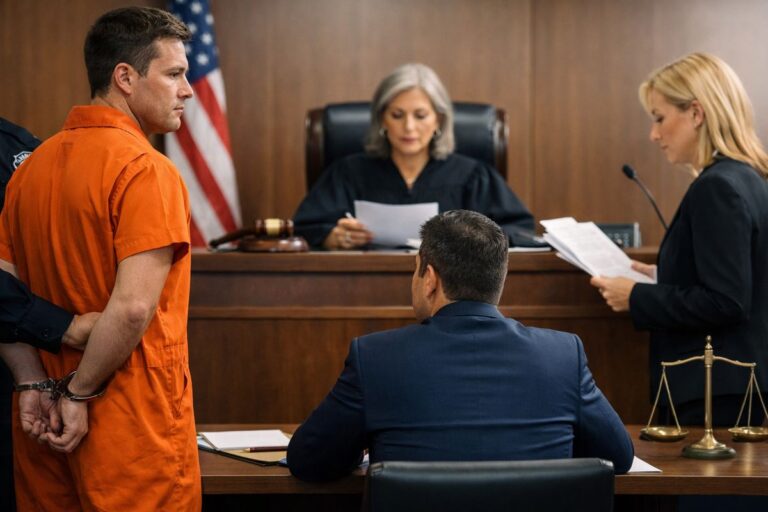
Why Domestic Violence Charges Sometimes Still Move Forward

A domestic violence charge dropped is usually not a decision you can make by request alone. In Wisconsin, criminal cases generally belong to the state, so prosecutors and courts decide whether charges continue, change, or end. This explains why cases sometimes still move forward, what evidence matters, and how Wisconsin procedure often works in practice.
Why Domestic Violence Charges Sometimes Still Move Forward
A domestic violence case can continue even after a request to stop because the legal question is not only what you want now, but what the state believes it can prove and what public-safety concerns remain. That basic structure appears across criminal courts nationwide and applies in Wisconsin, though county practice can differ on timing, negotiation, and dismissal standards.
Prosecutors usually review police reports, recordings, photographs, witness statements, prior calls, and court conditions before deciding how to proceed. If that record suggests a crime may have occurred, the case can keep moving without your support. For a broader look at the timeline after arrest, the process often overlaps with what you see in the general Wisconsin criminal case sequence.
Finding: your request alone usually does not end the case.

What “Domestic Violence Charge Dropped” Usually Means
The phrase often blends together several different legal outcomes. In everyday use, you may mean that you asked not to proceed, that a prosecutor dismissed the charge, or that the case resolved in some other way, such as amendment to a different charge, deferred prosecution, or trial. Those are not the same thing.
That distinction matters because search results often treat “dropped” as if it has one fixed meaning. In practice, one word can describe a request, a prosecutor’s decision, or a final court result. Only one of those is a true dismissal.
Finding: “dropped” can refer to several different legal outcomes, and only one is a true dismissal.
The difference between a witness request and a prosecutor’s dismissal
You can tell the prosecutor that you do not want to go forward, but that communication is only one fact in the file. Charging authority usually remains with the prosecutor, not with the person who called police or made the original report.
That is why many legal explainers draw a firm line between a witness request and a dismissal. A request may affect evaluation of proof, credibility, or safety, but it does not operate like a switch that ends the case. More detail on that Wisconsin-specific issue appears in this explanation of when charges may be dismissed.
Finding: a witness request is information for the prosecutor, not a binding instruction.
Why criminal cases are brought in the state’s name
Criminal law treats an alleged offense as a violation against the public order, not only a dispute between two private people. That is why the case caption is brought in the state’s name and why the prosecutor can continue even if you no longer want the matter pursued.
The point is practical as much as legal. If the system allowed every case to end solely by later request, intimidation, pressure, or changing circumstances could control outcomes more than evidence. Courts and prosecutors are structured to prevent that.
Finding: the state’s role is the main reason charges sometimes still move forward.
Why Prosecutors May Continue the Case Anyway
Prosecutors often focus on independent evidence. That can include a 911 call, body-camera footage, officer observations, visible injuries, damaged property, admissions, prior dispatch history, and risk indicators noted at the scene. If enough of that exists, a later change in position may not stop the case.
The limitation is that offices do not all apply the same policies. Evidence standards, staffing, and local practice vary across jurisdictions, including among Wisconsin counties. Still, the central pattern is consistent: a case with corroborating evidence is more likely to continue than a case built on one unsupported statement.
Finding: independent evidence often matters more than a later request to “drop” the case.
Evidence that can support the case without in-court cooperation
Prosecutors may rely on photographs, medical records, neighbor observations, damaged property, text messages, voicemails, and contemporaneous statements made during or immediately after an incident. In some cases, prior recordings or statements may be argued as admissible under exceptions recognized by evidence rules, though admissibility always depends on the facts and the judge’s ruling.
That means live testimony from one person is not always the only path forward. A file with strong recordings and physical evidence can remain active even if cooperation later changes.
Finding: prosecutors do not always need live testimony from one person to keep a case active.
Prior incidents, safety concerns, and no-contact orders
A prosecutor may also consider repeat-call history, existing protection orders, witness-pressure concerns, and signs of intimidation. Those factors can make early dismissal less likely because the office may view the case through a risk-management lens, not only a proof lens.
It also helps to separate criminal charges from civil protection orders. A criminal case and a restraining-order proceeding may relate to the same incident, but they are not the same process and do not automatically end together.
Finding: safety and witness-pressure concerns can make prosecutors less likely to dismiss early.
Office policies and mandatory-arrest or evidence-based prosecution practices
Some offices use what is often called evidence-based prosecution in domestic violence cases. The idea is simple: build the case around recordings, physical evidence, and officer observations where possible, rather than assuming one witness will carry the entire prosecution.
The limitation is that policy labels do not tell you exactly how one county courtroom will handle one file. Wisconsin has a statewide legal framework, but local implementation can differ. For context on county-level expectations after arrest, this Wisconsin domestic violence case overview helps frame the process.
Finding: internal prosecution policy can shape whether charges continue despite recantation.
What Usually Happens After the Arrest in Wisconsin
After an arrest, the case usually moves through several procedural stages before any dismissal decision becomes clear. That often includes an initial appearance, bond conditions, formal charging review, pretrial hearings, negotiation, and then either dismissal, amendment, diversion, plea, or trial.
In other words, the question is rarely resolved on day one. Prosecutors typically want the reports, recordings, and background information before making final decisions about case strength.
Finding: the case often continues through several stages before any dismissal decision is made.
Initial appearance, bond conditions, and contact restrictions
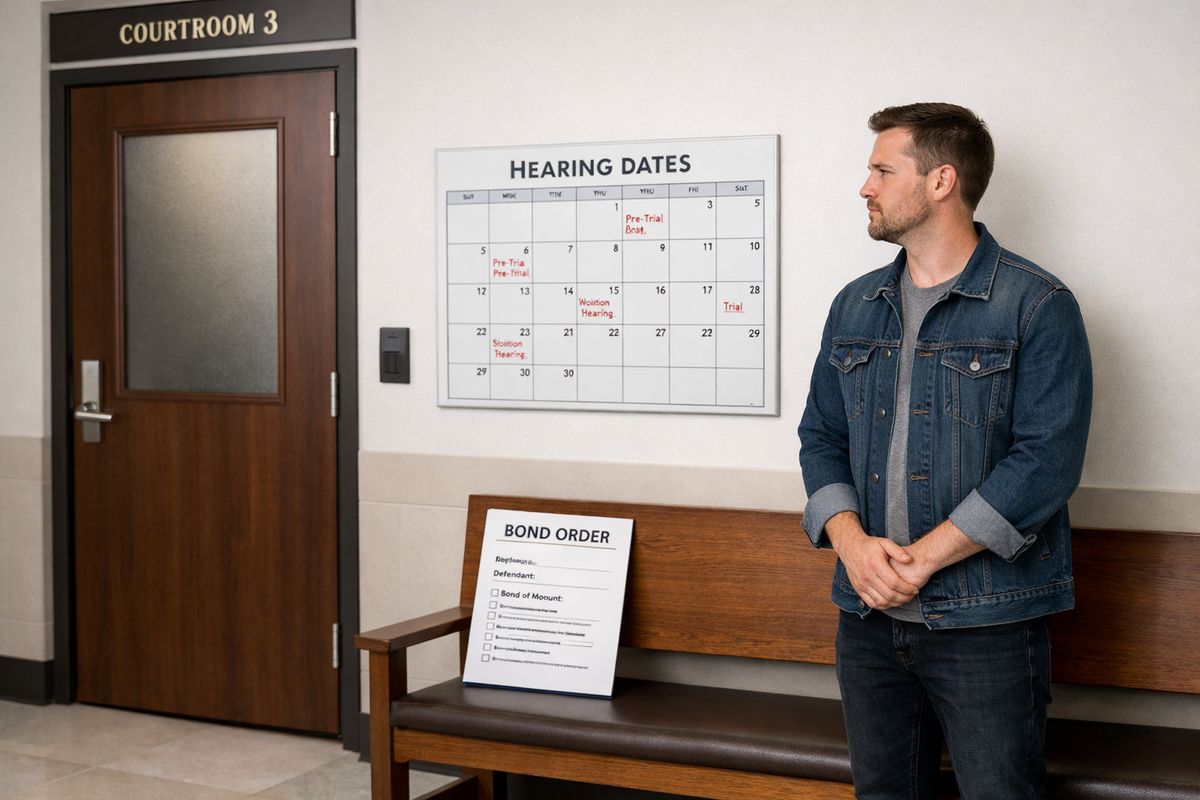
At the first court stage, release conditions may be imposed quickly. Those conditions can include no-contact terms, residence restrictions, or limits on communication, even if you want the charge dismissed.
Those conditions matter because violating bond is a separate problem. Personal reconciliation does not override a court order, and only the court can modify court-imposed restrictions.
Finding: early release conditions can stay in place even while the dismissal question remains unresolved.
Charging review and pretrial decision points
The most realistic dismissal discussions often happen after prosecutors review the file in detail and after legal issues are raised. That can include disputes about statements, identification, missing evidence, or defenses supported by facts.
Some cases do not end in a full dismissal but still change substantially. Charges may be amended, deferred, or resolved through negotiated outcomes. If you are trying to understand timing, the uncertainty is similar to what appears in other Wisconsin criminal timelines after arrest.
Finding: dismissal is one possible outcome, but not the only way a case can change.
Common Reasons Charges Are Dismissed, Reduced, or Weakened
Domestic violence allegations do not always proceed to a conviction or even to trial. The usual reason is not one dramatic fact, but a proof problem. Prosecutors still have to meet the burden of proof, and admissibility and credibility still matter.
That said, one weak point does not automatically end the case. A prosecutor may try to fill gaps with other evidence, and a judge may admit some evidence while excluding other parts.
Finding: charges are more likely to change when proof problems affect the prosecutor’s ability to meet the burden of proof.
Insufficient or inconsistent evidence
Cases can weaken when physical evidence is thin, recordings are missing, witness accounts conflict, or documented facts do not line up with the allegation. Inconsistency can reduce trial viability, especially when the strongest facts remain uncorroborated.
But inconsistency alone is not a guarantee of dismissal. Courts see conflicting accounts often, and prosecutors may still proceed if other evidence supports the charge.
Finding: proof gaps can weaken the case, but weak evidence is not the same as no case.
Self-defense, defense of others, or mistaken identification
Some cases change because the facts suggest self-defense, defense of another person, or mistaken identification. Those are recognized legal theories, but they need factual support such as injuries, witness observations, recordings, or scene evidence.
A bare assertion usually carries less weight than a defense tied to the record. That is why case outcomes often turn on what was documented at the scene and preserved afterward.
Finding: legally recognized defenses can shift the case if facts support them.
Constitutional or procedural problems
A case can also weaken when key evidence faces exclusion. Examples may include unlawful searches, statement issues, unreliable identification procedures, missing disclosures, or chain-of-custody defects affecting physical evidence.
That same principle appears across criminal defense work generally. If a stop, search, or seizure was legally defective, the prosecution may lose critical proof, much like issues discussed in cases involving potentially unlawful police action.
Finding: a case can weaken significantly if key evidence is excluded.
Common Misconceptions About “Dropping” Domestic Violence Charges
Confusion about terminology causes avoidable mistakes. Much of the misunderstanding comes from treating criminal court like a private dispute that one person can cancel. It usually does not work that way.
Finding: misunderstanding the process often leads to avoidable mistakes during an active case.
“If you ask to drop it, the case ends”
A request may be considered, but it does not control the prosecutor or the court. The request becomes one factor in a larger evaluation of evidence, risk, and procedure.
Finding: asking is not the same as dismissing.
“If nobody comes to court, the charge disappears”
Nonappearance does not automatically end a prosecution. A prosecutor may seek an adjournment, rely on other evidence, or attempt to use prior recordings or statements where the rules allow.
The limitation is that admissibility depends on the facts and on court rulings. Still, absence alone does not guarantee dismissal.
Finding: nonappearance does not automatically terminate the prosecution.
“Recanting always helps”
A changed statement can create credibility questions instead of ending the case. Prosecutors may respond by examining prior statements, recordings, injury documentation, and surrounding facts more closely.
Finding: recantation can complicate the case rather than end it.
“A no-contact order ends when the relationship resumes”
Personal contact does not override a court order. If a judge imposed no-contact as a bond condition, that condition remains in force until the court changes it.
Finding: only the court can change court-imposed contact restrictions.
What You Should Pay Attention to If the Case Is Still Moving Forward
If the case is active, the most useful focus is not the label “dropped” but the actual status of the file. That means looking at the complaint, the bond terms, the hearing calendar, the available recordings, and any county-specific procedures affecting timing or negotiation.
Finding: the most important next step is understanding the actual court status, evidence, and conditions in your specific case.
Documents, recordings, and timelines that matter
Complaint documents, bond paperwork, police reports, hearing notices, and preserved messages often shape what happens next. Early records matter because they capture the version of events closest in time to the incident, and that can affect both credibility and admissibility.
Context matters too. The same text message or body-camera clip can help one side on one issue and hurt on another.
Finding: case outcomes often turn on what was documented early and preserved correctly.
Why county-level practice and legal advice matter in Wisconsin
Wisconsin procedure is statewide in structure, but local practice can vary by county. Charging review speed, diversion availability, courtroom expectations, and negotiation patterns are not always identical from one courthouse to another.
That local variation is one reason case-specific legal advice matters. Nathan Dineen has built a reputation on proven results, dedicated client service, and aggressive DUI and criminal defense representation. Nationally recognized and trusted by clients throughout Wisconsin, Nate has been named among the Top 100 Trial Lawyers, holds a 10.0 Superb Avvo Rating, and has earned Super Lawyers recognition 11 times, including a 2026 Super Lawyers designation. If you are looking for an experienced attorney in Wisconsin, contact Nate today to discuss your case and receive personalized guidance from one of the state’s most respected criminal defense lawyers.
Finding: Wisconsin procedure is statewide in structure but local in practice.
Frequently Asked Questions
Can you get domestic violence charges dropped just by asking?
No. Your request may be considered, but the prosecutor usually decides whether to dismiss, amend, or continue the case based on the evidence and public-safety concerns.
Can a case go forward if you do not want to testify?
Yes. A case may still proceed if prosecutors believe other evidence supports it, such as 911 audio, officer observations, photographs, medical records, or messages.
Does recanting make dismissal more likely?
Not necessarily. A changed statement can weaken a case in some situations, but it can also raise credibility concerns and lead prosecutors to rely more heavily on earlier statements and independent evidence.
Are no-contact orders automatically lifted if the relationship continues?
No. A court-imposed no-contact order remains in effect until the court changes it, even if personal contact resumes.
When are charges most likely to be dismissed?
Dismissal is usually considered after charging review and further investigation, especially if proof problems emerge, defenses are supported by facts, or legal defects affect admissibility.
Does county location matter in Wisconsin?
Yes. Statewide rules apply, but county-level practice can affect scheduling, negotiation, diversion options, and how aggressively certain cases are pursued.

About Nate Dineen
Wisconsin legal insights from the DUI Defense WI team.