
Falsely Accused of Domestic Violence? Start Here

A falsely accused domestic violence situation can turn a normal day into a blur fast. The first few hours matter, and the right moves now can protect your case, your custody position, and your daily life before panic makes things worse.
What you’ll need before you do anything else
Get five basics in place right away: a safe place to stay if needed, a way to save messages and records, a notebook or notes app, copies of any court papers, and contact information for a defense attorney or family law attorney. Keep everything in one folder, digital or paper, so you are not digging through screenshots in a parking lot later.
If you have children, medications, work access issues, or a shared home, start thinking practically. Where are you sleeping tonight, how will you get to work, and how will you keep records organized? It sounds simple, but order beats panic.
Step 1: Slow the moment down and do not contact the other person
- Stop texting, calling, showing up, commenting online, or trying to explain your side.
- Save every incoming message without replying.
- Write down what happened while your memory is fresh.
Here’s the thing: one angry text sent at 11:40 p.m. from a driveway can create a brand-new problem. Even if the accusation is false, your reaction can still be used against you.
If law enforcement contacts you
- Stay calm and identify yourself if required.
- Do not argue on the spot.
- Do not give a detailed statement without legal advice.
A statement is simply anything you say that can later be used against you. That includes casual explanations, guesses, and attempts to sound cooperative. If you need a refresher on silence versus conversation, read more about what silence actually protects.
If you’ve already been served with papers or arrested
- Read every page you were given.
- Keep copies of all documents.
- Follow release terms immediately.
If you were arrested, learn the basics of what police procedures still have to respect. If you were served with a protection order, treat that paperwork like a locked door. You do not test it.
Step 2: Follow every court order exactly as written
- Read the order the same day.
- Follow it literally, not emotionally.
- Ask your attorney about anything unclear.
This can include restraining orders, no-contact terms, temporary custody rules, or release conditions. Fair or unfair does not matter in the short term. What matters is avoiding a violation that hands the court a fresh reason to distrust you.
Read the details line by line
- Check dates and hearing times.
- Check distance limits and places you must avoid.
- Check child exchange rules and any exceptions.
Small print causes big damage. A 100-yard stay-away term, firearm restriction, or limited child-contact exception can change what your day looks like. If you are unsure how a charge or order works in court, this guide to how these cases are usually framed helps.
Do not use friends or family to pass messages
- Do not send messages through anyone else.
- Do not tag, gift, or post indirectly.
- Do not use shared apps to communicate unless allowed.
Indirect contact still counts in many cases. So does a message that says, “Just tell…” The catch is that people get tripped up by trying to look reasonable.
Step 3: Start a clean evidence file the same day
- Create one folder for all records.
- Save texts, emails, call logs, photos, and videos.
- Add receipts, location history, and witness names.
A clean evidence file helps more than a rushed speech ever will. You are building a record, not a rant.
Build a timeline of what happened
- Write events in order.
- Include dates, times, places, and who was present.
- Add what happened before and after the accusation.
A timeline gives your attorney something solid to work with. Memory gets fuzzy fast, especially after a stressful call, a night in jail, or a sudden move out of the home.
Save digital records without editing them
- Take screenshots and save originals.
- Download voicemails and call logs.
- Back up files to cloud storage.
Do not crop, rewrite, annotate, or delete. Even well-meaning cleanup can raise avoidable questions later.
Gather third-party proof
- Pull records that do not come from you.
- Look for rideshare logs, work badge swipes, and store receipts.
- Save surveillance requests quickly before footage disappears.
Concrete details matter. A gas station receipt stamped 8:17 p.m. can do more work than three pages of explanation.

Step 4: Get legal help early and share the full story
- Contact a defense attorney right away.
- Add a family law attorney if custody or a protective order is involved.
- Bring your documents to the first meeting.
Early legal help is not optional when charges, custody, or a no-contact order are on the table. If you are comparing options, focus on what to look for in a strong defense lawyer, not just the first name you find.
Bring your documents in one place
- Take charging papers and court notices.
- Bring protection orders, screenshots, and timeline notes.
- Include custody papers, witness names, and prior case numbers.
That one folder can save time and lower legal fees. It also helps your attorney spot gaps fast.
Tell your attorney the bad facts too
- Share angry texts and old arguments.
- Mention substance use, prior police calls, or messy breakups.
- Do not hide facts you think look bad.
Surprises are easier to fix early than in court. Half-truths usually blow up at the worst possible moment.
Step 5: Protect your daily life while the case moves
- Make a plan for work, housing, and parenting exchanges.
- Secure your accounts and devices.
- Keep communication plain and documented.
A false accusation can spread like glitter in a car seat. Once it gets everywhere, cleanup is harder.
Handle work and background concerns carefully
- Tell work only what is necessary.
- Explain schedule issues without oversharing.
- Ask your attorney for help if records or letters are needed.
Keep it boring and factual. Court dates, access restrictions, and shift swaps can usually be handled without telling your life story.
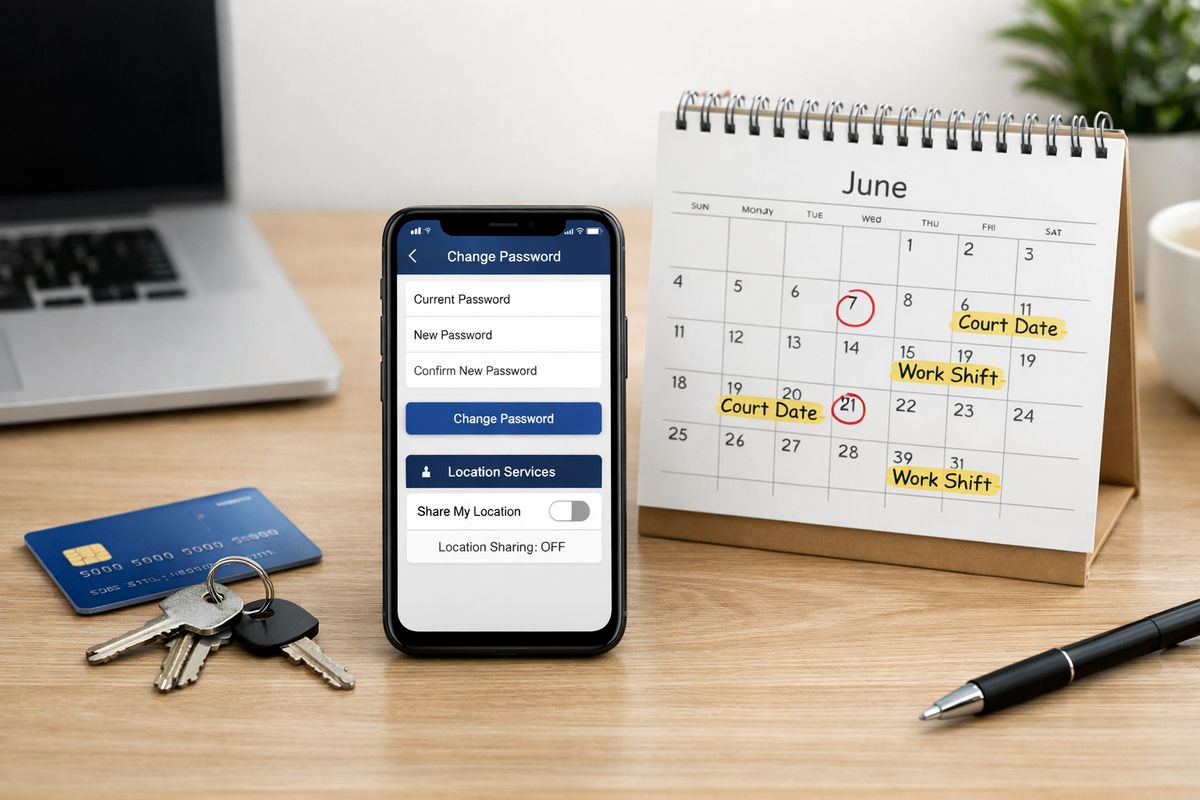
Change passwords and secure accounts
- Update email, banking, cloud, and phone passwords.
- Turn off location sharing.
- Check shared devices and recovery emails.
This protects evidence and prevents tampering or impersonation.
Keep communication boring and documented
- Use written communication only if legally allowed.
- Keep messages child-focused and neutral.
- Save every exchange.
If any contact is allowed, write like you are making a grocery list. Also, learn what a no-contact violation can trigger before one bad reply creates a second case.
Step 6: Prepare for hearings, interviews, and possible defense strategies
- Calendar every court date.
- Review your file with your attorney.
- Show up early and act calm.
The process usually moves through arraignment, protective order hearings, custody disputes, interviews, and evidence review. If you have never done this before, a plain-English breakdown of what happens at arraignment can make the whole thing feel less foggy.
What your attorney may use to challenge the accusation
- Look for contradictions and missing proof.
- Compare messages and timelines.
- Use receipts, alibi evidence, and witness accounts.
“Inconsistent” means the story changed in important ways. That can matter a lot, especially when the accusation is not backed by reliable evidence.
How to act in court and around the courthouse
- Dress neatly and arrive early.
- Keep your face, voice, and body language calm.
- Do not react across the room.
Calm beats dramatic every time. Court notices behavior, even outside the courtroom door.
Troubleshooting: Common mistakes that can sink your case
The biggest self-inflicted problems are deleting messages, posting online, venting by text, violating orders, and trying to negotiate privately. If you already made one of those mistakes, stop digging. Save what remains, document what happened, and tell your attorney immediately.
“But the other person contacted you first”
Incoming contact usually does not cancel a no-contact order. Save it, do not answer, and forward it to your attorney.
“You don’t have perfect evidence”
Perfect proof is rare. Organized proof still helps, especially when your timeline is clear and your records are intact.
“The accusation affects custody too”
Criminal court and family court can move side by side without fixing each other automatically. If parenting time is involved, learn more about how judges look at custody in these cases.
What outcome to expect and what to do next
A false accusation does not always disappear quickly. There can be hearings, pressure to accept a plea, delays, and ripple effects on work or custody. But a weak claim gets much harder to push when your records are clean, your behavior is controlled, and your attorney gets the full story early.
Today, do one thing: start your evidence file and get a legal consult on the calendar.
Frequently Asked Questions
Can false domestic violence accusations be dropped?
Yes, sometimes. A case can weaken or be dismissed when the proof falls apart, stories conflict, or records support your side. That does not happen automatically, which is why early case building matters.
Should you respond to clear up a misunderstanding?
No. Trying to fix it directly often creates new evidence against you or leads to a violation of a court order.
What if the accusation is completely made up?
Treat it seriously anyway. A made-up claim can still lead to arrest, removal from the home, custody limits, and background issues until the case is addressed.
Can you defend yourself without a lawyer?
That is a bad gamble. Domestic violence accusations can affect criminal charges, protective orders, and custody at the same time.
What if you already sent messages after the accusation?
Stop now, save everything, and tell your attorney exactly what was sent. A quick honest cleanup plan is better than pretending it did not happen.
Speak With Attorney Nathan J. Dineen
Attorney Nathan J. Dineen represents clients facing DUI, OWI, and related criminal charges throughout Wisconsin. His approach combines strategic courtroom advocacy with advanced training in standardized field sobriety testing, drug-recognition evaluation, and the science behind breath, blood, and chemical testing.
Nathan has also presented DUI defense topics to other attorneys and has been recognized by legal organizations for trial advocacy, professional achievement, and work in impaired-driving defense.
A DUI or OWI charge can affect your license, career, reputation, and future. Get experienced legal guidance before making your next decision.
Schedule your confidential consultation with Attorney Nathan J. Dineen today.

About Nate Dineen
Wisconsin legal insights from the DUI Defense WI team.