If You Violate a No-Contact Order, Here’s What Happens
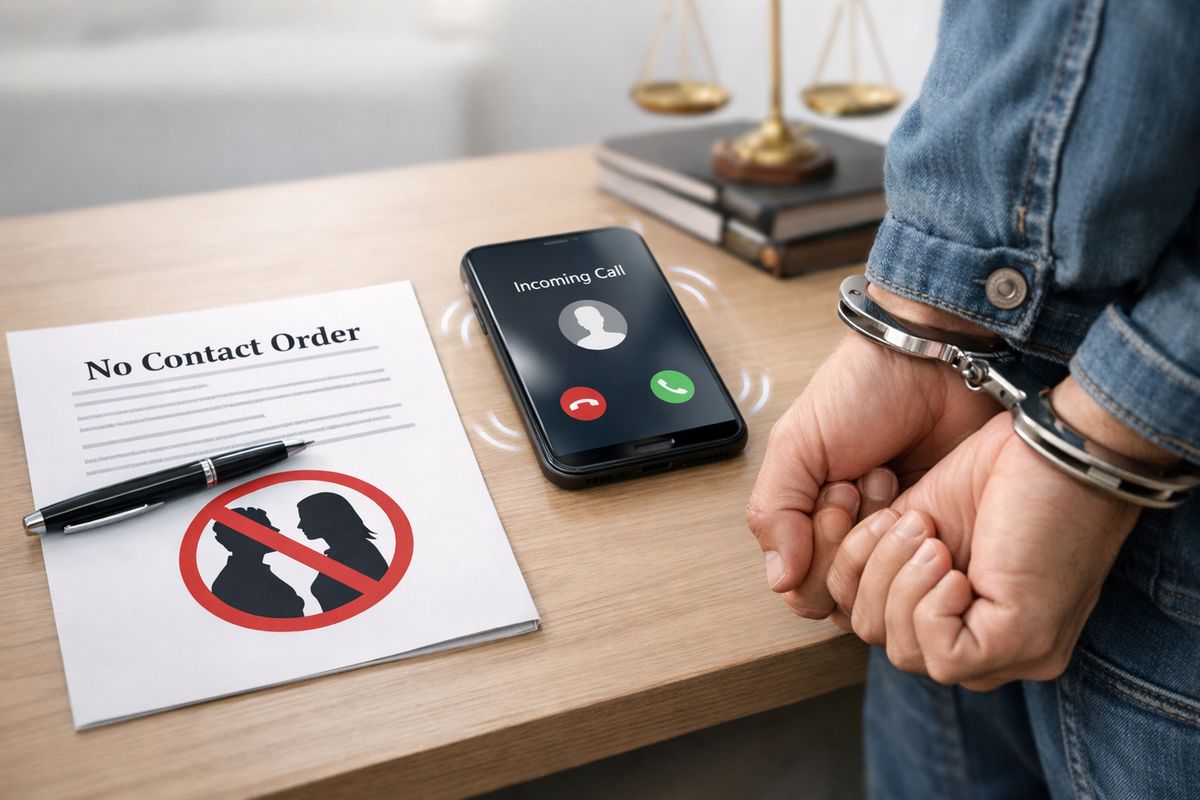
According to the Bureau of Justice Statistics, protective orders exist because repeat contact after abuse allegations is a real safety risk, and courts treat violations seriously from the moment the order takes effect. If you violate no contact order terms, you are not breaking a private promise. You are disobeying a court command, and that triggers fast legal consequences.
What Violating a No-Contact Order Means
A no-contact order is a judge’s directive that bars you from contacting, approaching, or communicating with a specific person in ways listed in the order. The simplest version of this: it is a court rule with criminal consequences, not a relationship boundary you can negotiate on your own.
That distinction matters. If the order says no calls, no texts, no third-party messages, or no coming within a certain distance, every one of those restrictions applies exactly as written. Violating the order usually means any prohibited contact or prohibited proximity after the judge signs it and you receive notice of it.
What this means in practice is simple. Your opinion about fairness does not change the order. Your first move is to read every line of the order today, including distances, exceptions, protected locations, and any communication limits.
What Counts as a Violation
According to the National Center for State Courts, violations often happen through routine communication, not dramatic confrontations. A text sent late at night, a direct message on social media, or showing up “just to talk” creates the same legal problem if the order forbids it.
Common violations include calling, texting, emailing, sending gifts, commenting online, tagging on social media, showing up at a home or workplace, and using somebody else to pass along a message. Reconciliation does not erase the restriction. If the court order says no contact, personal peace between you and the protected person changes nothing.
Here’s how to use that rule: stop all direct and indirect communication now. If you are already dealing with underlying domestic violence allegations in court, a violation makes that case harder immediately.
Indirect Contact Still Violates the Order
A 2024 statewide judicial education guide from court training materials in multiple jurisdictions emphasizes that indirect contact is one of the most common misunderstandings. Asking a friend to say “call me,” sending a family member to check in, replying through a shared group chat, or monitoring and reacting to social media posts can all count as prohibited conduct.
Intent does not rescue you. “I did not mean anything by it” is not a defense when the conduct itself breaks the order. An “accidental” reply that turns into a conversation is no longer accidental. The move that works is total silence and immediate disengagement.
The Other Person’s Permission Does Not Cancel the Order
According to court FAQ materials published by state judicial branches, the protected person cannot privately cancel a judge’s order. Only the court can modify or dismiss it.
That means an invitation to talk, a request to meet, or a text saying “it’s okay” does not protect you. Do not rely on calls, texts, screenshots, or verbal permission as a defense. If the order needs to change, that happens in court, not by agreement between you and the other person.
What Happens Right Away After a Violation
The Office on Violence Against Women explains that protective order enforcement is designed for speed because the order already reflects a judicial safety finding. Once police have probable cause to believe you violated the order, the process moves fast.
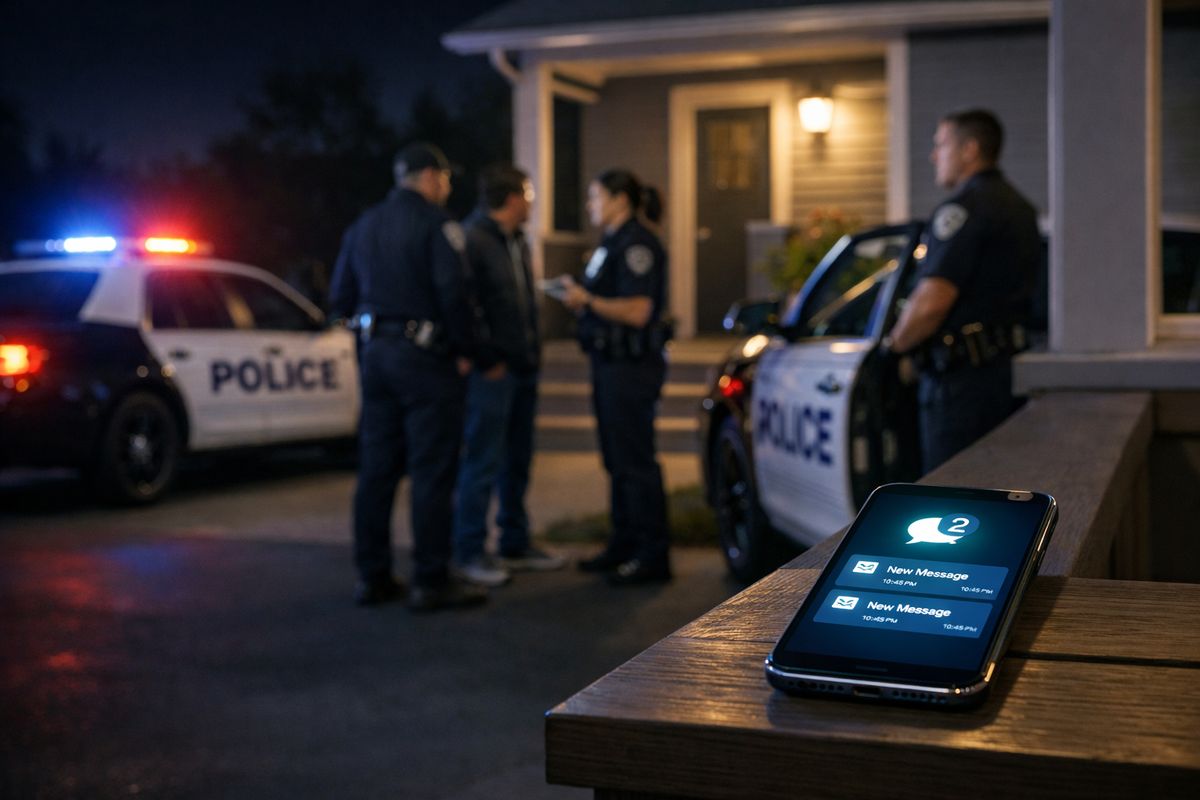
Immediate consequences often include police response, arrest, booking, jail, a new criminal charge, and a return hearing. In many states, officers can make a warrantless arrest based on probable cause. That means an officer does not need to wait for a judge to issue a warrant before taking you into custody.
What this means in practice: preserve every message, call log, screenshot, and timeline entry for your attorney. If you are arrested, understanding what police must still respect during an arrest matters from the first minute.
Police Can Arrest You Fast
A 2023 review of enforcement guidance used by law enforcement agencies shows why violation calls are treated as urgent. The court already found enough concern to issue the order, so officers do not treat later contact as a minor misunderstanding.
Police also do not need the protected person to “press charges” in the ordinary sense. Once probable cause exists, the state can proceed. Your safest response is to say little, comply physically, and protect your right to stay silent until you speak with counsel.
A New Charge Gets Added to Your Existing Case
A violation does not just complicate the old case. It creates a new one. If you already face allegations involving harassment, stalking, custody conflict, or criminal domestic violence accusations, the violation becomes a separate charge layered on top.
That compounds risk immediately. It affects release conditions, negotiations, credibility, and how the judge views future requests.
The Penalties You Face
According to state sentencing statutes and court administration summaries across the country, a first violation is often charged as a misdemeanor, while repeat violations or more serious conduct trigger felony exposure. The pattern is consistent: the more danger, repetition, or intimidation involved, the harsher the punishment.
You can face jail time, fines, probation, mandatory counseling or batterer’s intervention classes, stricter no-contact conditions, and additional criminal penalties. If the facts include threats, violence, stalking behavior, prior convictions, or weapons, the case escalates fast. For a clear breakdown of how offense levels differ, it helps to understand what separates lower-level and felony charges.
Your practical move is direct: check the state statute or have a lawyer identify the exact offense level attached to the alleged violation.
Misdemeanor Penalties
In many jurisdictions, misdemeanor penalties include up to a year in jail, financial penalties, probation, compliance classes, and tighter court supervision. Even when jail is not imposed immediately, probation conditions can become restrictive fast.
If you later receive a plea offer, knowing how negotiated resolutions usually work helps you assess the real cost.
When the Charge Becomes a Felony
Felony exposure rises when the violation is repeated, tied to assaultive behavior, linked to credible threats, involves stalking, or breaks multiple orders at once. Prior convictions also raise the stakes.
A felony conviction changes much more than the sentence. It affects employment, housing, firearm rights, and what remains visible on your background record.
Why “Harmless” Contact Still Hurts Your Case
The Centers for Disease Control and Prevention and research on coercive control both point to the same reality: repeated contact after a boundary is imposed often functions as pressure, intimidation, or destabilization. Courts know that. That is why even brief messages are treated seriously.
An apology, a closure text, or a “just checking in” message can become evidence that you ignored the order. The court sees more than words on a screen. It sees disregard for judicial authority and potential pressure on the protected person.
What this means in practice is blunt: stop trying to explain yourself outside court.
Apologies, Closure, and Co-Parenting Messages Still Create Risk
Good intentions do not undo prohibited conduct. “I only wanted to apologize” still counts if personal contact is barred. “I only needed to discuss the kids” also counts unless the order specifically allows a lawful communication channel.
If the court permits communication through attorneys, supervised exchange services, or an approved parenting app, use only that channel and nothing else. Personal workarounds are what turn manageable cases into worse ones.
What You Should Do Immediately If You Already Violated the Order
According to defense guidance published by state bar associations and criminal practice groups, early action after an accusation matters because small mistakes in the first 48 hours create bigger problems later. Delay helps nobody.
Stop all contact now. Do not delete messages. Follow every release condition exactly. Contact a defense lawyer fast, especially if you are unsure how the order interacts with a pending case or your first trip back before a judge.
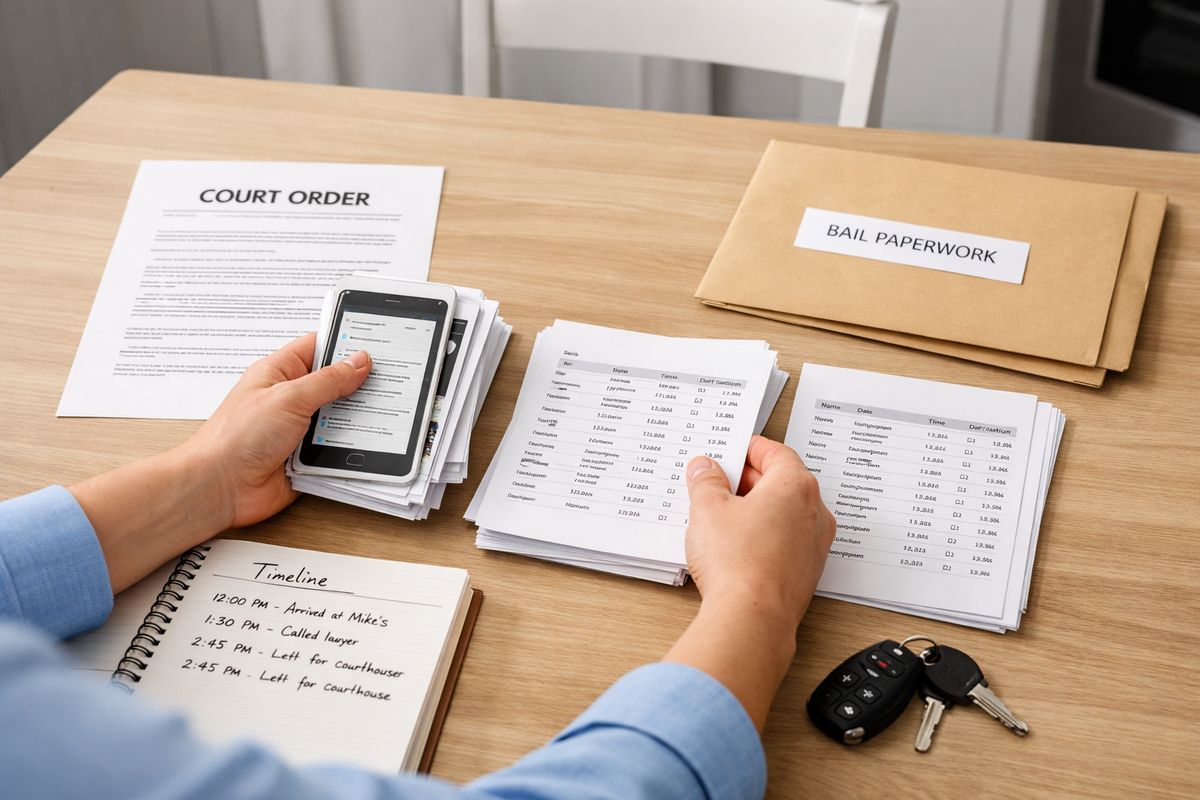
Write a clean timeline of every contact event before your first legal meeting. Dates, times, platforms, locations, and witnesses matter.
What to Bring to Your Attorney
Bring the full order, screenshots, call logs, voicemail records, bail paperwork, witness names, GPS or phone location records, and proof of where you were. If the other person initiated contact, document it, but do not treat that as a defense.
What Not to Do
Do not delete evidence. Do not send one last apology. Do not contact the protected person through somebody else. Do not skip court dates. Every one of those moves makes the case worse, faster.
Common Questions About No-Contact Order Violations
State court FAQ pages consistently show the same public confusion: people assume mutual contact, consent, or “accidental” communication cancels the order. It does not. If the wording feels unclear, follow the strictest reading until a judge changes it.
If the Protected Person Contacted You First, Are You Still in Trouble?
Yes. If you responded or continued the interaction, you can still violate the order.
Can the Protected Person Drop the Order?
No private agreement drops a court order. Only a judge can modify or dismiss it through court process.
What If the Contact Was Accidental?
A brief accidental encounter is different from staying, talking, following, or replying. Leave immediately and document the encounter for counsel.
What to Do This Week to Protect Yourself
Treat the order exactly as written. Cut off all direct and indirect contact. Get legal advice now, not after another allegation lands in the file.
Save a copy of the order to your phone, highlight every restriction, and schedule a defense consultation within 48 hours.
Frequently Asked Questions
Does liking a social media post violate a no-contact order?
Yes, if the order prohibits direct or indirect contact. A like, reaction, tag, or comment is still a form of communication.
Can you get arrested without a warrant for violating a no-contact order?
Yes. In many states, police can arrest you without a warrant when probable cause shows the order was violated.
Does one text message really matter?
Yes. One message is enough if the order bars communication. Courts do not measure violations by emotional tone or message length.
What if you needed to talk about children or property?
Use only court-approved channels, such as attorneys or approved communication tools. Personal texting or calling still creates risk unless the order expressly allows it.
Will a violation affect the underlying criminal case?
Yes. It adds a new problem, damages credibility, and often makes release conditions and plea negotiations worse.
Speak With Attorney Nathan J. Dineen
Attorney Nathan J. Dineen represents clients facing DUI, OWI, and related criminal charges throughout Wisconsin. His approach combines strategic courtroom advocacy with advanced training in standardized field sobriety testing, drug-recognition evaluation, and the science behind breath, blood, and chemical testing.
Nathan has also presented DUI defense topics to other attorneys and has been recognized by legal organizations for his trial advocacy, professional achievement, and work in impaired-driving defense.
A DUI or OWI charge can affect your license, career, reputation, and future. Get experienced legal guidance before making your next decision.
Schedule your confidential consultation with Attorney Nathan J. Dineen today.

About Nate Dineen
Wisconsin legal insights from the DUI Defense WI team.