
How to Get Your License Back After a DUI Suspension
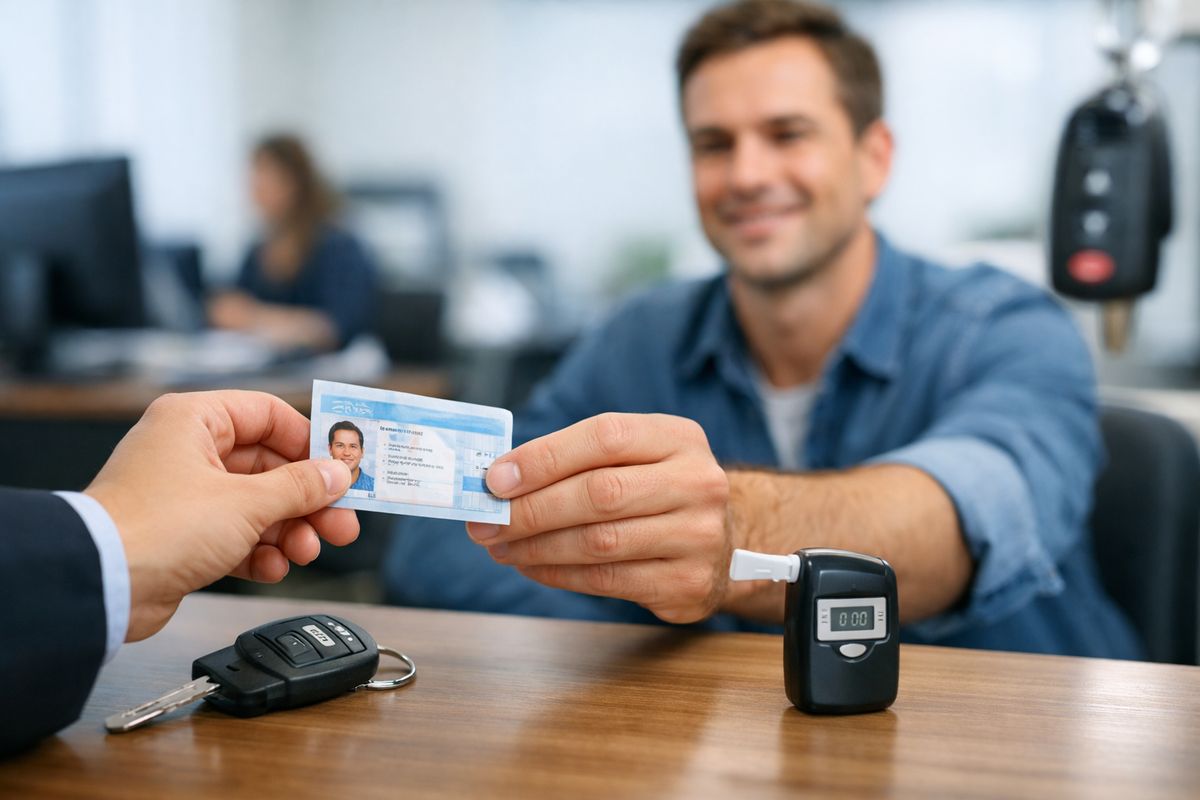
A DUI suspension does not end when the court date ends. To get license back after DUI, a person usually has to clear court orders, DMV actions, insurance filings, fees, and sometimes testing.
Check the suspension type and dates
A person should confirm if the license is suspended, revoked, or restricted. Those words do not mean the same thing.
A suspension usually ends after a fixed term. A revocation often requires a new application and added review. A restricted license allows limited driving under printed conditions.
Read the notice from the court or DMV
The notice usually lists the offense date, case number, action type, and start date. It may also list a reinstatement date or conditions that must be met first.
Some people have both a court notice and a DMV notice. That split matters. A criminal case can close while an administrative hold remains. More detail on that sequence appears in the usual path after an impaired driving arrest.
Get the driving record
The state driving record shows current status. It can also show points, revocations, unpaid actions, and separate holds.
Most states allow online, mail, or in-person record requests. The record is often the fastest way to see what still blocks reinstatement.
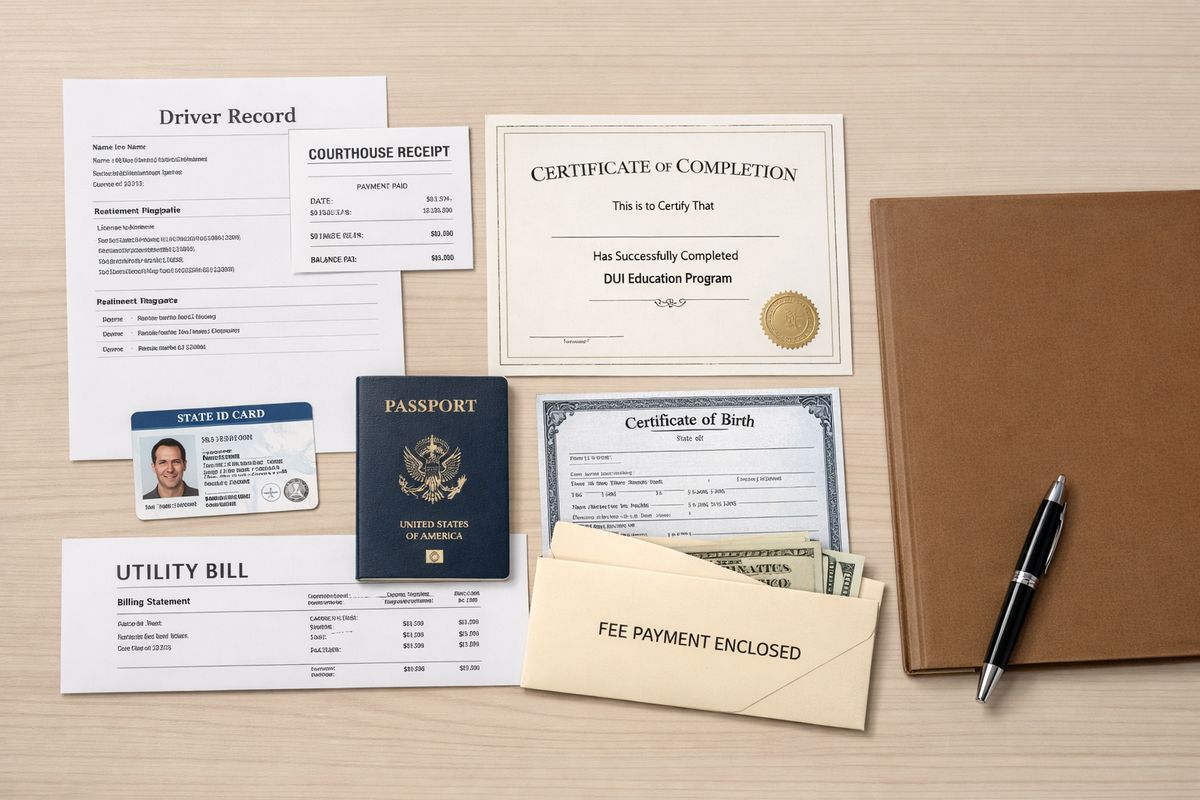
Gather the required documents and fees
Most states require proof before they restore driving privileges. Missing one document can stop the process.
Collect proof of identity and residency
Common items include a license or state ID, passport, birth certificate, and utility bill or lease. Names and addresses should match state records.
If a name changed after marriage or divorce, the state may need the legal change document. A mismatch can delay the file.
Collect court and compliance records
A person should gather sentencing papers, payment receipts, dismissal orders if any, and completion records for DUI school or treatment. The DMV may ask for certified copies.
If the criminal charge changed during the case, the final court paperwork still matters. Related issues about reduced charges and negotiated case outcomes can affect what appears in the record, but they do not erase DMV requirements by themselves.
Confirm reinstatement fees
Reinstatement often requires a DMV fee. There may also be court balances, interlock fees, and exam fees.
Amounts vary by state. Payment methods vary too. Some agencies take cards online. Others require money orders or in-person payment.
Step 1: Clear court requirements
A person cannot usually move forward until the court case is fully resolved. Every court order tied to the DUI must be complete.
- Review the judgment or final order.
- List each requirement with a deadline.
- Match each item to proof of completion.
A clean checklist prevents missed items. Courts and DMVs often rely on official records, not verbal confirmation.
Pay fines and close outstanding cases
Unpaid fines can block reinstatement. So can missed court dates, failure to appear entries, and bench warrants.
- Contact the clerk of court.
- Confirm all balances and case status.
- Get a receipt or docket update after payment.
If the person never appeared after the charge, the first required court hearing may explain why the license issue remains open.
Complete DUI school or treatment
Many DUI cases require education classes, substance use counseling, or an evaluation. The state often requires the provider to issue formal completion proof.
- Confirm the exact program the court or DMV approved.
- Finish every session and any follow-up terms.
- Submit the certificate where required.
Checkpoint: the certificate should show the person’s name, program name, and completion date.
Finish probation terms if required
Probation can include check-ins, testing, community service, and other conditions. A person may need discharge from probation before full reinstatement.
- Review the probation order.
- Complete each condition.
- Get written confirmation if the case is closed.
Step 2: Resolve DMV or administrative actions
The DMV can suspend a license apart from the criminal case. Both tracks must be cleared.
- Check the driving record for active actions.
- Match each action to its agency.
- Confirm what each agency needs to release the hold.
Check for an administrative suspension
Administrative suspensions often follow a failed chemical test or a test refusal. Those actions can start soon after arrest.
The court does not cancel them automatically. State law also differs on terminology, including how impaired driving charges are labeled.
Request or review a hearing if the deadline is open
Some states allow a hearing to challenge the DMV action. The deadline is often short.
- Read the notice for the hearing deadline.
- File the request before the date passes.
- Keep proof that the request was sent.
If the deadline passed, the suspension usually stays in place for the stated term. The focus then shifts to reinstatement conditions.
Clear extra holds on the record
A DUI is not always the only problem. Unpaid tickets, child support blocks, and insurance lapses can all stop reinstatement.
- Read each hold code on the record.
- Contact the agency tied to that code.
- Get confirmation after the hold is cleared.
Step 3: Meet insurance and SR-22 requirements
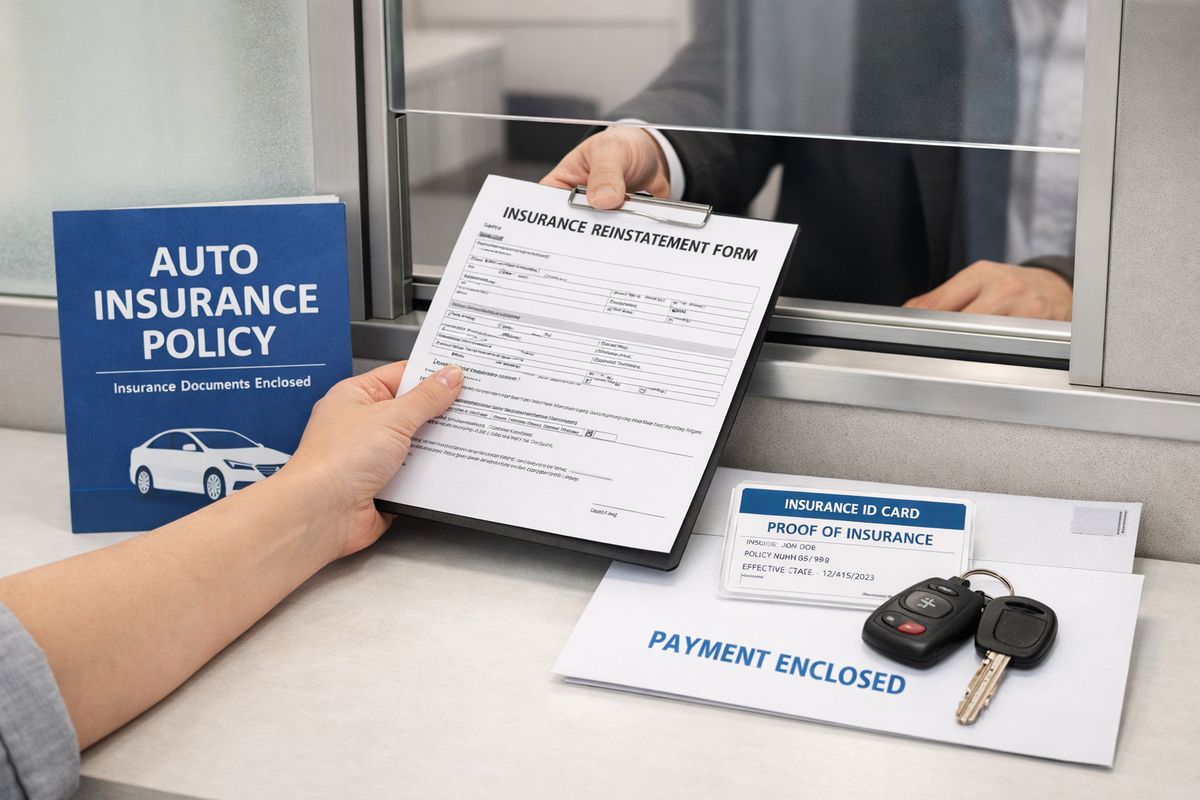
Many states require an SR-22 after a DUI. It is not a separate insurance policy. It is a filing that proves required coverage is in place.
- Confirm if the state requires SR-22 or a similar filing.
- Ask the insurer to submit it.
- Verify that the DMV received it.
Ask the insurer for an SR-22 filing
The insurance company usually files the form with the state. A person does not usually file it alone.
Some drivers need a non-owner policy if they do not own a car. The insurer can explain which policy supports the filing.
Keep the policy active for the full term
The filing usually must remain active for years. If coverage lapses, the insurer can notify the state.
- Keep premiums paid on time.
- Track the filing end date.
- Confirm cancellation is allowed before ending coverage.
A new lapse can trigger another suspension. That can also affect how long the DUI continues to appear in public and state records.
Step 4: Install an ignition interlock device if ordered
Some states require an ignition interlock device after a DUI. It may be required for restricted driving, early reinstatement, or full reinstatement.
- Confirm if interlock applies to the case.
- Use an approved provider.
- submit proof to the state.
Confirm device rules in the state
Rules differ by offense level and prior history. Some states require interlock after a first offense. Others require it only in certain cases.
A person should confirm the required term, vehicle rules, and approved vendors before scheduling installation.
Complete installation and submit proof
The vendor installs the device and issues a certificate. The DMV or court usually needs that proof before driving can start.
- Schedule installation with an approved vendor.
- Get the certificate after install.
- Send or confirm delivery to the agency.
Checkpoint: the driving record should later show the interlock condition or restricted status.
Follow reporting and maintenance rules
Interlock programs require service visits and calibrations. Missed visits can create violations.
Failed breath samples, tampering flags, or missed reports can extend the restriction period. A person should keep every receipt and service log.
Step 5: Apply for reinstatement or a restricted license
Once all conditions are complete, the person files for reinstatement. Some people qualify only for a hardship or restricted license first.
- Review the state application form.
- Attach the required records.
- Pay the filing or reinstatement fee.
Submit the application to the DMV
Many states allow online, mail, or in-person filing. The application should include compliance proof and payment.
A careful packet reduces delays. That issue often overlaps with state filing steps, deadlines, and fee rules for restoring driving privileges.
Apply for a hardship or restricted license if full reinstatement is not available
A restricted license may allow driving for work, school, treatment, or medical care. Proof is often required.
- Gather employer, school, or treatment documents.
- Complete the restricted license form.
- Follow all route, hour, and purpose limits.
Track processing status
The DMV may need days or weeks to process the file. Many states offer online status checks.
If the agency asks for more documents, the response should be prompt and complete. Delay often restarts review time.
Step 6: Complete testing if the state requires it
Some states require written, vision, or road tests before full return of driving privileges. Revocations are more likely to trigger retesting than short suspensions.
- Check the notice or DMV record.
- Confirm which exams apply.
- Schedule each exam before the permit or application expires.
Schedule the required exams
The DMV usually handles booking. The person should bring ID, proof of insurance if needed, and any required forms.
If a road test is required, the test vehicle must meet state rules. Registration and insurance must be current.
Prepare for retesting after revocation
Written retesting may cover traffic laws and signs. A road test may measure safe turns, stops, lane use, and observation.
A person who has questions about charge level may also need background on the difference between lower and higher criminal classifications, since revocation risks can rise with prior offenses or aggravating facts.
Handle common delays and denial reasons
A reinstatement request can still fail after the main steps are done. Most denials come from a short list of record problems.
Missing proof of completion
Schools, treatment providers, and courts sometimes issue records late. Certificates can also be unsigned or sent to the wrong place.
A person should request replacement documents if anything is missing. Certified copies are often safest.
Insurance or SR-22 lapse
A canceled policy can restart the suspension. The person must restore coverage and confirm the new filing reached the state.
The DMV record should be checked after the insurer files the form. Verbal confirmation alone is not enough.
Interlock violations or missed service
Interlock violations can extend restriction periods. Missed calibration visits can create the same result.
The person should contact the vendor and the state agency at once. Delay can harden the violation into a denial.
Open fines, warrants, or non-DUI holds
A record can still carry blocks unrelated to the DUI. The DMV will not issue a valid license until each hold is removed.
That includes old tickets, court failures, and support-related holds. Every block needs its own release.
Know what happens after reinstatement
Reinstatement is not the end of compliance. Many licenses return with conditions.
Review restrictions on the new license
The new card or record may limit driving to work hours, interlock use, or named purposes. Those limits are enforceable.
Driving outside those limits can lead to a new suspension or criminal charge. The printed restriction codes should be read with care.
Keep records and renewal dates
A person should keep copies of orders, receipts, completion forms, and insurance filings. Renewal dates should be tracked for the license, SR-22 term, and interlock period.
Good records help if the state record is wrong. They also help if another stop or review occurs.
Use state resources for the final check
State DMV websites, driver safety offices, and court clerks give the final answer on reinstatement rules. DUI suspensions vary by state and by offense history.
A final record check before driving is the safest rule. If the record still shows a hold, the license is not back.
Frequently Asked Questions
How long does it take to get a license back after a DUI?
The timeline depends on the suspension term, court compliance, DMV holds, and state processing time. Some cases take weeks after eligibility. Others take months if revocation, interlock, or testing applies.
Can a person drive to work during a DUI suspension?
Some states allow a hardship or restricted license for work, school, treatment, or medical travel. The person must apply and get approval first. Driving before approval can create new penalties.
Is an SR-22 always required after a DUI?
No. Many states require it. Some use a different filing or do not require it in every case. The DMV notice or driving record will usually show the requirement.
What is the difference between suspension and revocation?
A suspension usually pauses driving privileges for a set time. A revocation ends the license and often requires a full reinstatement application, fees, and possible retesting.
Can a dismissed DUI still affect license reinstatement?
Yes. The DMV may maintain a separate administrative action even if the criminal case changes or ends. A person should review both the court file and the driving record.
Speak With Attorney Nathan J. Dineen
Attorney Nathan J. Dineen represents clients facing DUI, OWI, and related criminal charges throughout Wisconsin. His approach combines strategic courtroom advocacy with advanced training in standardized field sobriety testing, drug-recognition evaluation, and the science behind breath, blood, and chemical testing.
Nathan has also presented DUI defense topics to other attorneys and has been recognized by legal organizations for trial advocacy, professional achievement, and work in impaired-driving defense.
A DUI or OWI charge can affect a license, career, reputation, and future. Get experienced legal guidance before the next decision.
Schedule a confidential consultation with Attorney Nathan J. Dineen today.

About Nate Dineen
Wisconsin legal insights from the DUI Defense WI team.