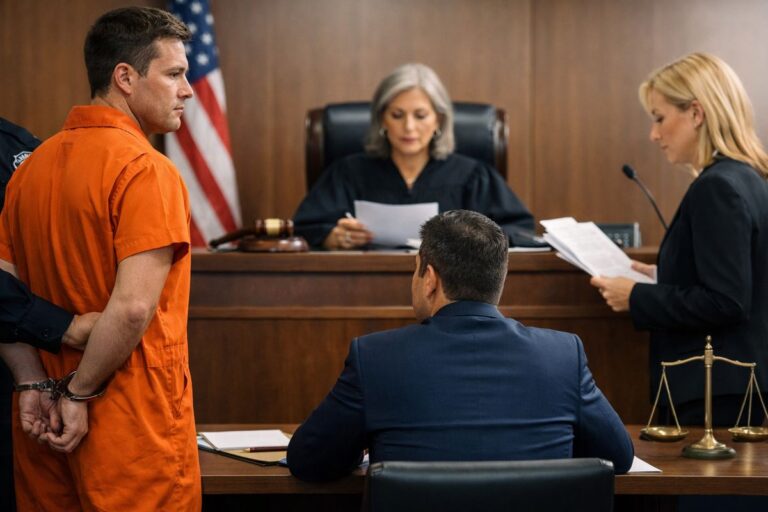
Your Right to Remain Silent: What It Really Covers
The right to remain silent means you do not have to answer questions that could help build a criminal case against you. That sounds simple on TV, but in real life it gets confusing fast, especially when a conversation feels casual, friendly, or “off the record.” Here’s what the right actually covers, when it applies, what it does not do, and the exact kind of words that protect you when pressure starts to rise.
What the Right to Remain Silent Actually Means
In plain English, the right to remain silent is your right to refuse to answer questions if your answers could be used against you in a criminal case. The basic idea is straightforward: you do not have to supply the government with your own damaging statements.
That protection comes from the Fifth Amendment, not from television and not from the Miranda warning itself. The Miranda warning is just the version most people recognize because it gets read aloud in certain police questioning situations. The underlying right is bigger than that.
Here’s the part many people miss: silence is not just about dramatic police station interrogations under a bright light. It can matter during a traffic stop, a chat at your front door, a “voluntary” interview at work, testimony in court, or any setting where your words could later be turned into evidence.
And words get turned into evidence all the time. A sentence you say to “clear things up” can become a contradiction, an admission, or a detail that helps fill in a timeline. Even innocent people get trapped this way. Stress makes people guess, overexplain, and agree to things just to make the moment end.
Where This Right Comes From
The right to remain silent comes from the Fifth Amendment to the U.S. Constitution, which says that no person can be compelled in a criminal case to be a witness against yourself. That language is old, formal, and easy to tune out. The meaning is not.
At bottom, the rule is simple: the government has to prove its case without forcing you to help by supplying your own incriminating words.
The Fifth Amendment in plain English
The phrase “be a witness against yourself” basically means “say things that can help convict you.” “Compelled” means forced or pressured by the government in a legal setting where your answers can be used against you.
So the plain-English translation looks like this: you do not have to answer official questions when the answer could expose you to criminal trouble.
That does not mean you get to ignore every legal obligation or refuse every kind of cooperation. It means you are protected against compelled self-incrimination, which is a legal way of saying forced self-snitching.
Why this protection exists
This protection exists because forced confessions and pressure-filled questioning are dangerous. People say false things under stress. People guess when they do not know. People try to sound helpful and accidentally say too much. And once words are out, you do not get to pull them back.
The Fifth Amendment is there to limit that damage. It recognizes a basic imbalance in criminal investigations. The government has power, training, and time. You, in that moment, may be tired, scared, embarrassed, confused, or simply eager to go home.
That is exactly when bad statements happen.
Historically, the rule grew out of deep suspicion of forced confessions and coercive questioning. In modern terms, the principle is the same: your silence protects the space between what investigators want and what they can actually prove.
Why People Usually Hear About It Through Miranda Rights
Most people learn about this right through the Miranda warning: “You have the right to remain silent…” But Miranda is not the source of the right. It is a procedure built around the right.
That distinction matters more than it sounds.
What Miranda warnings are
Miranda warnings are the familiar warnings police are supposed to give before custodial interrogation. That usually includes notice that you have the right to remain silent, that anything you say can be used against you in court, that you have the right to an attorney, and that an attorney can be appointed if you cannot afford one.
The warning came out of the Supreme Court’s decision in Miranda v. Arizona, which required safeguards before certain police questioning. The point was to reduce the pressure of in-custody interrogation and make sure any waiver of rights is informed.
But Miranda is narrower than many people think. Police do not have to read the warning the second you see handcuffs, and they do not have to recite it before every conversation. Miranda is tied to a specific kind of setting.
Miranda rights vs. the underlying right
The Constitution gives you the underlying right. Miranda is a warning system designed to protect it during custodial interrogation.
That means if police fail to give Miranda warnings when they should have, the usual question is not “Does the whole case disappear?” The usual question is whether certain statements can be used against you in court. The Supreme Court has described Miranda as a set of procedural safeguards, not the original source of the Fifth Amendment right itself.
This is where a lot of confusion starts. You can still have the right to remain silent even when Miranda has not been read yet. And police can still investigate you, speak to you, or even arrest you without having recited the warning at the exact moment you expected.
If you want a bigger picture of police limits during an arrest itself, it helps to understand what officers still have to respect in that moment.
When the Right to Remain Silent Applies
The right applies whenever you are being compelled to give testimonial answers that could incriminate you. In real life, that comes up most often during police questioning, but it also matters in court and other legal proceedings.
The key question is not “Am I under arrest yet?” The better question is “Could my answer be used against me criminally?”
During police questioning
This is the setting people think of first, and for good reason. If police ask questions designed to get incriminating answers, the Fifth Amendment is front and center.
Sometimes the questions are direct: “Where were you last night?” “Whose bag is this?” “Did you have anything to drink?” Sometimes the conversation looks friendly: “Help us understand what happened.” “You’re not in trouble, just explain it.” “This is your chance to clear it up.”
The catch is that casual talk can become evidence just as easily as formal questioning. A statement made in a parking lot at 11:40 p.m. can show up later in a police report, an affidavit, or a courtroom transcript.
In court or other legal proceedings
The Fifth Amendment is not limited to street encounters or stationhouse interviews. It can also apply if you are asked to testify in court, before a grand jury, or in another legal proceeding where an answer could expose you to criminal liability.
That does not mean you can refuse to answer every question in every hearing. The protection applies when the answer itself could tend to incriminate you. If a truthful answer could supply a damaging fact, a link in a chain of evidence, or an admission, the privilege may apply.
This matters in places beyond the police station. A question in a related civil case, for example, can create criminal risk if the same facts overlap. That is one reason people facing charges often need a clear sense of what happens when a criminal case enters court.
During a traffic stop
Traffic stops are where a lot of people talk too much.
During a lawful stop, you may still have to provide basic identifying information, such as your license, registration, and proof of insurance. In some settings, you may also have to identify yourself if the law requires it. But handing over identifying information is not the same as answering broad investigative questions.
If an officer asks, “Do you know why I pulled you over?” or “How much did you have to drink?” that is different from asking for your driver’s license. One is basic identification or compliance with traffic rules. The other can produce statements that may later be used against you.
That difference matters a lot in impaired driving cases, where a few casual answers can shape everything that follows, including what the process looks like after a drunk driving arrest.
The Two Big Triggers: Custody and Interrogation
If you want to understand why Miranda warnings show up in some situations and not others, focus on two words: custody and interrogation.
Both usually need to be present before Miranda warnings are required.
What “in custody” means
“In custody” does not just mean “officially arrested” in a technical sense, though arrest is the clearest example. It usually means your freedom is restrained to a degree similar to arrest.
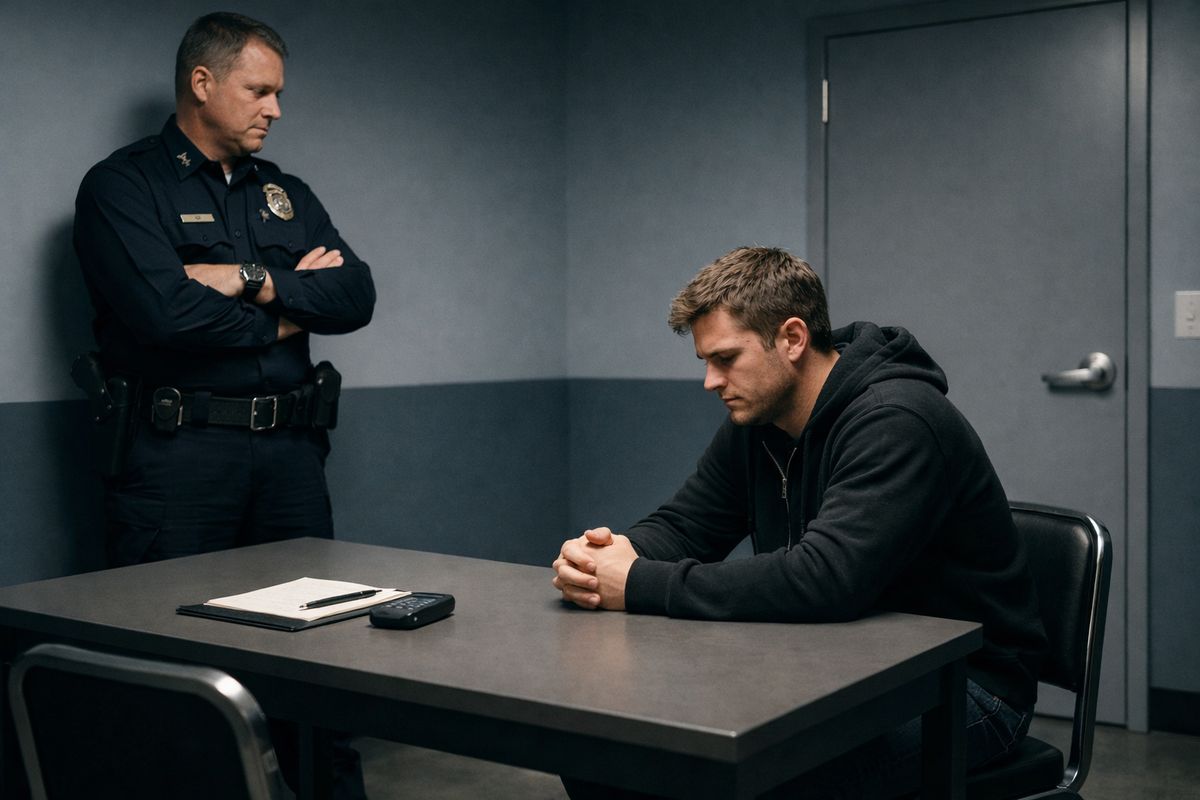
Picture this: you are taken into a small interview room at a police station at 10 p.m. The door is closed. An officer stands near it. You are told to wait, then questions begin. That starts to look and feel like custody.
By contrast, if you voluntarily walk into a station, sit in an open office, and are told you are free to leave, the custody question becomes less clear. The legal test looks at how a reasonable person in that situation would understand the restraint on freedom.
Courts look at the setting, how long the encounter lasts, whether you were told you could leave, whether officers used force or restraints, and how much control officers had over your movement. The more it feels like your freedom has been taken away, the more likely it is custody.
What counts as interrogation
Interrogation is more than blunt questions like “Did you do it?” It includes direct questioning and also words or actions by police that are reasonably likely to produce an incriminating response.
That means interrogation can include subtle prompts. “Your friend already told us everything.” “This is your chance to explain.” “If there’s a misunderstanding, now is the time.” Those comments may be designed to get you talking.
Still, not every statement by an officer counts as interrogation. Routine booking questions, safety-related instructions, or casual remarks that are not meant to draw out incriminating information may fall outside Miranda’s scope.
The line is not always obvious in the moment, which is exactly why clear invocation matters so much.
Why both matter
Miranda warnings generally matter when both custody and interrogation are present. No custody, no Miranda warning requirement in most situations. No interrogation, same result.
That is why police can sometimes ask questions without reading Miranda first and still use the answers, depending on the setting. It may feel unfair, but the legal framework is narrower than pop culture suggests.
Here’s the simple practical takeaway: even if Miranda has not kicked in yet, talking can still hurt you. Your safest assumption is that investigative questions are not casual, even when the tone is relaxed.
What the Right Really Covers and What It Does Not
The right to remain silent is powerful, but it is not magic. It protects some things very strongly and does almost nothing for others.
Knowing the limits matters just as much as knowing the right exists.
It protects testimonial communication
The Fifth Amendment mainly protects testimonial communication. That means statements or acts that communicate what is in your mind, such as admissions, explanations, identifications, timelines, or answers that reveal knowledge.
If a question forces you to use your own words to supply incriminating information, that is the heart of what the privilege protects.
Think of it like a locked drawer in your head. The Fifth Amendment is largely about keeping the government from forcing you to open that drawer and describe what is inside.
It does not erase physical evidence
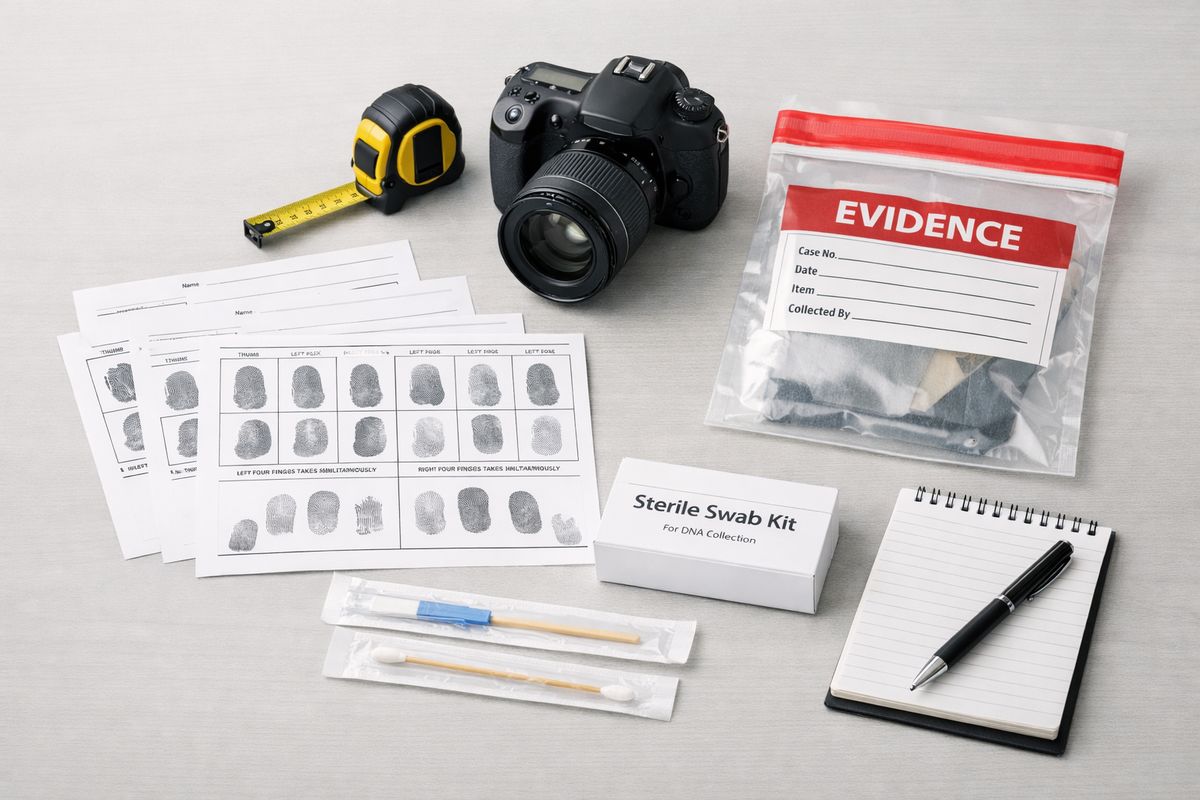
The right usually does not let you block the collection of physical, non-testimonial evidence. Fingerprints, photographs, a lineup appearance, handwriting samples in some contexts, or a blood sample ordered under lawful rules are generally not protected in the same way because they are not testimonial communications.
That sounds technical, but the everyday version is simple: the right protects your compelled words far more than your physical characteristics.
That is one reason people get into trouble by assuming silence alone ends the matter. It does not. Investigators can still gather records, video, witness statements, phone data, forensic testing, and physical evidence.
It does not always let you refuse basic identification
In many settings, you still have to provide certain identifying information when lawfully required. During a traffic stop, for example, you may have to present your license and registration. In some states and situations, a lawful stop may also carry an obligation to identify yourself.
That does not mean you need to answer open-ended investigative questions. “Here is my license” is very different from “I was only at the bar for twenty minutes and had two beers.”
Knowing where that line sits can save you from volunteering details that were never legally required in the first place.
It does not stop police from investigating
This point is worth saying plainly: staying silent can protect your words, but it does not stop an investigation.
Police do not have to drop the matter because you refused to answer. Silence does not force release, cancel a stop, or wipe out other evidence. It simply prevents you from helping build the case through your own statements.
That still matters a lot. In many criminal cases, a person’s own words become the centerpiece. If you want to understand how a case can keep moving even without a confession, it helps to look at how charges can develop from other evidence, including in articles about when a criminal case can actually get tossed.
How to Actually Invoke Your Right
This is where people often make the biggest mistake. You can have the right, believe in the right, and still fail to use it clearly enough.
Why staying quiet is not always enough
Silence by itself is not always treated as a clear invocation. Courts have often required an unambiguous statement. If you just sit there, shrug, mumble, change the subject, or answer some questions but not others, things can get messy fast.
That is frustrating, but it is the reality. A right you do not clearly invoke can become a fight later.
Also, partial cooperation often makes things worse. Once you start talking, you may feel pulled to keep going. Silence becomes harder after the first answer because the conversation now has momentum.
Simple phrases that work
Use clear, direct language. Short is better.
Good examples include: “I am invoking my right to remain silent.” “I do not want to answer questions.” “I am not answering any questions.” “I want a lawyer.”
Those sentences work because they are plain and unmistakable. No guessing. No ambiguity. No opening for debate.
And once you say it, stop talking.
Vague phrases that can fail
Statements like “Maybe I should stop talking,” “I don’t know if I should say anything,” or “Do you think I need a lawyer?” can cause problems because they sound uncertain.
Uncertainty invites more questioning. Officers may treat that as hesitation rather than invocation.
The trick is not to sound clever. The trick is to sound clear. Stress is not the moment for subtle wording.
What to Say in Common Real-Life Situations
Real encounters are messy. Questions may sound friendly, casual, or even helpful. That does not make them safe.
Here’s how common pressure points usually work.
“Just help us clear this up”
This is one of the oldest setups in the book because it works. You hear “clear this up” and think a quick explanation will end the misunderstanding.
But “clear this up” is still questioning. It is often an attempt to lock you into a story, test details, or get a statement that can later be compared against other evidence.
A calm response is enough: “I am invoking my right to remain silent. I do not want to answer questions.”
No speech. No backstory. No attempt to sound cooperative by adding “but I didn’t do anything.” That extra sentence is exactly where damage starts.
“If you’ve done nothing wrong, why not talk?”
Because innocence does not protect you from misstatements, bad memory, nervous wording, or selective note-taking.
That point deserves confidence: innocent people talk themselves into trouble all the time. A stressed brain fills gaps, agrees to assumptions, and tries too hard to sound reasonable. Later, a small inconsistency becomes “changing your story.”
You do not waive a constitutional protection just to look confident.
A simple answer works: “I am not answering questions without a lawyer.”
“We already have evidence”
Maybe yes. Maybe no. Either way, this is not your cue to start correcting, explaining, or patching holes in the story.
People hear this and panic. Then out comes the timeline, the texts, the names, the half-memory, the detail that “proves” innocence but actually adds another issue.
If officers really do have evidence, your talking may only strengthen the case. If officers do not, your talking may give the investigation what it was missing.
Silence is often the safer move, especially when you do not yet know what facts matter, what charge is being considered, or how your words could connect to later claims such as how prosecutors sort out lower-level and more serious offenses.
“You’re not under arrest”
That may be true, but it does not make the conversation harmless.
Voluntary interviews can create real risk because Miranda may not apply if you are not in custody, yet your statements can still be used against you. In other words, the absence of handcuffs does not mean the absence of danger.
You can still say: “I am not answering questions. I want a lawyer.”
That is not rude. It is careful.
If questioning starts at home, on the street, or at work
People tend to lower the guard in familiar places. Home feels safe. Work feels normal. A sidewalk chat feels minor.
But ordinary places can become high-stakes quickly if questions shift toward possible criminal conduct. If police ask where you were, what happened, who was present, or whether something belongs to you, the setting does not matter as much as the risk of your answer.
A short line is enough: “I am invoking my right to remain silent, and I want a lawyer.”
Say it politely. Then stop.

Invoking Silence vs. Asking for a Lawyer
People often lump these together, but they are not identical. Both matter. One is usually stronger.
What happens if you ask for a lawyer
A clear request for a lawyer generally requires questioning to stop until counsel is present, at least in the classic custodial interrogation setting. That request is treated as a strong signal that you do not want to face questioning alone.
The law in this area has details and exceptions, but the practical point is simple: asking for a lawyer usually gives you stronger protection than invoking silence alone.
That is why criminal defense lawyers so often tell people to say both.
What happens if you only invoke silence
If you only invoke your right to remain silent, police are supposed to honor that invocation. But depending on the circumstances, there may be more room to resume questioning later after a pause.
That does not mean your invocation was useless. It means the request for counsel tends to create a firmer barrier.
If charges follow, the difference can matter early, especially by the time you reach steps like the formal hearing where charges are read and rights are addressed.
Why many people use both
The practical sentence is easy to remember: “I am invoking my right to remain silent, and I want a lawyer.”
It covers both protections in one breath. It is direct. It is hard to misunderstand. And it gives you a better chance of shutting down questioning cleanly.
Memorize it before you ever need it. Honestly, that is the whole game.
What Police Are Supposed to Do After You Invoke
Once you clearly invoke, police are not supposed to keep pressing as if nothing happened. The exact consequences depend on whether you invoked silence, requested counsel, or both.
If you clearly invoked silence
If you clearly invoked silence, questioning should stop, at least for that interrogation. Officers are supposed to respect the decision rather than continue trying to squeeze out answers.
In practice, the situation may not always become quiet immediately. Officers may handle logistics, move you, or make routine statements. But continued questioning aimed at getting incriminating answers creates legal problems.
The clearer your invocation, the easier it is to identify later if questioning crossed the line.
If you asked for a lawyer too
If you also clearly asked for a lawyer, the pause in questioning is generally stronger. The request signals that you do not want to navigate further questioning without counsel present.
Again, the legal details can get technical. But the practical lesson stays simple: asking for counsel is not just a formality. It is a stronger stop sign.
If police keep talking anyway
If police continue questioning after a clear invocation, that can affect whether later statements are admissible in court. Courts may look closely at whether your rights were scrupulously honored, whether your request was clear, and whether any later statement was truly voluntary.
That does not mean you should argue about case law in the moment. It means you should keep doing the same thing: repeat the invocation if needed, ask for a lawyer, and stop talking.
Can You Start Talking Again Later?
Yes, you can. But that is where people often undo the protection they just used.
Reinitiating conversation
If you restart the discussion after invoking, or if you choose to answer questions later, your new statements may be used against you.
That can happen because the law may treat the renewed conversation as your choice, especially if you were warned and then voluntarily spoke.
A lot of people invoke, sit in silence for a while, then crack because the room feels awkward. That awkwardness is not your problem. Talking to fill it is.
Waiving the protection after invoking
A waiver is just a plain-English way of saying you gave up the protection by speaking voluntarily.
If you were warned, said you understood, and then talked anyway, a court may find you waived the right. The same thing can happen if you invoked and later changed course by willingly answering questions.
This is one reason officers may come back with a softer tone later. Fatigue changes people. So does time.
Why changing your mind can backfire
Think of it like shutting and then reopening a door you locked for a reason. Once the door opens again, whatever comes through is much harder to control.
Changing your mind rarely helps in the moment because you still do not know the full evidence, the legal theory, or how your answers will be framed later. You just know the pressure got uncomfortable.
That is not a good reason to start talking.
Can Silence Be Used Against You?
This issue is more complicated than TV makes it sound. The legal effect of silence can depend on timing, setting, and whether you clearly invoked the right out loud.
Before arrest or before Miranda warnings
In some pre-arrest or pre-Miranda situations, silence may be treated differently than silence after a clear invocation. This area is messy, fact-specific, and full of distinctions that surprise people.
The main practical point is this: do not assume that standing mute automatically carries the same protection in every situation. Clarity helps. Saying that you are invoking your right is often better than relying on silence alone.
After a clear invocation
Once you clearly invoke in the proper setting, your silence generally gets stronger protection. That is the safer legal posture.
The reason is simple. There is less room for argument about what you meant. You did not merely pause. You asserted a constitutional right.
That distinction can matter later if prosecutors try to make something out of your refusal to answer.
Why context matters
The law cares about context: pre-arrest versus post-arrest, custodial versus noncustodial, warned versus unwarned, silent versus clearly invoked.
That sounds fussy, and it is. But the practical rule is not hard: do not leave your intentions unclear. State the right plainly, ask for a lawyer, and stop talking.
Special Situations That Confuse People
Some settings create extra confusion because the basic right still exists, but other legal concerns pile on top.
Juveniles and young people
Minors have the right to remain silent too. But age matters because youth can affect how courts evaluate custody, pressure, understanding, and whether any waiver was truly knowing and voluntary.
A teenager questioned at school or in a stationhouse may feel less free to leave than an adult would. Age can shape the analysis.
That does not make the right weaker. If anything, it makes clear invocation and legal counsel even more important.
Immigration and non-citizen concerns
If you are not a citizen, criminal questioning can carry immigration consequences far beyond the immediate case. A statement that seems minor in the criminal setting can create major problems for status, removal proceedings, or future applications.
That is why silence and legal counsel matter even more in this context. The criminal issue may be only part of the risk.
Workplace or school questioning
Private employers and schools are not the same as police. The Fifth Amendment is aimed at government compulsion in criminal matters, not every uncomfortable question in life.
But the line can blur if school officials, campus police, or public employers are involved, or if answers could later reach law enforcement. Even in a private setting, your words may still be handed over.
If an allegation overlaps with a criminal accusation, including situations like domestic cases that can trigger both personal and court consequences, caution matters.
Grand jury or administrative settings
The Fifth Amendment can matter outside the police station too. Grand jury testimony, administrative investigations, licensing proceedings, and other formal settings can create criminal exposure if answers reveal incriminating facts.
That does not mean you can simply walk out or refuse everything. It means the privilege may apply question by question when truthful answers could lead to criminal trouble.
This is where a lawyer becomes especially important because the setting looks less dramatic than an arrest but can be just as dangerous.
Common Myths About the Right to Remain Silent
Misunderstanding this right creates false confidence. A few myths come up over and over.
“If police forget Miranda, the case gets thrown out”
Usually not. The common issue is whether certain statements can be used against you, not whether the entire prosecution disappears.
Cases are built with many forms of evidence. Miranda problems often target statements, not the whole case. That is a big difference.
“Only guilty people stay silent”
False.
The right exists for innocent people too, maybe especially for innocent people. Stress, fear, poor memory, confusion, and bad assumptions can twist ordinary words into damaging evidence. Innocence is not a shield against misunderstanding.
You do not prove honesty by giving up legal protection.
“You have to answer if police keep asking”
No. Repetition does not create a duty to speak once you have clearly invoked.
Pressure can make it feel that way. An officer may repeat the question, rephrase it, or suggest that silence makes things worse. But a clear invocation does not expire just because the room gets tense.
“Silence means police have to release you”
No again. Invoking the right protects against compelled self-incrimination. It does not erase lawful detention, arrest authority, warrants, or other evidence.
Police can continue investigating. Prosecutors can still file charges. Courts can still move forward. If that happens, later stages like negotiating a deal instead of going to trial may depend heavily on the evidence gathered without your help.
Practical Do’s and Don’ts if You Want to Use This Right
Stress scrambles memory. In the moment, simple rules help.
Do keep your words short and clear
Say one clean sentence: “I am invoking my right to remain silent, and I want a lawyer.”
That is enough. Extra explanation usually creates extra risk. The more words you add, the more openings you create for follow-up questions, misquotes, or partial admissions.
Short wins here.
Do stay calm and non-confrontational
Use a steady tone. Be polite. Do not argue. Do not make sudden movements. Do not try to “win” the interaction with sarcasm or defiance.
Invoking your rights is not the same as escalating the encounter. Calm behavior helps protect you. It also keeps the focus where it belongs, on your clear refusal to answer questions.
Don’t try to “explain your way out”
This is where people get into trouble.
The urge to explain is powerful, especially if you feel wrongly suspected. But explanation often becomes evidence. A harmless detail turns into a timeline. A guess turns into a contradiction. A denial turns into a statement prosecutors later compare against phone records, video, or witness accounts.
Talking feels productive. Often it is the opposite.
Don’t lie
The right to remain silent is not a right to make false statements.
If you choose to speak and lie, that can create separate legal trouble and deepen the original problem. Silence protects. Lies complicate.
If you are not going to tell the truth fully and safely, the better move is not to talk at all.

Frequently Asked Questions About the Right to Remain Silent
Do you have to say the exact words?
No magic script is required, but clarity matters. The safest move is to use unmistakable language such as “I am invoking my right to remain silent” and “I want a lawyer.” Fancy wording is unnecessary.
Can you invoke the right after answering a few questions?
Yes. You can stop at any point and invoke. If you already answered some questions, that does not mean you must keep going.
Does remaining silent make you look guilty?
It may feel that way emotionally, but legally it is not an admission. Protecting yourself during questioning is a lawful choice, not a confession.
Can police talk to you again later?
Sometimes yes. That can depend on whether you invoked silence, asked for a lawyer, whether custody continued, and who restarted the conversation. That is one reason many people clearly invoke both silence and counsel.
Should you say both that you want to remain silent and that you want a lawyer?
Yes, that is often the clearest and safest practical approach during questioning. One sentence can do both: “I am invoking my right to remain silent, and I want a lawyer.”
The One Thing to Remember Under Pressure
If your mind goes blank in a tense moment, remember one sentence: “I am invoking my right to remain silent, and I want a lawyer.” Say it clearly. Say it calmly. Then stop talking.
That one habit changes everything. It stops the impulse to explain, shuts the door on guesswork, and gives your future self a much better chance. Practice the sentence now, out loud if needed, so it is there when stress hits and your brain wants to do the exact wrong thing.
Frequently Asked Questions
Can you stay silent even if police say you are just a witness?
Yes. If your answers could expose you to criminal liability, the right can still matter even when the conversation is framed as “just helping.” Labels do not control the risk. Your words can still be used against you.
Does the right to remain silent apply if police come to your house and ask to talk?
Yes. A doorstep conversation can still produce statements that become evidence. Miranda may not apply if you are not in custody, but your underlying Fifth Amendment protection still matters. You can say that you are invoking your right and want a lawyer.
Can silence alone protect you without saying anything out loud?
Not always. Silence by itself can be legally messy, especially before arrest or before Miranda warnings. Clear words are safer. State that you are invoking your right to remain silent, then stop talking.
Can you be punished for asking for a lawyer?
Asking for a lawyer is a constitutional protection, not misconduct. You do not lose the right because an officer seems annoyed or disappointed. The safer move is still to ask clearly and stop answering questions.
If you already started talking, is it too late to stop?
No. You can stop at any point. Even if you answered several questions, you can still say, “I am invoking my right to remain silent, and I want a lawyer,” and then stop.
Speak With Attorney Nathan J. Dineen
Attorney Nathan J. Dineen represents clients facing DUI, OWI, and related criminal charges throughout Wisconsin. His approach combines strategic courtroom advocacy with advanced training in standardized field sobriety testing, drug-recognition evaluation, and the science behind breath, blood, and chemical testing.
Nathan has also presented DUI defense topics to other attorneys and has been recognized by legal organizations for trial advocacy, professional achievement, and work in impaired-driving defense.
A DUI or OWI charge can affect your license, career, reputation, and future. Get experienced legal guidance before making your next decision.
Schedule your confidential consultation with Attorney Nathan J. Dineen today.

About Nate Dineen
Wisconsin legal insights from the DUI Defense WI team.