Probation Rules Explained: How to Avoid Violations
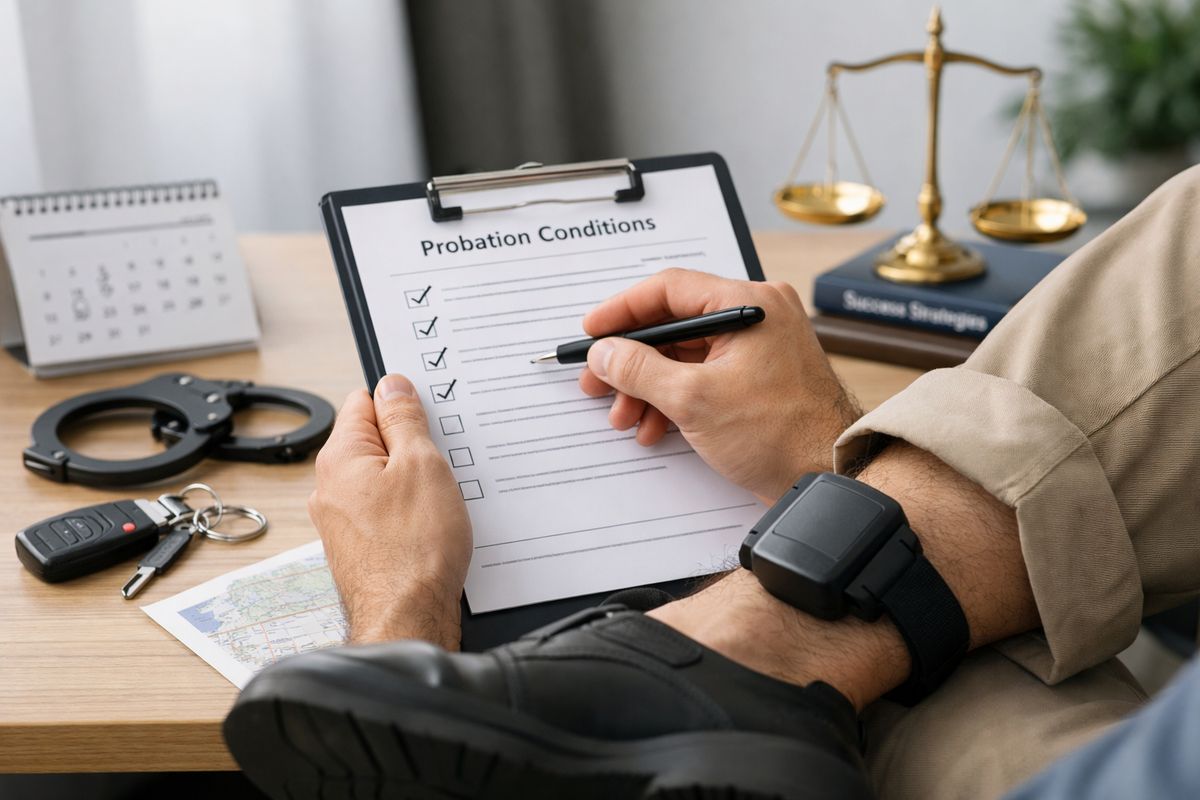
Probation rules can feel simple until one missed appointment, one weekend trip, or one unpaid fee turns into a real problem. If you want to avoid violations, the trick is not guessing what probation means in general, but knowing exactly what your probation rules require in your case and building your routine around them.
Probation is a court-ordered period of supervision in the community instead of jail, or sometimes after jail, with conditions you must follow. Those conditions can cover reporting, travel, treatment, payments, work, and contact with certain people or places. In plain English, probation is freedom with strings attached, and your sentencing paperwork is the string that matters most.
Early on, focus on a few basics:
- What your written conditions actually say
- When and how you must report
- What needs prior approval
- What proof you should save
- What to do fast if something goes wrong
What Probation Actually Means
Probation is a sentence that lets you stay in the community while the court keeps oversight on your conduct and daily obligations. That sounds better than jail, and it often is, but the catch is that probation is not casual. Every condition attached to it can become the basis for a violation if you ignore it.
Day to day, probation usually means some mix of check-ins, payments, classes, testing, treatment, work requirements, or location restrictions. Some people report monthly. Some report more often. Some barely check in at all, but still have strict court conditions that sit quietly in the background until something goes wrong.
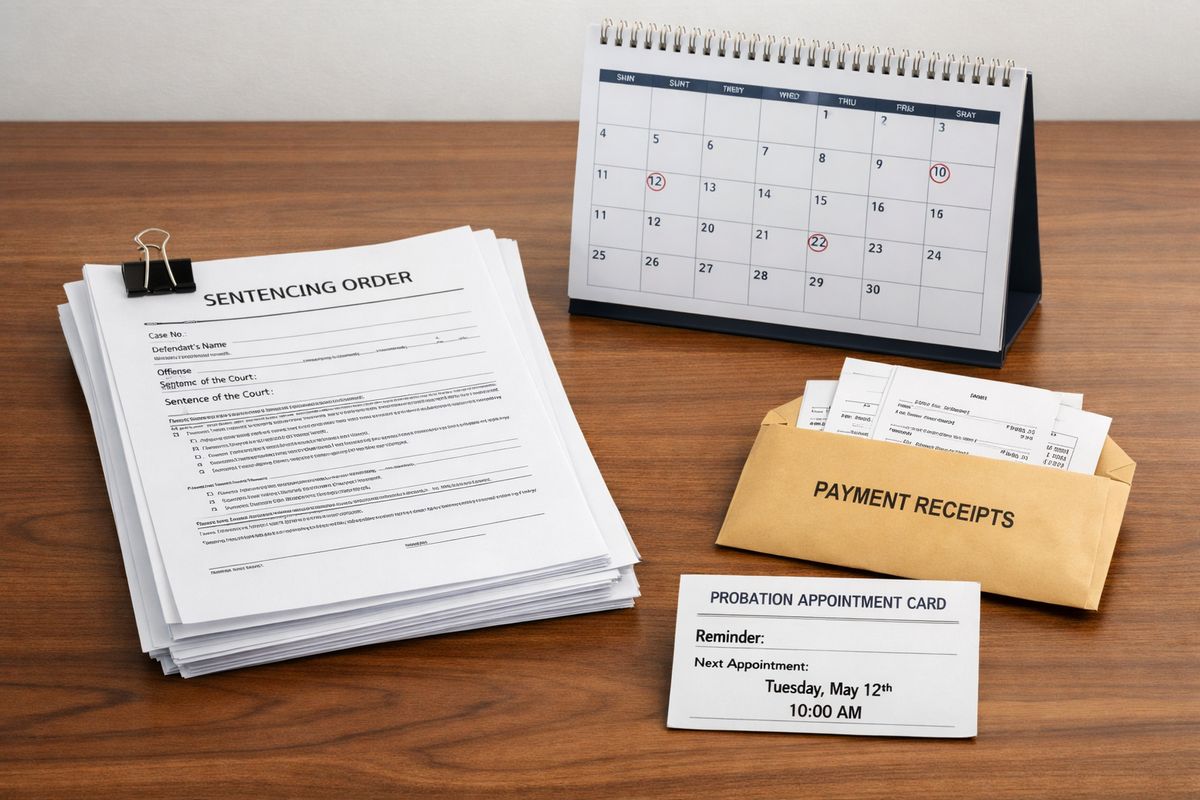
The biggest mistake is treating probation like a vague warning instead of a written order. Your judge may have said a lot in court. Your probation officer may explain local procedures. But your sentencing order, probation order, and any signed conditions are the documents that control.
Probation vs. parole vs. supervised release
These terms get mixed up constantly, and that confusion causes trouble.
Probation is usually a sentence imposed by a court instead of incarceration, or as part of the sentence. You remain in the community under court-ordered conditions.
Parole is different. Parole usually happens after time in prison, when early release is granted under supervision. If you are on parole, the rules come from that release system, not from a straight probation sentence.
Supervised release is another separate category, most often tied to the federal system. It usually begins after a prison term ends. If you are trying to compare how your case was handled, it helps to understand how sentencing decisions are shaped in the first place, because probation, prison, and post-release supervision can all fit together differently.
Why probation rules can feel confusing
Probation rules feel confusing because several layers can overlap at once. You may have general court conditions, local probation office policies, program rules from treatment providers, and personal conditions written just for your case.
That is why two people in the same county can both say “I’m on probation” and still have very different restrictions. One may have weekly testing and a curfew. Another may just need to stay crime-free and pay restitution.
Here’s the thing: the paperwork matters more than memory, assumptions, or what happened in somebody else’s case. If a condition is unclear, guessing is dangerous.
The Main Types of Probation You May Be Dealing With
Not all probation looks the same. The amount of supervision changes how much structure you need and how fast a small mistake can snowball.
Supervised probation
Supervised probation is the version most people picture. You usually have a probation officer, regular reporting requirements, and active monitoring. That can include office visits, home visits, work verification, drug or alcohol testing, treatment check-ins, and rules about where you live or travel.
With supervised probation, silence is rarely harmless. If your phone number changes, your job changes, or your ride falls through, that can matter. A missed appointment on supervised probation is not just a scheduling issue. It can be treated as noncompliance.
Unsupervised or informal probation
Unsupervised probation sounds easier, and in many ways it is. You may not have regular officer check-ins, and you may handle most things through the court clerk, payment records, or proof of class completion.
But fewer check-ins do not mean fewer consequences. If your conditions say complete a class, pay restitution, avoid new charges, or obey a no-contact order, those rules still apply. A lot of people get tripped up here because the supervision feels invisible until the court reviews the file and notices something missing.
Specialized probation programs
Some cases come with specialized probation programs such as drug court, DUI probation, mental health court, or veterans court. These programs often add treatment, counseling, sobriety monitoring, frequent court reviews, or strict incentives and sanctions.
If your case involves alcohol or driving charges, the probation piece may also connect to license problems, treatment rules, and other consequences. That overlap makes it worth understanding what separates DUI and DWI charges in different systems, because the label on the case can affect what programs and conditions show up.
The Probation Rules You Need to Know First
Some probation conditions are so common that you should expect to see them unless your order says otherwise. These are the rules most likely to cause violations because they affect ordinary life.
Report as ordered
“Report as ordered” means exactly what it sounds like. If you are told to appear in person, call in, attend a virtual check-in, or show up for a review hearing, you must do it on time and in the way ordered.
Missing one appointment can create a chain reaction fast. Maybe you thought a phone call would be enough. Maybe you mixed up the time. Maybe you assumed somebody would reschedule you. Probation systems are not built around benefit-of-the-doubt thinking. If you cannot make a required contact, speak up before the deadline passes.
Stay crime-free
Nearly every probation order includes some version of “obey all laws” or “commit no new offenses.” That means more than avoiding a conviction. A new arrest, citation, or charge can trigger court attention immediately.
This matters even if the new case seems minor. If you are not sure how a new case starts moving through court, it helps to know what happens at that early court stage, because probation trouble can start before the new charge is resolved.
Get permission before travel or moving
Travel and relocation rules catch a lot of people off guard. Some orders ban leaving the county or state without approval. Some require permission for overnight trips. Some require notice before any address change, even if the move is temporary.
The simple rule is this: ask first. Explaining later is much harder. A three-day trip for a wedding, a night at a partner’s apartment, or a move after losing housing can all become issues if your conditions require prior approval.
Follow testing, treatment, and classes
If your probation includes drug testing, alcohol testing, counseling, anger management, DUI school, parenting classes, or other programs, those are not side tasks. They are core conditions.
You usually need to do more than attend. You may need to enroll by a deadline, participate consistently, follow provider rules, and submit proof of completion. One failed drug test, one missed counseling session, or one discharge from treatment can trigger a violation report.
Pay fines, fees, restitution, or court costs
These payments sound interchangeable, but they are not. Fines punish. Court costs cover system expenses. Fees may support supervision or required programs. Restitution is money paid to a victim for losses.
Falling behind without saying anything is what creates the real danger. Courts often care less about a temporary money problem than about silence, avoidance, or no effort to document hardship.
The Rules That Catch People Off Guard
The obvious rules get attention. The smaller ones are often the ones that cause the mess.
Curfews, location limits, and no-contact orders
Some probation orders tell you when you must be home, where you cannot go, and who you cannot contact. That may include victims, co-defendants, certain neighborhoods, bars, liquor stores, or a former partner’s home or workplace.
No-contact rules are especially easy to violate by accident or emotion. A text, a message through a friend, or showing up “just to talk” can create another case on top of the probation problem. If that condition applies to you, read more about what can happen when a stay-away order is broken.
Firearms, weapons, and restricted items
Many probation orders ban possession of firearms, ammunition, or other weapons. That can be a shock if gun ownership was a normal part of your life before sentencing.
Do not assume the ban only applies if you carry a weapon in public. Depending on the order and local law, a gun in your house, vehicle, or even shared living space can become a serious issue. If the item is restricted, the safe move is to remove the gray area entirely.
Search conditions and privacy limits
Probation often reduces your privacy rights. Some conditions allow searches of your person, home, car, phone, or property by probation staff or law enforcement, sometimes with fewer requirements than would apply otherwise.
That does not mean every search is unlimited in every state. Local law still matters. But you should assume probation comes with less privacy, not more. If a search condition appears in your order, treat it like a live rule, not boilerplate.
Employment, school, and daily routine requirements
Some probation terms require you to keep a job, look for work, attend school, or maintain a stable daily routine. If you lose a job, stop attending classes, or change schedules, reporting that change may be part of compliance.
This is one of those areas where ordinary life problems spill into legal trouble. Missing work, unstable housing, or family disruption can all affect probation. A case involving family conflict may even overlap with how courts handle allegations tied to domestic violence matters, especially if contact restrictions or parenting issues are part of the order.
How to Read Your Probation Terms Without Missing Anything
Court paperwork can feel like reading instructions for a machine you never wanted. Still, this is where you prevent avoidable violations.
Start with your sentencing order
Start with the document that actually imposed probation. That is usually the sentencing order, judgment, probation order, or a separate list of conditions signed in court. Read every page, including attachments.
Do not rely on memory from the hearing. Courtrooms move fast. You may remember the judge saying “just check in and stay out of trouble,” then miss the written line requiring treatment, travel approval, or no alcohol use.
Make a one-page personal rules list
Turn your paperwork into a one-page checklist you can read in under a minute. Write down every reporting date, payment amount, travel limit, program deadline, testing rule, and special restriction.
Put it in plain English. “Call by Friday at 3 p.m.” is better than copying legal language you will never look at again. A one-page list works like a fridge note or a packing checklist. Boring, but it saves you from stupid mistakes.
Ask questions right away if anything is unclear
If any condition is vague, ask fast. Call your probation officer. Contact your lawyer. Get clarification in writing if possible.
Guessing is how violations happen. The same is true if you are still sorting out counsel and costs. Before you delay legal help over money, take a look at what criminal defense fees often look like in real cases, because the cost of doing nothing can get much worse.
How to Stay Compliant in Real Life
Knowing the rules is step one. Building habits around them is what keeps you out of trouble.
Build a calendar for every deadline
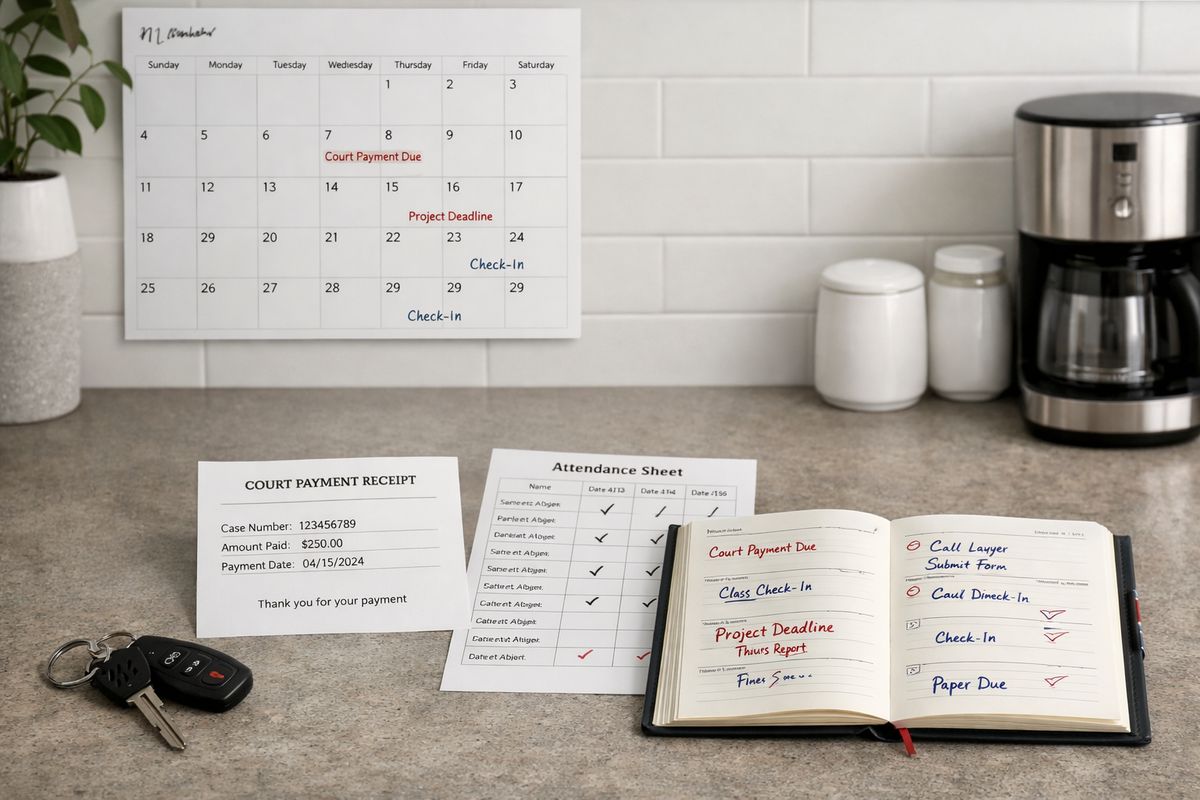
Put every appointment, payment date, class, and testing requirement into a calendar the same day you learn it. Your phone works. A paper planner works. Using both is even better.
Be specific. If you have a Tuesday 8:30 a.m. office visit downtown, enter the address, travel time, what documents to bring, and two reminders, one the night before and one an hour before. Probation is not the place to trust memory.
Keep proof of everything
Save receipts, attendance slips, screenshots, emails, text confirmations, enrollment records, drug test paperwork, and payment confirmations. If somebody says you missed something you actually completed, proof can save you.
Keep it organized in one folder, physical or digital. If your life gets messy, your records should not. A screenshot from 9:14 a.m. showing you checked into a required class can matter more than a long explanation later.
Communicate before a problem turns into a violation
If you get sick, lose your ride, lose your job, miss a payment, or run into a treatment problem, communicate early. Not after the missed deadline. Before it.
Stick to facts. Say what happened, what proof you have, and what you are doing next. That same habit matters in any criminal case. If police contact you or a new allegation appears, knowing what your right to stay silent actually protects can keep a bad situation from getting worse.
What Counts as a Probation Violation
A probation violation is any failure to follow the conditions of probation. Some violations are technical. Some involve a new offense. Both can lead to serious consequences.
Technical violations
A technical violation means breaking a probation rule without necessarily committing a new crime. Common examples include missed appointments, positive drug tests, skipped classes, unpaid fees, curfew violations, or travel without approval.
A technical violation may sound minor, but courts do not always treat it that way. Repeated “small” violations can make you look like you are ignoring the sentence.
New law violations
If you are arrested or charged with a new offense while on probation, the court may treat that as a probation violation even before the new case is finished. The standard and timing are different from a normal criminal trial.
That surprises a lot of people. “I haven’t been convicted yet” may be true, but probation can still be in danger while the new case is pending.
Willful vs. non-willful violations
This distinction matters a lot. A willful violation means the court believes you could have complied but chose not to. A non-willful violation means you genuinely could not comply despite real effort.
Think of the difference between refusing to pay and losing your job, documenting the loss, and asking for help before the due date. Same missed payment on paper, very different story in court.
What Happens After a Probation Violation
The process after a violation depends on the rule broken, your history, and local practice, but the range of outcomes is wider than most people expect.
Warning, modification, or arrest
Sometimes the first response is a warning. Sometimes it is a stricter reporting schedule, more testing, extra classes, electronic monitoring, or added treatment.
Other times, especially with repeated problems or a new arrest, a judge may issue a warrant and you may be taken into custody. If that happens, understanding what protections still apply during an arrest matters right away.
The probation violation hearing
A probation violation hearing is not the same as a regular criminal trial. The court reviews whether you violated the terms of probation, and the rules of evidence and proof can work differently than in a new criminal case.
The hearing may focus on officer reports, records, test results, payment history, witness testimony, and your explanation. That is why documents and timelines matter so much.
Possible penalties
If the court finds a violation, penalties can include a warning, added conditions, extended probation, more supervision, short jail sanctions, full revocation, or an order to serve the original sentence.
Consequences can escalate quickly. One violation can also affect how future charges, pleas, or sentencing decisions are viewed. This is not an area to treat casually.

What to Do If You Think You Broke a Rule
The worst moment on probation is that sinking feeling that something went wrong. The good news is that panic helps less than simple, fast action.
Do not ignore it
Silence is the fastest way to make a bad situation worse. Avoiding calls, skipping the next meeting, or hoping nobody notices almost always backfires.
Probation systems tend to react more strongly to disappearance than to a problem reported early. If you messed up, disappearing makes it look intentional.
Gather documents and timeline details
Start collecting proof right away. Pull together dates, receipts, screenshots, treatment records, call logs, medical notes, transportation records, emails, or witness information that supports your explanation.
Build a short timeline while details are still fresh. Write what happened, when it happened, who you contacted, and what proof backs it up. A clear timeline is far more useful than a scattered story.
Contact your lawyer or probation officer fast
If you have a lawyer, contact that lawyer quickly. If you do not, reach out to your probation officer and stick to clear facts. Do not ramble. Do not guess. Do not make the situation messier with emotional side arguments.
If you are deciding whether to hire counsel, focus on fit and experience, not just ads or promises. It helps to know what to look for when choosing defense counsel, especially if jail time is on the table.
Special Situations That Change the Rules
Some situations create confusion because everyday life changes faster than court paperwork does.
If you want to travel
Ask for travel permission early, especially for overnight trips or out-of-state travel. Some offices want written requests. Some want proof of destination, dates, lodging, and reason for travel.
Do not assume a weekend trip is too small to matter. A Friday-to-Sunday trip can still violate probation if your order requires approval first.
If you want to move or change jobs
A new address, new employer, new schedule, or move to another county can trigger reporting duties. Interstate moves can require a transfer process that takes time.
Even a positive life change, like getting a better job in another city, can become a problem if you move first and explain later. Keep the order of events straight: request, approval, then change.
If you cannot afford a payment or program
If you cannot afford a fee, class, monitoring cost, or restitution payment, document the hardship immediately. Keep pay stubs, termination notices, benefit records, medical bills, or anything else that shows the problem is real.
Then ask about payment plans, modifications, alternate providers, community service options, or schedule changes if available. Courts are much more likely to work with visible effort than with silence.
Smart Questions to Ask at the Start of Probation
The start of probation is the best time to prevent confusion later. A few smart questions can save months of trouble.
Questions about reporting and communication
Ask exactly how often you must report and by what method. Get the office phone number, email rules, after-hours instructions, and the name of the person you should contact if you are running late or your phone changes.
Also ask what counts as a missed appointment. Five minutes late, same-day cancellation, and no-show may be treated very differently.
Questions about restrictions and permissions
Ask directly about travel, overnight stays, curfew, alcohol use, prescription medication, visitors at your home, work hours, and whether any people or places are off-limits.
Do not assume silence means permission. If a condition feels like a gray area, make somebody spell it out.
Questions about records and proof
Ask what proof you need to save for classes, treatment, tests, payments, and community service. Ask how to confirm that payments posted correctly and how to show completion if a provider closes or delays records.
The trick is simple: if a future dispute comes up, you want something you can hold in your hand or pull up on your phone.
A Simple Plan to Avoid Probation Violations
Probation gets easier once you stop treating it like a moving target and start treating it like a checklist. Know your rules, track every deadline, save proof, and speak up early when life gets messy.
Try one thing today: make your one-page probation checklist before tonight. Put every rule, number, deadline, and restriction in one place you can actually use. That small step does more to prevent violations than vague good intentions ever will.
Frequently Asked Questions
Can you violate probation without being arrested?
Yes. Many probation violations are technical violations, not new arrests. Missing a meeting, failing a drug test, skipping a class, breaking curfew, or traveling without permission can all be enough.
Does a missed payment automatically mean probation revocation?
Not always. Courts often look at why the payment was missed and whether the failure was willful. A documented hardship with early communication is very different from ignoring the obligation.
Can probation rules change after sentencing?
Yes. A court can modify probation conditions, sometimes after a violation, sometimes after a request, and sometimes because your situation changed. Never assume your original terms stayed the same unless you have updated paperwork.
What if your probation officer tells you something different from your paperwork?
Treat the written order as the starting point, then get clarification fast. If there is a conflict between what you were told and what is written, ask for the instruction to be confirmed clearly and, if possible, in writing.
Do you need permission for a short trip out of town?
Often yes, depending on your conditions. Some probation orders require approval for overnight travel, leaving the county, or leaving the state. Even a quick weekend trip can be a violation if you were supposed to ask first.
What should you bring to a probation violation hearing?
Bring organized proof: receipts, class records, treatment notes, payment confirmations, messages, medical documents, and a timeline of events. If a lawyer is involved, hand over everything early so nothing gets lost or overlooked.
Speak With Attorney Nathan J. Dineen
Attorney Nathan J. Dineen represents clients facing DUI, OWI, and related criminal charges throughout Wisconsin. His approach combines strategic courtroom advocacy with advanced training in standardized field sobriety testing, drug-recognition evaluation, and the science behind breath, blood, and chemical testing.
Nathan has also presented DUI defense topics to other attorneys and has been recognized by legal organizations for trial advocacy, professional achievement, and work in impaired-driving defense.
A DUI or OWI charge can affect your license, career, reputation, and future. Get experienced legal guidance before making your next decision.
Schedule your confidential consultation with Attorney Nathan J. Dineen today.

About Nate Dineen
Wisconsin legal insights from the DUI Defense WI team.