Possession or Control
Where the item was found, who could access it, whether it was hidden, and what evidence allegedly connects it to the accused.

A possession allegation can affect freedom, employment, education, housing, and professional opportunities. The search, alleged control, substance identification, and chain of custody should be examined before decisions are made.
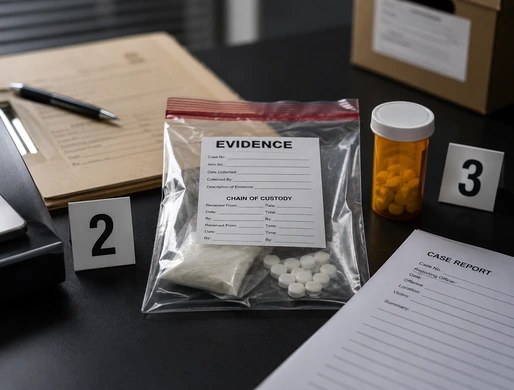
A drug-possession allegation may arise from a vehicle, residence, shared room, workplace, clothing, bag, prescription container, or another location used by more than one person. Finding a substance nearby is not the same as proving that a specific person knowingly possessed or controlled it.
The defense should evaluate why police were present, whether a stop or search was lawful, who had access to the location, what statements were made, and whether officers documented the evidence consistently.
Substance identification may also depend on laboratory testing, weight, packaging, sample preservation, and chain-of-custody records. Each step should be reviewed rather than assuming the field identification is conclusive.
The actual analysis depends on the evidence, the statutory subsection, the county, the procedural history, prior matters, and current Wisconsin law.
Each part of the allegation should be matched against reliable, admissible evidence rather than assumed from the police report.
Where the item was found, who could access it, whether it was hidden, and what evidence allegedly connects it to the accused.
Statements, behavior, packaging, location, ownership, and surrounding circumstances may be used to argue that the accused knew what the substance was.
The stop, detention, consent request, warrant, protective search, vehicle search, and scope of seizure may create suppression issues.
Field tests, laboratory methods, sample handling, weight, contamination, and documentation may affect the reliability of the identification.
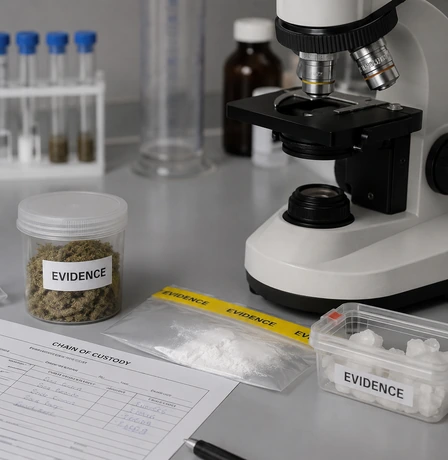
The defense should reconstruct the location where the substance was found and identify every person who had access. Shared vehicles, shared homes, borrowed clothing, passengers, and common areas can create important factual disputes.
Statements should be compared with video, reports, photographs, property records, fingerprints, digital records, and laboratory documentation. A short police narrative may omit context that materially changes the analysis.
The defense strategy should address both the legal allegation and the practical effects on work, driving, licensing, family, insurance, and future opportunities.
The substance, amount, alleged intent, prescription status, and prior record may affect how the allegation is charged.
A drug allegation can create collateral concerns for regulated work, professional licenses, background checks, and school programs.
A possession allegation may appear with an OWI, traffic stop, probation issue, or other criminal accusation.
Suppression, dismissal, amendment, diversion, treatment, negotiated resolution, and trial require different evidence and preparation.
A structured process helps preserve evidence, identify legal issues, and keep negotiation and trial options available.
Request video, dispatch records, photographs, warrants, property logs, and laboratory records before they are lost or overwritten.
Map the vehicle, room, container, occupants, ownership, and timing to evaluate knowledge and control.
Compare police conduct with the claimed legal basis for the detention, search, and seizure.
Coordinate legal motions, factual defenses, mitigation, treatment information, negotiation, and trial preparation.
These pages address related charges, testing issues, license concerns, or defense topics that may overlap with this case.
These answers provide general information. Individual facts and current law control the analysis.
No. Proximity can be evidence, but the complete record should be evaluated to determine whether the State can connect the accused to knowing possession or control.
Yes. The facts supporting the stop, detention, warrant, consent request, search, and seizure should be reviewed for suppression issues.
Shared access can be important. The evidence must be examined to determine whether it identifies one person rather than merely showing that the substance was present.
Laboratory records may address identification, sample handling, analytical methods, controls, weight, chain of custody, and potential contamination.
Possession of medication can involve prescription status, container information, ownership, transfer, quantity, and the specific controlled substance alleged.
Contact the firm to confirm the best location or meeting arrangement for your case.
Share the charge, county, evidence, prior history, accident details, and any immediate court or license deadline.