
Burglary vs. Robbery: What’s the Difference in Court?

If you have ever heard about a break-in on the news and wondered why it was called robbery instead of burglary, or the other way around, you are not alone. In court, burglary vs robbery is not a small wording issue. It changes what prosecutors must prove, how a jury hears the case, and how serious the punishment can get.
Quick Overview of Burglary and Robbery
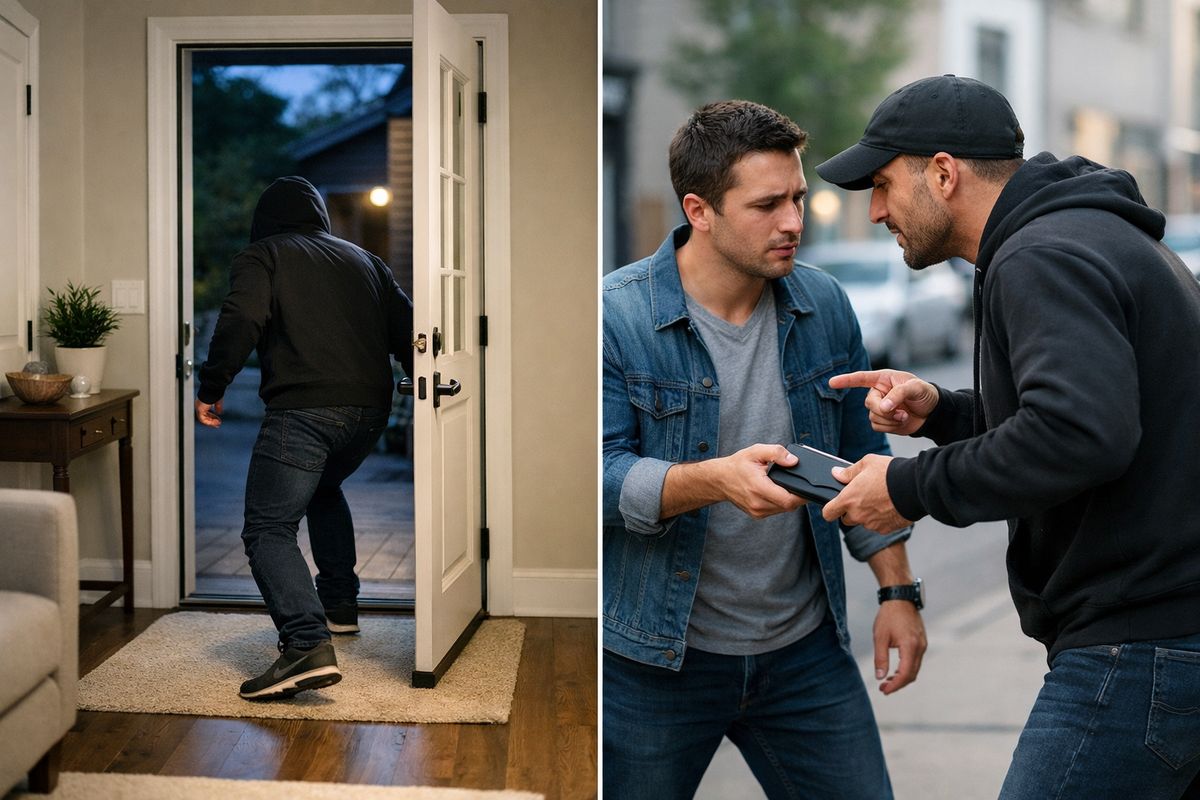
Burglary and robbery both involve crime against property, but that is where the easy overlap ends. Burglary is usually about going into a building, home, garage, or sometimes even a vehicle without permission, with the intent to commit a crime inside. Robbery is about taking property from a person through force, intimidation, or threats.
That means a burglary can happen in total silence at 2:00 a.m. in an empty house. A robbery usually involves a face-to-face encounter, even if it lasts only a few seconds.
The Core Legal Difference
Here’s the simple version: burglary is an entry crime, robbery is a confrontation crime.
For burglary, the court usually focuses on unlawful entry plus criminal intent. For robbery, the court focuses on taking something from a person by force or fear. That distinction matters more than the value of what was taken. In many cases, a stolen phone and a stolen television can lead to very different charges depending on how the property was taken.
If you remember one thing, make it this: burglary is usually about where and why someone entered, while robbery is about how property was taken from a person.
What Prosecutors Have to Prove
Every criminal charge comes with legal elements, basically a checklist. If prosecutors cannot prove each required part beyond a reasonable doubt, the charge can fall apart. That is the same basic idea behind any criminal case, from property crimes to getting a charge thrown out before trial.
In a burglary case, prosecutors usually need to show unlawful entry, or sometimes remaining unlawfully, and the intent to commit a crime once inside. In a robbery case, prosecutors usually need to show that property was taken from a person or from that person’s immediate presence through force, threats, or intimidation.
The key difference is timing. In burglary, intent often exists before or at the moment of entry. In robbery, the force or threat is tied to the taking itself.
Presence of a Victim
This is where many people get tripped up. Burglary does not require anyone to be present.
Picture an empty apartment in Phoenix while the tenant is away for the weekend. If someone climbs through a window planning to steal a laptop, that can be burglary even if nobody ever comes home during the crime. Robbery usually does require direct contact with a person, such as a mugging outside a gas station where a wallet is handed over because of fear.
That direct human element changes everything. A jury often sees robbery as more immediate and more frightening because someone was personally threatened.
Force, Threats, and Violence
Force is the engine of robbery. Without force, intimidation, or threat, the charge may drop closer to theft instead. A snatched purse can become robbery if force was used to wrest it away. A demand for money while flashing a knife is even clearer.
Burglary does not need any of that. Someone can sneak through an unlocked back door, take jewelry, and leave without waking anyone. That can still be burglary. But if force enters the picture during the taking, the case starts looking very different in court, and sentencing risk rises fast. If you want a deeper look at how courts weigh punishment, it helps to understand what judges look at during sentencing.

Entry, Trespass, and Intent
On the burglary side, entry and intent do most of the work. Entry can be dramatic, like kicking in a door, or surprisingly minimal, like slipping a hand through an open window to unlock it. The trick is that the prosecution usually does not need to prove a successful theft.
Intent is the catch. If someone walks into a store during business hours and later decides to steal, that may be theft, not burglary, depending on state law and the facts. But if someone enters a closed store after hours planning to steal from the start, burglary is on the table even if nothing gets taken.
That is why burglary cases often turn on details that sound small but are not, such as permission, timing, and what can be inferred from conduct.
When the Crime Is Considered Complete
Burglary can be complete the moment unlawful entry happens with the intent to commit a crime inside. Nothing else has to happen. No stolen property. No confrontation. No escape.
Robbery usually is not complete until property is actually taken through force or threat. If there is a threat but no taking, prosecutors may look at attempted robbery or another related charge instead.
That timing issue matters in plea negotiations, charging decisions, and even at your first trip into court, where the formal accusation starts shaping the entire case.
Common Examples and Everyday Scenarios
A person breaks into a hardware store after closing to steal power tools. That is classic burglary.
A person corners someone in a parking lot and demands a purse while implying a weapon is present. That is robbery, even if no actual weapon appears.
A person enters a detached garage without permission to steal a leaf blower. That can still be burglary in many places, because the unlawful entry and criminal intent are enough.
A person grabs cash from a register while shoving the clerk aside. That leans toward robbery because force was used against a person during the taking.
Like sorting laundry, the labels look similar until you pay attention to what fabric you are holding. Entry points to burglary. Confrontation points to robbery.
Charges, Degrees, and Aggravating Factors
Both offenses can come in degrees or enhanced versions. States often treat occupied homes, nighttime entry, use of weapons, injury, or prior convictions as aggravating factors that raise the stakes.
A burglary of an occupied residence is usually viewed more harshly than entering an empty shed. An armed robbery is usually treated more harshly than a threat with no weapon displayed. In many states, both charges are felonies, though exact labels differ. If you need the broader picture, it helps to understand what separates a misdemeanor from a felony.
Penalties and Sentencing
Robbery often brings tougher penalties than burglary because it puts a person in direct danger. Courts tend to punish violence, threats, and fear more severely than unlawful entry alone.
That said, burglary is still serious. Prison time, probation, fines, restitution, and a lasting criminal record are all possible. Once a felony conviction enters the picture, the fallout can stick for years, including background checks and housing problems. A closer look at how felony consequences keep following you makes that part painfully clear.
Pricing and Legal Costs
The legal cost side can hit hard long before sentencing. Bail, missed work, court fees, investigation expenses, and attorney fees can pile up quickly.
Robbery cases often cost more to defend because the evidence is heavier. More witnesses. More surveillance footage. More forensic questions. More exposure if the charge carries a long prison term. Burglary cases can still be expensive, but robbery tends to be the costlier courtroom fight. For a grounded look at money, see what a criminal case can really cost to defend.
Defenses Used in Court
Burglary defenses often target intent or entry. If there was permission to enter, no unlawful entry may exist. If there was no intent to commit a crime at the time of entry, the burglary charge can weaken.
Robbery defenses often focus on identity, force, or the nature of the taking. If the wrong person was identified, if no threat occurred, or if the property was not taken from a person or immediate presence, prosecutors may struggle to prove robbery.
And yes, what you say early on can matter. Knowing what your silence legally protects can shape how a defense starts before a courtroom ever gets involved.
How Courts and Juries Tend to View Each Charge
Robbery usually feels more personal in court. Someone was scared, cornered, shoved, threatened, or hurt. That emotional reality can land hard with a jury.
Burglary often turns more on inference and detail. Was the entry unlawful? Was there intent at the time? Those questions are serious, but they can feel less visceral than a direct confrontation. That difference in perception can affect plea offers, trial strategy, and sentencing arguments.
When a Case Could Involve Both Burglary and Robbery
Sometimes the line is not either-or. A person can unlawfully enter a home intending to steal, then run into an occupant and use force to take a wallet or phone. That can support both burglary and robbery charges from the same event.
Once that happens, exposure rises fast because prosecutors are not choosing one label. Instead, multiple felony counts can stack on the same set of facts.
When Burglary Fits Better and When Robbery Fits Better
Use a simple sorting rule. If the main fact is unlawful entry into a place with criminal intent, burglary fits better. If the main fact is taking property from a person by force or fear, robbery fits better.
If both happened, both labels may apply. That is the part people often miss. Burglary is not just stealing, and robbery is not just taking. Courtrooms care about the method.
Verdict: Burglary vs. Robbery in Court
If you want the clearest takeaway, here it is: robbery is usually the more serious courtroom problem because it involves force or fear against a person, while burglary centers on unlawful entry and criminal intent.
The next time you hear the terms used interchangeably, try one simple test. Ask whether the key fact is entry or confrontation. That one question usually gets you to the right answer fast.
Frequently Asked Questions
Is burglary always a felony?
Not always, but it often is. State law controls the charge level, and factors like entering a home, entering at night, or having a weapon can raise it quickly.
Can you be charged with burglary if nothing was stolen?
Yes. If unlawful entry happened with intent to commit a crime inside, burglary can be complete even when nothing was actually taken.
Does robbery require a weapon?
No. A weapon can make the charge more serious, but robbery can still happen through threats, intimidation, or physical force alone.
What if property was taken from a store, not a person?
That usually points away from robbery unless force or threats were used against someone during the taking. Depending on the facts, the charge may be theft, shoplifting, or burglary.
Can one incident lead to both burglary and robbery charges?
Yes. Unlawful entry into a home or building, followed by force or threats to take property from a person inside, can support both charges.
Speak With Attorney Nathan J. Dineen
Attorney Nathan J. Dineen represents clients facing DUI, OWI, and related criminal charges throughout Wisconsin. His approach combines strategic courtroom advocacy with advanced training in standardized field sobriety testing, drug-recognition evaluation, and the science behind breath, blood, and chemical testing.
Nathan has also presented DUI defense topics to other attorneys and has been recognized by legal organizations for trial advocacy, professional achievement, and work in impaired-driving defense.
A DUI or OWI charge can affect your license, career, reputation, and future. Get experienced legal guidance before making your next decision.
Schedule your confidential consultation with Attorney Nathan J. Dineen today.

About Nate Dineen
Wisconsin legal insights from the DUI Defense WI team.