
Aggressive Defense. Personalized Attention. Protecting Your Future.
Roadside OWI Evidence

Field SobrietyTesting

Standardized field sobriety tests are divided-attention and eye-movement exercises used by officers to gather evidence before an OWI arrest.

Roadside TestingThe Tests Must Be Administered and Scored Properly

Instructions, demonstrations, environmental conditions, medical factors, and video all affect interpretation.

HGNEye-movement test
Walk-and-TurnDivided-attention test
One-Leg StandBalance and instruction test
EvidenceNot a laboratory result
Overview

Roadside Exercises Are Not Simple Pass-or-Fail Tests

The standardized battery commonly includes Horizontal Gaze Nystagmus, Walk-and-Turn, and One-Leg Stand. Officers look for specific clues, but the significance of those clues depends on proper administration and the surrounding conditions.

Important

Alphabet, finger-to-nose, counting, and similar exercises may be non-standardized tests and should not be confused with the standardized three-test battery.

01

Horizontal Gaze Nystagmus

The officer moves a stimulus and looks for lack of smooth pursuit, sustained nystagmus at maximum deviation, and onset before 45 degrees.

  • Correct stimulus distance and speed matter
  • Medical or neurological causes should be considered
  • The officer should document the clues in each eye
02

Walk-and-Turn

The person is asked to maintain a position, follow multi-step instructions, walk heel-to-toe, turn, and return while the officer looks for standardized clues.

  • Surface, footwear, weather, traffic, and lighting matter
  • Instructions and demonstration should be complete
  • Video can confirm or contradict scoring
03

One-Leg Stand

The person raises one foot, watches it, and counts while the officer observes swaying, hopping, using arms, or putting the foot down.

  • Age, injury, balance, and fatigue may matter
  • The timing should be documented
  • The exercise does not directly measure BAC
Practical Review

What to Examine in the Video

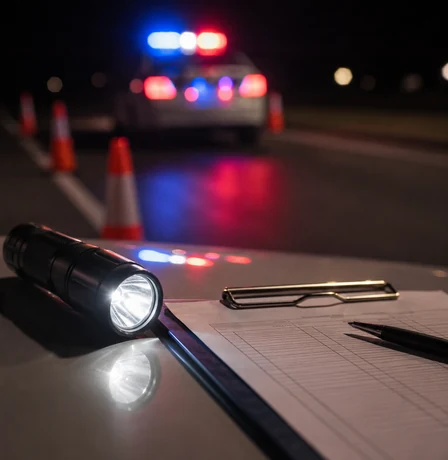
A detailed review compares the report, officer testimony, and what the recording actually shows.

  • Instructions and demonstrations
  • Testing surface and lighting
  • Footwear, injuries, balance, and fatigue
  • Exact clues claimed by the officer
  • Duration, timing, and interruptions
Common Questions

Legal and Practical Context

These answers are general. The correct analysis depends on the facts, record, notices, and current law.

Roadside exercises and preliminary breath testing are different from evidentiary chemical testing. The consequences of declining depend on the circumstances.

No. The tests are pieces of evidence considered with driving, observations, statements, chemical testing, and other facts.

Medical, neurological, environmental, and procedural factors may affect eye movement and should be considered.

The recording can show instructions, environmental conditions, performance, and whether the report accurately describes the encounter.

Talk With a Wisconsin OWI Defense Attorney

Let’s Review
Your Situation

Share the facts, deadlines, notices, testing, driving record, and questions that need immediate attention.

Schedule a Consultation

    We typically respond within one business day.