
Choosing a Domestic Violence Defense Lawyer

A domestic violence defense lawyer usually becomes urgent at the worst possible moment: late at night, after an arrest, with court coming fast and your phone suddenly full of advice you did not ask for. In that kind of scramble, the lawyer you choose can shape the case in a very real way, from the first hearing to the long-term damage you may or may not carry forward.
Start with the lawyer search right away
Domestic violence cases move quickly. An arrest on Friday can turn into a bond hearing, a no-contact order, or an arraignment before you have even had time to get your bearings. That speed is exactly why waiting around is a mistake. Early decisions matter, early filings matter, and early communication matters.
Here’s the thing: this is not just about finding any criminal lawyer with a polished website. You are trying to find somebody who understands how domestic violence allegations are charged, how protective orders affect the case, and how small details can snowball. A text message sent in frustration, a neighbor who heard part of an argument, a bodycam clip from the front porch at 11:40 p.m., any of that can matter.
A rushed search can feel like buying a used car in the rain. Everything sounds plausible, everybody sounds confident, and you do not have much time. A good buyer’s guide helps you slow the process down just enough to spot what actually matters.

What a domestic violence defense lawyer actually does
A domestic violence defense lawyer protects your rights and starts managing the case immediately. That often includes reviewing the charges, looking at police reports, addressing bail or bond conditions, preparing you for arraignment, talking with prosecutors, and building a defense strategy based on the facts instead of panic.
In plain English, that means sorting out what happened, what the state claims happened, and what can be challenged. An arraignment is the first formal court appearance where the charge is read and a plea is entered. If you want a clearer picture of that stage, it helps to understand how that first plea hearing usually unfolds. A lawyer should be able to explain that process in normal language, not bury you in jargon.
A good defense lawyer also helps you avoid making the case worse. That can include advising you about contact restrictions, social media, statements to police, and what not to say to the other person involved. If you have not talked with counsel yet, protecting your right to stay quiet at the right time can matter more than most people realize.
Cases this kind of lawyer usually handles
Domestic violence is not always a single charge with a single name. It often works as a label attached to other criminal allegations when the people involved have a family, dating, marriage, or household relationship. That can include assault, battery, threats, harassment, stalking-related accusations, disorderly conduct, criminal damage to property, or accusations tied to a protective order violation.
Some cases stay at the misdemeanor level. Some are charged as felonies, especially if there are serious injuries, weapons, prior convictions, strangulation allegations, or repeated incidents. If you want a fuller picture of how these accusations are framed in criminal court, that background makes it easier to compare lawyers intelligently.
Why this is different from hiring a general criminal defense lawyer
General criminal defense experience has value, but domestic violence cases have a distinct set of moving parts. Protective orders can block contact with a spouse, partner, or child. Conditions of release can affect where you sleep that night. Family dynamics can overlap with divorce, custody, or immigration concerns. Judges often move carefully in these cases, and prosecutors often take a harder line than you might expect.
That is why focused experience matters. A lawyer who handles DUI, theft, and drug possession but rarely touches domestic violence matters may miss issues that a more focused attorney spots right away. The best fit usually understands the criminal case and the fallout around it, including how these accusations can affect parenting disputes.
Know what is at stake before you hire anybody
Plenty of people underestimate these cases at the start. That is a mistake. Even when the facts seem minor to you, the legal system may treat the accusation as serious from day one.
The obvious risk is conviction and punishment. The less obvious risk is everything attached to that outcome: firearm restrictions, immigration trouble, a damaged professional license, housing problems, and a record that follows you into future background checks. A strong hiring decision starts with understanding that the lawyer is not just handling a hearing date, the lawyer is protecting your options.
Criminal penalties and immediate court consequences
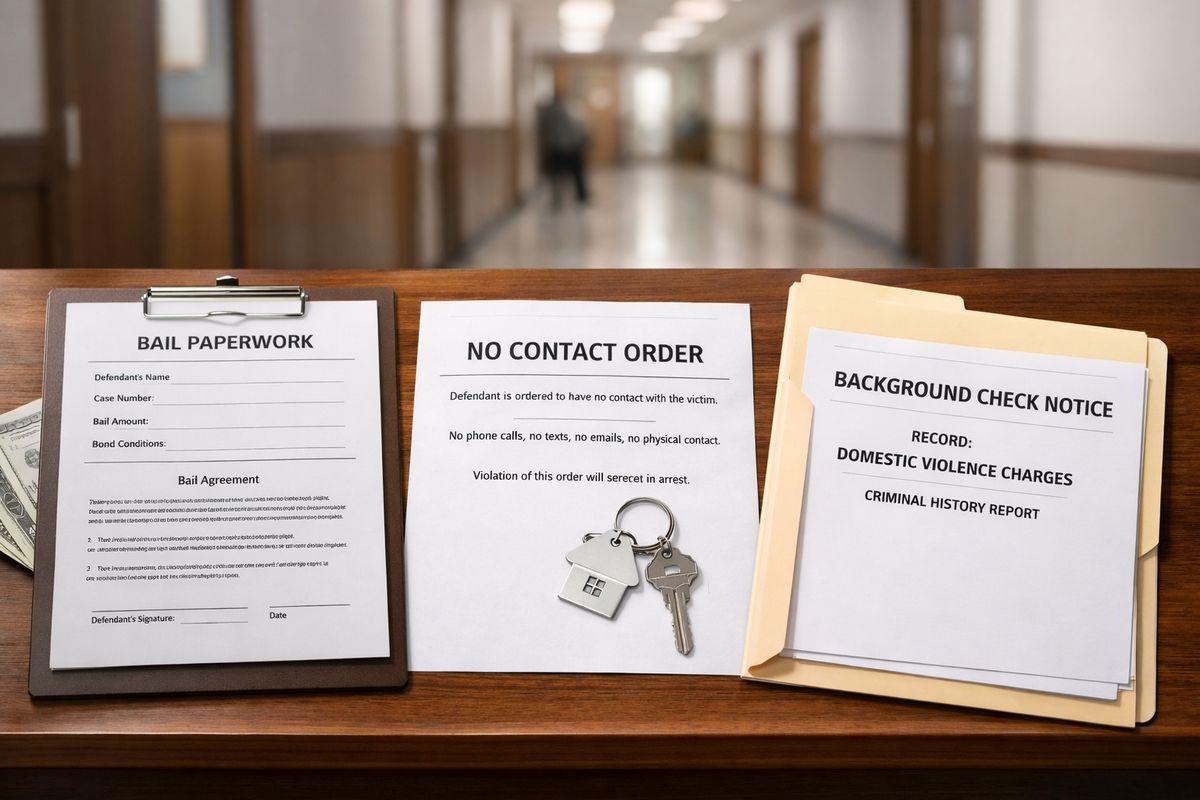
After arrest, you may go through booking, which is the intake process at the jail. Bail or bond may follow, meaning the court sets conditions for release. Those conditions can include no-contact orders, staying away from a home, avoiding alcohol, or checking in with pretrial services.
Then comes arraignment, pretrial hearings, negotiations, and possibly trial. Depending on the charge, the outcome can include probation, jail, fines, counseling, batterer’s intervention classes, community service, or stricter long-term no-contact conditions. The difference between a misdemeanor and a felony can be huge, not just in sentencing but in future consequences, so it helps to understand what separates lower-level charges from more serious ones.
Long-term effects outside the courtroom
The court case may end, but the effects often do not. Employers run background checks. Landlords run background checks. Licensing boards ask about criminal history. Future family court disputes can pull old allegations back into the spotlight.
Even a case that does not end in jail can still change how you move through ordinary parts of life. Child custody arguments, security clearances, immigration filings, and future sentencing exposure can all be affected by what happens now. That is why the cheapest, fastest, easiest answer is not always the best one.
The most important things to look for in a domestic violence defense lawyer
This is the center of the buying decision. Fancy branding is nice. Actual fit is better.
Relevant case experience
Look for recent, meaningful experience with domestic violence defense, not just a long menu of practice areas. A lawyer who says “criminal law, family law, personal injury, real estate, wills, traffic, and more” may be competent, but that list does not tell you much about depth.
What you want is familiarity with the kinds of facts that show up in these cases: conflicting witness statements, recanting witnesses, 911 calls, bodycam footage, medical records, text threads, intoxication issues, and protective order hearings. Experience here should sound specific, not generic.
Local court knowledge
Local knowledge matters more than most people think. Court culture differs by county. Filing habits differ. Prosecutors differ. Some judges push fast resolution. Some expect extensive motion practice. Some courts are strict about release conditions and schedule hearings quickly.
A lawyer who regularly appears in the same courthouse may know how domestic violence calendars tend to move and what procedural traps to avoid. That does not mean inside deals. It means practical familiarity, which is often more useful.
Communication and responsiveness
You should not have to chase your lawyer for basic information. If calls go unanswered before you hire anybody, expect worse after you sign.
Pay attention to how the lawyer explains the case. Do you get plain answers? Do you understand the likely sequence of events? Are risks named clearly? Good communication lowers confusion, which matters because criminal cases already come with plenty of stress. If you are trying to compare broader hiring standards, this is also one of the biggest markers of what actually separates a strong defense attorney from a forgettable one.
Strategy, not promises
A good lawyer talks strategy. A bad one sells certainty.
Be careful with anybody who promises dismissal in the first conversation, guarantees a miracle result, or acts as if the prosecutor will fold just because a fee was paid. Real defense work sounds more like this: here are the issues, here is the evidence to preserve, here is how no-contact conditions may affect you, here are the pressure points, and here is what the next 30 days usually look like.
Fees and billing clarity
Fee structures vary, but clarity should not. You should know whether the lawyer charges a flat fee, hourly rate, or retainer. You should know what that covers. You should know whether trial costs extra, whether a contested restraining order hearing costs extra, and whether expert witnesses or investigators are separate.
If the pricing conversation feels slippery, that is a problem. Criminal defense fees are already stressful enough. You should not be guessing what the invoice means.
Questions to ask during a consultation
A consultation should help you compare lawyers, not just listen to a sales pitch. Treat it like a buying conversation with real stakes.
Questions about experience and case handling
Ask how often domestic violence cases show up in the lawyer’s current practice. Ask who will actually appear in court. Ask whether most of the day-to-day work is handled personally or passed to staff. Ask what usually happens in the first 30 days of a case like yours.
Those questions cut through marketing fast. If answers stay vague, that tells you something.
Questions about defense approach
Ask what facts matter most at this stage. Ask what evidence should be preserved right now, such as call logs, text messages, photos, surveillance clips, location data, or witness names. Ask whether anybody should be contacted, and just as important, whether anybody should not be contacted because it could create a new problem.
If a protective order or no-contact rule is already in place, ask how that changes the defense. If you are dealing with a false allegation, it also helps to understand how early defense choices differ when the accusation itself is disputed.
Questions about cost and expectations
Ask for a written fee agreement. Ask what the likely full cost range looks like. Ask about payment plans, trial add-ons, investigation costs, and how updates will be delivered. Will you get calls, emails, portal messages, or court-date reminders by text?
Also ask what outcome range looks realistic. Not perfect. Realistic.

Warning signs that should make you keep looking
Some red flags are obvious once you know where to look. The trick is noticing them before you hand over money.
Guaranteed outcomes or pressure tactics
“I can get this dropped” sounds comforting, but it should make you pause. No honest lawyer controls the prosecutor, the judge, the complaining witness, or the evidence. Confidence is fine. Guarantees are not.
Watch for fear-based selling too. If the entire consultation is built around panic, with pressure to sign immediately or lose your chance forever, step back. You are hiring judgment, not just bravado.
Vague answers and poor communication
If pricing is fuzzy, timelines are fuzzy, and case explanations are fuzzy, expect the whole representation to feel that way. Missed calls before hiring often become missed calls after hiring.
You do not need perfect predictions. You do need clarity about process, risks, and next steps. Even a short explanation should leave you less confused than before, not more.
No real focus on domestic violence defense
A website can list twenty practice areas and still say almost nothing. Look for signs of actual focus. Are domestic violence matters discussed with any detail? Is there any indication of experience with no-contact orders, protective order hearings, or trial strategy in these cases?
If not, keep looking. Surface-level marketing is easy. Relevant experience is harder to fake.
Understanding cost: what you may pay and what affects the price
Legal fees are one of the biggest hiring concerns, and for good reason. Costs vary a lot by location, charge level, complexity, and whether the case resolves early or heads toward trial.
Common fee structures
Some lawyers charge a flat fee for handling the case through a certain stage. Some bill hourly. Some require a retainer, which is an upfront deposit drawn down as work is performed. Some use one fee for pretrial work and a separate amount if the case goes to trial.
None of those structures is automatically better. The better question is whether the arrangement is clear and sensible for your case. If you want a broader breakdown of how criminal defense billing usually works in practice, that can help you compare apples to apples.
What can make fees go up
Serious charges usually mean higher fees. So do prior convictions, felony exposure, allegations involving strangulation or weapons, contested protective orders, large volumes of digital evidence, multiple witnesses, medical records, and expert testimony.
Trial risk changes price too. Preparing for trial takes more time, more investigation, and more court appearances. Even a case that looks simple at the start can get expensive once facts are disputed.
When paying more may be worth it
Higher fees are not always a sign of better lawyering. Sometimes they are just higher fees. But in serious or complicated cases, paying more can buy something real: quicker action, deeper preparation, stronger court familiarity, and more direct access to the lawyer handling the case.
If the choice is between a bargain lawyer who never calls back and a more prepared lawyer who can explain your case clearly, the cheaper option may end up costing more in consequences.
How to compare lawyers without getting overwhelmed
You do not need to interview ten lawyers. That usually creates more noise than clarity.
Build a short list of two to four candidates
Start local. Narrow the list to lawyers who clearly handle domestic violence defense, have consultation availability soon, and show signs of recent work in the same county or nearby courts. Reviews can help, though they are only one piece of the picture.
Two to four solid options is enough. More than that and details start to blur together.
Compare notes after each consultation
Right after each call, write down what stood out. Did the lawyer explain the first week of the case clearly? Was pricing transparent? Was the strategy grounded in facts? Did the conversation feel focused on your case or scripted like a call-center intake?
Those notes matter because stress makes memory slippery. By the third conversation, everything can start sounding the same unless you track specifics.
Trust the fit, not just the pitch
The best choice often comes down to a combination of relevant experience, local knowledge, calm communication, and a strategy that fits the facts. A polished pitch is nice. Feeling heard is better. A lawyer who catches an important detail you almost skipped over is usually showing more value than one who talks the loudest.
Common mistakes people make when hiring a defense lawyer
Most hiring mistakes happen because the clock is ticking and fear narrows your focus. That is understandable, but still fixable.
Waiting too long to get help
Delay can hurt the case early. Witness memories fade. Video gets overwritten. Messages get deleted. Release conditions get violated by accident because nobody explained them clearly.
Quick legal advice does not solve everything, but it often prevents avoidable damage. If arrest has already happened, learning what police can and cannot ignore during that process can also help you make better decisions moving forward.
Choosing based only on price
Price matters. Of course it does. But hiring the cheapest option without looking at responsiveness, depth, and strategy is risky.
A low fee can hide a thin level of service, little courtroom preparation, or a lawyer who is hard to reach once money changes hands. In criminal defense, bargain shopping can backfire fast.
Hiring the first person who sounds confident
Confidence helps, especially in court. But confidence without specifics is just style.
If time allows, compare at least two lawyers. You are looking for somebody who can explain what matters in your case, not somebody who just sounds smooth on the phone.
Talking too much before getting legal advice
A lot of damage happens before the defense even starts. People try to explain things to police. People send emotional texts. People reply to the other person involved. People post online.
Do less. Silence is often smarter than improvising. Once a no-contact order exists, even a “just checking in” message can become its own problem, especially if you do not understand what happens after contact rules are violated.
Special situations that can change what you need in a lawyer
Some cases call for a slightly different kind of fit. The basics stay the same, but the priorities shift.
If the case includes a protective or restraining order
Protective orders can affect housing, parenting time, communication, and daily logistics almost immediately. If your case includes an emergency order, a hearing to extend it, or a request to modify contact terms, make sure the lawyer has real experience with those hearings.
That part matters because violating an order, even unintentionally, can create a second legal mess on top of the first one.
If immigration status, custody, or professional licensing is involved
Some consequences fall outside criminal court but still shape the defense. Immigration concerns, child custody disputes, teaching or nursing licenses, commercial driving work, military issues, and security clearances can all change what strategy makes sense.
The lawyer does not need to practice every kind of law personally, but the lawyer should understand the stakes and know when outside coordination matters.
If the case may go to trial
Not every domestic violence case goes to trial. But if yours might, ask bluntly about courtroom experience. How often does the lawyer actually try cases? How are witnesses prepared? How is digital evidence handled? What does trial preparation look like in practical terms?
Some lawyers are strong negotiators but rarely try cases. That is not automatically bad. It just means you should know what you are buying.
How to make the final decision and take the next step
If you are choosing a domestic violence defense lawyer, keep the rule simple: prioritize relevant experience, local court knowledge, clear communication, and written fee clarity. Then look for the person who explains the first stage of your case in a way that actually makes sense.
Try one thing today: call two local lawyers and ask each one what the first week of your case is likely to look like. The better answer usually stands out fast.
Frequently Asked Questions
How soon should you hire a domestic violence defense lawyer?
As soon as possible. Early advice can affect bond conditions, no-contact issues, evidence preservation, and what gets said in the first days after arrest. Waiting can close off options you had at the start.
Can a domestic violence case move forward if the other person wants to drop it?
Yes. Prosecutors can continue a case even if the other person no longer wants to cooperate. That is one reason quick legal advice matters. The case belongs to the state once charges are filed.
Is a domestic violence charge always a felony?
No. Some cases are misdemeanors and some are felonies. The level often depends on injury allegations, prior history, weapon use, strangulation claims, and local law. The difference can affect penalties, record consequences, and defense strategy.
What should you bring to a consultation with a lawyer?
Bring any charging documents, bond paperwork, court dates, protective order paperwork, screenshots, photos, witness names, and a short timeline of what happened. Keep it organized. That gives the lawyer something useful to work with right away.
Should you talk to the other person involved while the case is pending?
Not unless your lawyer says it is allowed and safe to do so. If a no-contact order exists, contact can create a new charge or a bond violation. Even without a formal order, reaching out can complicate the defense.
How do you know if a lawyer is a good fit for your case?
Look for a mix of relevant experience, local court familiarity, prompt communication, realistic advice, and clear pricing. A good fit usually sounds prepared, pays attention to details, and does not rely on big promises.
Speak With Attorney Nathan J. Dineen
Attorney Nathan J. Dineen represents clients facing DUI, OWI, and related criminal charges throughout Wisconsin. His approach combines strategic courtroom advocacy with advanced training in standardized field sobriety testing, drug-recognition evaluation, and the science behind breath, blood, and chemical testing.
Nathan has also presented DUI defense topics to other attorneys and has been recognized by legal organizations for trial advocacy, professional achievement, and work in impaired-driving defense.
A DUI or OWI charge can affect your license, career, reputation, and future. Get experienced legal guidance before making your next decision.
Schedule your confidential consultation with Attorney Nathan J. Dineen today.

About Nate Dineen
Wisconsin legal insights from the DUI Defense WI team.